
What Does It Actually Cost to Move in Portland? (2026 Pricing Guide)
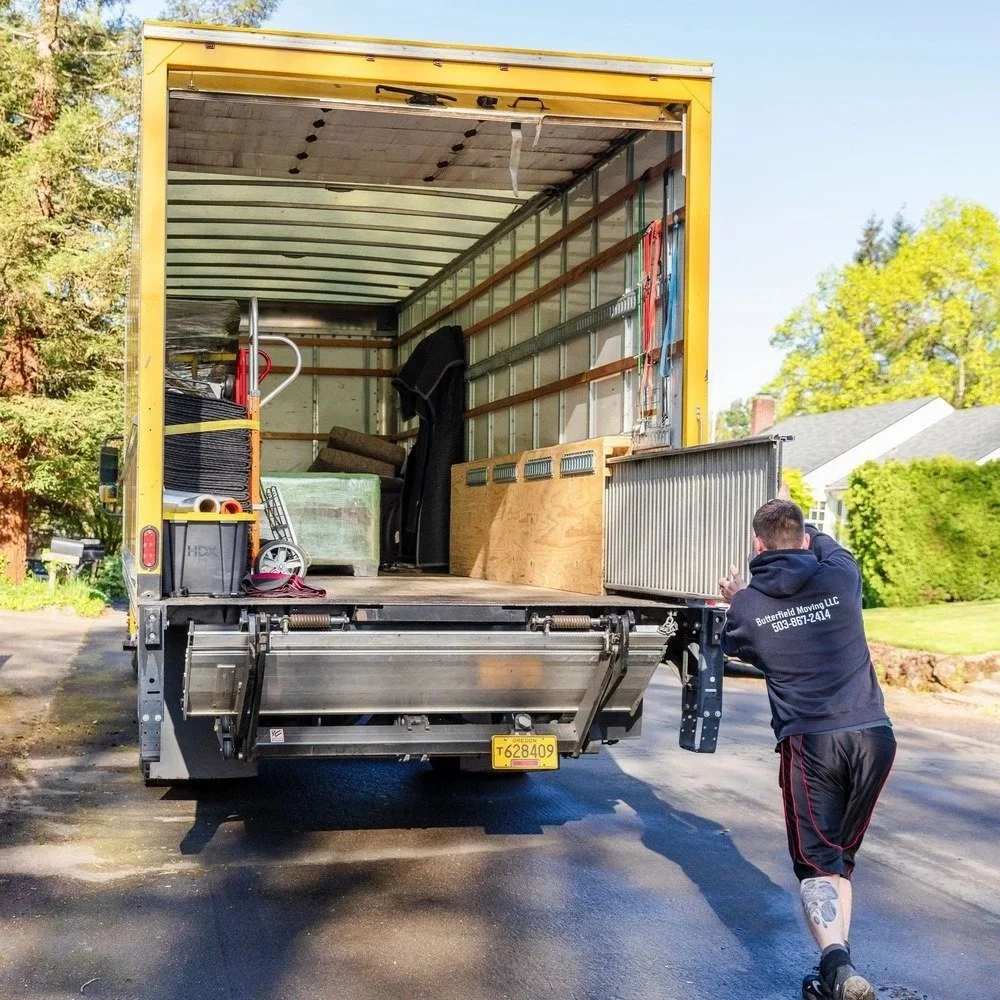
Portland moving crew loads furniture into truck during residential move, reflecting real 2026 moving costs, labor rates, and relocation services.
If you are planning a move in Portland and trying to figure out what to budget, the hourly rate is not the number that matters most. Most Portland movers charge by the hour, but how many hours your move takes depends on size, access, services, and timing — and the hour count is where projects get expensive. A 2-bedroom apartment move that runs 4 hours from one driveway to another can cost half as much as the same move from a third-floor walk-up to a downtown high-rise. Real Portland-area numbers and the factors that drive them are what separate a useful estimate from sticker shock.
The Quick Answer — What Most Portland Moves Actually Cost
A typical 2-bedroom apartment move within the Portland metro area runs $600 to $1,200 with a professional crew. A 3-bedroom house move within the metro runs $1,200 to $2,500. Studios and 1-bedroom apartments come in at $400 to $700. Larger homes, longer distances, or full-service packing push your bill higher: 4-bedroom houses run $1,800 to $3,500, and 5-bedroom homes often turn into 2-day moves at $3,000 to $6,000 or more. Long-distance moves are priced on entirely different curves.
These ranges are wide because move size, services, timing, and access conditions all affect your final number. The factors below explain how your bill moves within each range.
How Portland Movers Actually Charge
Most Portland moving companies charge by the hour for local moves. Industry hourly rates in the Portland metro typically range from $120 to $160 per hour for 2- to 3-person crews, depending on the company, time of year, and crew size. Butterfield Moving publishes its rate at $146.95 per hour with a 3-hour minimum, which is unusually transparent for the moving industry. Many companies will not quote an hourly rate without an in-home estimate first.
What “by the hour” actually means in practice: the clock typically starts when the crew arrives at the origin and runs until the truck is unloaded at the destination. Drive time between origin and destination counts toward the hour total. Some companies also charge a separate travel fee from their warehouse to the origin location, which is worth asking about specifically. That fee can add 30 to 90 minutes of billable time before the crew has touched a single piece of furniture.
The hourly rate covers the crew’s labor, the truck, basic moving equipment (dollies, blankets, straps), and the driver’s time. It typically does not cover packing materials, packing labor when requested as a separate service, specialty item handling beyond standard furniture, or storage between origin and destination.
What Drives the Hour Count Up
For an hourly-rate move, your bill is rate times hours. The rate is fixed; the hours are where your move gets expensive.
Things that add hours:
Volume of items: A fully packed 2-bedroom apartment has more boxes than a sparsely furnished one
Heavy or awkward furniture, including sectional sofas, gun safes, treadmills, china cabinets, and pianos
Number of stairs at origin or destination: Portland’s older homes often have steep, narrow stairs
Long carry distance from truck to door, especially common in older neighborhoods like Sellwood, Mt. Tabor, and Alberta, where 26-foot trucks cannot easily pull up to the front of the house
Elevator wait times at high-rise buildings, which can add 30 to 60 minutes per trip
Disassembly and reassembly of furniture on either end of the move
Drive time between the origin and destination, particularly across town in rush hour
Packing services if the customer has not pre-packed boxes
Pickup or drop-off at a storage facility added to the route
Tight scheduling, like staging furniture for delivery in a specific order
A 2-bedroom apartment move from a building with elevator access and street parking might run 4 hours. The same move from a third-floor walk-up to a curbside truck with a long carry might run 6 to 7 hours. The move size is identical; the hours doubled. That gap is the difference between a $600 bill and a $1,000 bill on your invoice at the same hourly rate.
Cost by Move Size — Realistic Portland Ranges
These ranges assume a professional crew at typical Portland metro rates ($120 to $160 per hour, depending on the company and time of year):
Studio or 1-bedroom apartment with light furniture: 3 to 4 hours, $400 to $700
2-bedroom apartment: 4 to 5 hours, $600 to $1,200
2-bedroom house with garage and storage: 5 to 7 hours, $900 to $1,600
3-bedroom house, typical Portland-area suburban home: 6 to 8 hours, $1,200 to $2,500
4-bedroom house: 8 to 12 hours, $1,800 to $3,500
5-bedroom home or larger: 10 to 16 or more hours, often a 2-day move, $3,000 to $6,000 or more
These are local moves within the Portland metro area: Hillsboro, Beaverton, Aloha, Gresham, Troutdale, Forest Grove, Clackamas, West Linn, Oregon City, and Salem. Long-distance moves run on different pricing structures, typically weight-based or flat-rate by distance, and fall outside the scope of these hourly ranges.
When Pricing Goes Up — Peak Season, Weekends, and Overtime
Three factors push pricing above base hourly rates.
Peak season runs May through September in Portland. Demand pushes prices up and books crews further out. A Saturday in late June often costs more than a Tuesday in February at the same company. Plan your move ahead during peak months: booking 4 to 6 weeks out is normal, and same-week availability in summer is rare.
Weekend rates work two ways across the industry. Some movers charge a premium for Saturday moves. Others charge the same rate but book up faster on weekends, so flexibility on your date matters as much as price. Sunday and holiday rates often trigger overtime charges separately.
Overtime applies to most Portland movers between 7 pm and 7 am, on Sundays, and on holidays. Butterfield Moving applies overtime in this same window. For a long move that runs into the evening, the last few hours can cost meaningfully more than the daytime hours. Plan your start time to avoid hitting overtime unless the schedule requires it.
What “Full Service” Means — And When It Is Worth Paying For
Most Portland movers offer tiers of service:
Labor only: the crew arrives, loads, drives, and unloads. The customer packs everything ahead of time
Standard service: labor plus furniture wrapping, padding, and basic protection. Most local moves use this tier
Full-service packing: the crew packs everything on top of moving. This typically adds $400 to $1,500 to a residential move, depending on home size, and includes packing materials
White-glove or specialty service: premium handling for high-value items like pianos, fine art, and antiques. Pricing varies widely
Full-service packing is worth paying for in three specific situations. Tight closing or move-in deadlines that do not leave time to pack. Elderly homeowners or downsizers who cannot physically pack a full household. Homes with a significant fragile-item count, like extensive china, glassware, or original art, where professional packing reduces breakage risk.
For most household moves where the homeowner has time and physical ability, packing the move yourself saves real money (typically $400 to $800) without meaningfully increasing breakage risk if you use proper materials.
Hidden Costs to Ask About Specifically
A bottom-line quote often misses these items. Ask each contractor on your shortlist whether the following are included or extra:
Travel time from the mover’s warehouse to your origin (most charge it; some bury it in the hourly rate; a few exclude it)
Packing materials (boxes, paper, tape, bubble wrap)
Specialty item handling (pianos, gun safes, large appliances, treadmills)
Furniture disassembly and reassembly
Long carry charges if the truck has to park more than a set distance from the door (common in older Portland neighborhoods with narrow streets)
Stair charges (some companies add fees per flight beyond the first)
Elevator wait time at high-rise buildings
Storage between the origin and destination if the move is staged
Insurance beyond the basic 60 cents per pound that federal law requires
A quote that comes in $200 below the others often has $300 of extras that show up on the day-of bill. Compare your quotes with the same scope, not just the same headline number.
How to Compare Portland Mover Quotes Apples-to-Apples
Get every quote for your move in writing. Lay them side by side. For each line item, mark which contractor includes it and at what price. The lowest bottom-line number often reveals itself as the most expensive once missing items are added back in.
A worked example. Mover A quotes $800 for the project. Mover B quotes $1,100. After itemizing:
Mover A’s $800 does not include packing materials ($150), furniture disassembly ($200), or travel time from the warehouse ($100). The true cost to match Mover B’s scope is $1,250.
Mover B’s $1,100 includes everything: packing materials, disassembly, travel time, and basic furniture protection. The true cost stays at $1,100.
Mover B is actually $150 cheaper for the same work. This pattern shows up constantly when Portland homeowners compare quotes carefully. The headline price hides what is missing.
Tipping the Movers — How Much Is Standard
Tipping is customary for moving crews in Portland, though not strictly required. Standard practice for local residential moves: $5 to $10 per hour per crew member, or roughly $40 to $60 per crew member for a half-day move and $80 to $100 per crew member for a full-day move.
Tipping is paid at the end of the move directly to the crew. Customers can also provide drinks and snacks during the move, particularly on hot summer days when the work is physical.
A short note on the math: tipping a 3-person crew $80 each on a full-day move adds $240 to the total cost. Factor it into your budget upfront so it does not feel like an unexpected add-on at the end of moving day.
When Hiring Movers Saves Money Compared to DIY
DIY moves cost less in dollars but more in time, risk, and physical labor. The honest comparison for a typical 2-bedroom Portland move:
Truck rental: $80 to $150 for a 16-to-20-foot truck for the day
Mileage: $0.79 to $1.25 per mile, depending on the rental company
Pads, dollies, straps: $30 to $60 in rental fees
Gas: $40 to $70 for a local move (rental trucks average 8-12 mpg)
Friends as labor: typically free, but factor in pizza, beer, and the moral debt
Time: 6 to 12 hours of your day
Risk: damage to furniture or property is on you
Total DIY cost: $200 to $400 in cash, plus your time and the risk that something gets dropped.
Total professional cost for the same move: $600 to $1,200.
The professional move costs more in cash but takes less of your day, includes professional handling, and means damaged items are the mover’s responsibility within the limits of basic liability coverage. Federal law sets the default mover liability at 60 cents per pound, which is light coverage; full-replacement coverage costs more and applies to high-value moves.
DIY makes sense when the move is small, time is flexible, friends are available, and the items are not particularly fragile. Professional movers make sense when the move is large, time is tight, items are valuable or fragile, or you cannot physically handle the labor. For most 3-bedroom-plus Portland homes, professional movers come out ahead on the all-in math even though the cash cost is higher.
FAQs
Industry rates in the Portland metro typically range from $120 to $160 per hour for 2- to 3-person crews. Rates vary by company, crew size, and time of year. Butterfield Moving’s published rate is $146.95 per hour with a 3-hour minimum. Many Portland movers do not publish hourly rates on their websites and require an in-home estimate before quoting.
Three hours of billable time, which typically includes both labor and drive time between origin and destination. If your move only takes 90 minutes of actual work, the customer is still billed for the full 3 hours. The minimum exists because crew dispatching, drive time, and equipment setup make sub-3-hour moves uneconomical for moving companies.
DIY with a rental truck, friend labor, and self-packing is the cheapest in cash terms for your move, typically $200 to $400 for a 2-bedroom move. The trade-off is time, physical labor, and risk. For larger homes or when time is tight, professional movers come out ahead on the all-in math, even though they cost more.
Some do, some do not. The bigger weekend factor is availability: Saturday slots in peak season book out 4 to 6 weeks in advance. Sunday and holiday work typically triggers overtime rates regardless of the company. Booking a Tuesday or Wednesday in February is the cheapest combination in the Portland metro.
Yes, tipping is customary in Portland, though not required. Standard practice runs $5 to $10 per hour per crew member, or roughly $40 to $60 per person for a half-day move and $80 to $100 per person for a full-day move. Cash, paid directly to the crew at the end of the job, is the convention.
Industry pricing for full-service packing typically adds $400 to $1,500 to a residential move, depending on home size and item count. The cost includes labor and packing materials. Partial packing (kitchen only, or fragile items only) is sometimes available at a lower cost from movers who offer the option.
Basic quotes typically include the crew’s labor, the truck, basic equipment (dollies, blankets, straps), and driver time. Common extras: packing materials, packing labor, specialty item handling, furniture disassembly, long carry distances beyond a set threshold, stair charges, elevator wait time, and storage. A quote $200 below others often has $300 in extras hidden as add-ons.
Portland moving cost is hourly, but the hours are not the simple part. Move size sets the floor; access, packing, timing, and specialty handling decide where in the range your bill lands. Get every quote in writing, ask about every line item that could be charged separately, and compare your quotes with the same scope rather than the same headline number. The cheapest quote on paper is rarely the cheapest move for your household in practice.
Want a real estimate for your specific move in Portland or Hillsboro? Butterfield Moving’s published rate is $146.95 per hour with a 3-hour minimum, and the team provides free estimates with full breakdowns of what is included. Call (503) 506-4149 to schedule.