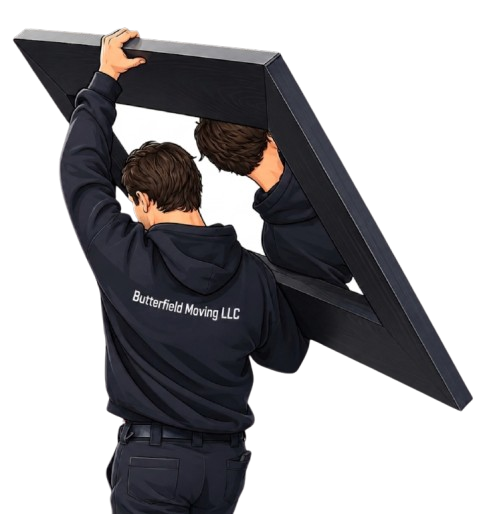
Specialty & High-Value Moving in Hillsboro & Greater Portland: The Honest Method
Family-Owned & Operated | ODOT #275978 · USDOT #3604556 | Extra Care Planned In: Never Billed as a Surprise | Google 4.8★ Rated | Open 7 AM–10 PM, Every Day
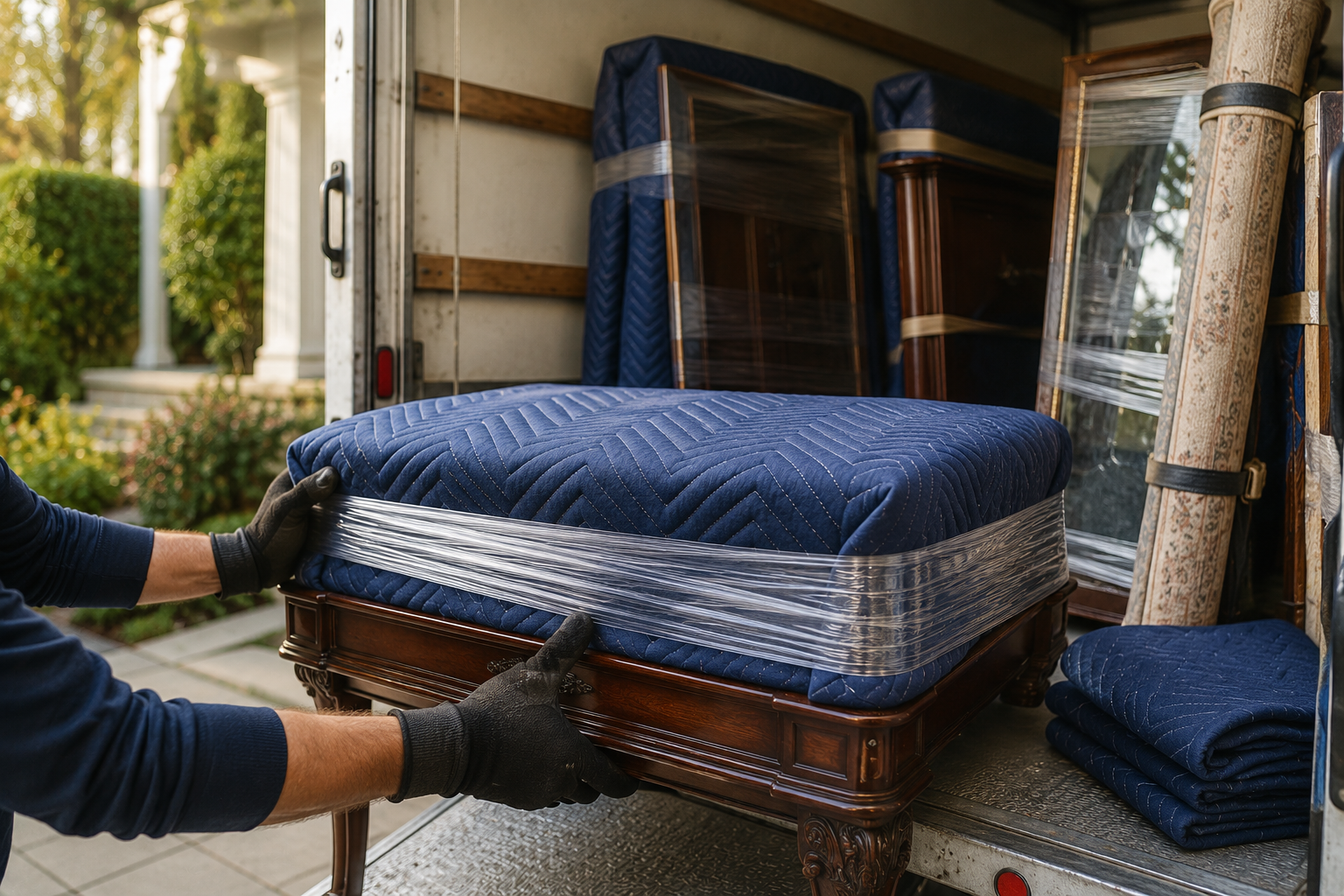
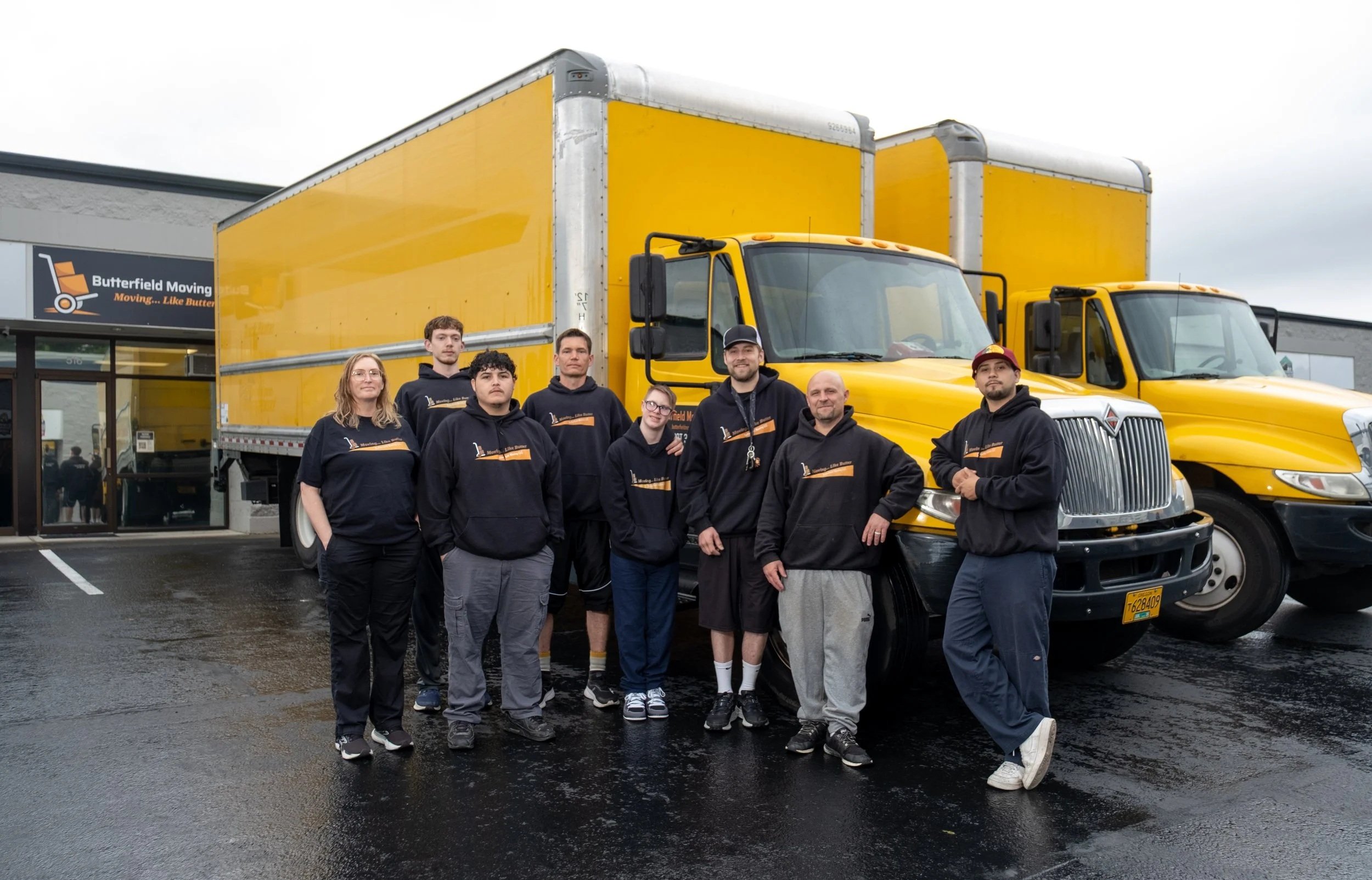
Here's the truth about how careful moving actually works, from a company that does it every week: fine art, antiques, and luxury furniture don't get moved safely by gadgets; they get moved safely by time. More wrapping. More padding. More hands on the stairs, more patience at the truck. Butterfield Moving plans that time into the estimate for specialty pieces across Hillsboro, Lake Oswego, West Linn, Portland, and Greater Portland, so the care happens on schedule, and the bill holds no surprises.
You'll notice what this page doesn't claim. No 'climate-controlled fleet' (our cargo boxes aren't, and we'll tell you exactly how we protect sensitive pieces anyway). No 'custom crating workshop' (pieces that truly need crates need a fine-art shipper, and we'll say so). What we do claim, our reviews already proved on heirloom tables, mirrored armoires, and dressers that outlived three houses: padded blankets, commercial film over the pads, vertical glass, anchored tiers, and crews that treat the word 'irreplaceable' as an instruction.
Moving a home with serious pieces in it, or a collection's worth of serious pieces? Call Patrick and walk him through what you've got. The honest plan is free.
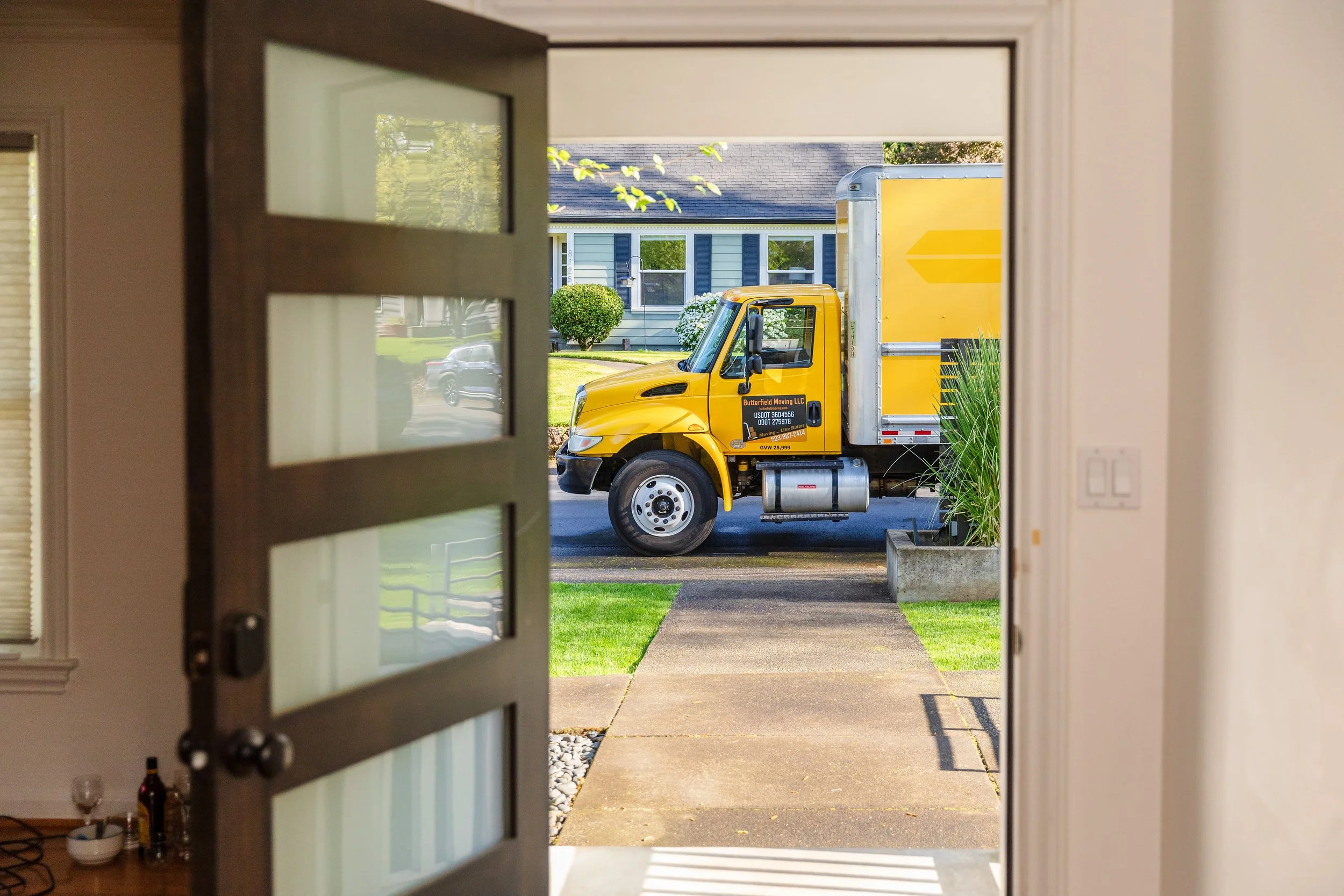
The Method Is Time
Specialty pieces get extra wrap, extra padding, extra hands, budgeted into the estimate, never improvised on the clock.
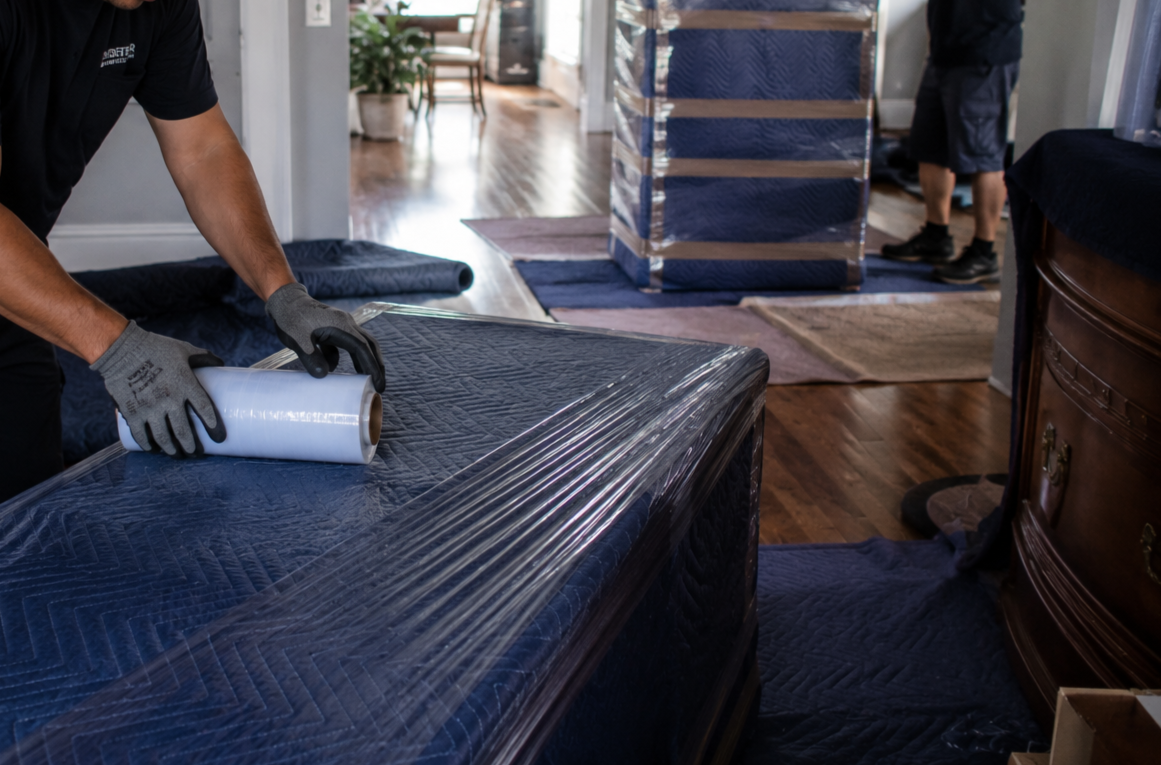
Pads First, Film Second
Never film on finish, never plastic on canvas or leather. Materials professionals use, in the order that protects.
Glass & Art Ride Vertical
Mirrors, framed art, and glass tops travel upright, padded, and anchored between tiers, never flat, never floating.
Published Rates, Planned Time
The same $150.35–$263.15/hr rates as every move, specialty just budgets more honest hours, quoted up front.
Honest Limits
Museum-grade crating and climate-controlled transport are a fine-art shipper's trade. When a piece needs that, we say so, free.
The Owner Prices Your Inventory
Patrick prices every specialty job himself, 7 AM–10 PM. Describe the piece; get the real plan.
Three Decisions That Decide Whether Your Pieces Arrive as Themselves
Tell the mover what the piece is: before move day
The most protective sentence in specialty moving is spoken on the estimate call: 'There's an 1880s highboy in the bedroom.' Named pieces get planned handling, wrap time budgeted, the right equipment loaded, and stair math done in advance. Unnamed pieces get discovered by a crew pacing a normal move, which is how heirlooms end up handled like furniture. Walk Patrick through every serious piece; the call is free, and the plan is the protection.
Decision 1
The mover with gadget claims, or the one with method claims
Moving websites love specialty theater, climate-controlled fleets, alarmed compartments, in-house crating shops. Ask one question: 'Walk me through exactly how my piece gets wrapped.' The honest answer sounds like materials and steps, pads, paper, film, corners, vertical, anchored. The dishonest answer sounds like brochure copy. We've written our wrap method out below, step by step, because the method is the product.
Decision 2
Know when you need us, and when you need a fine-art shipper
A household with valuable pieces needs a careful mover. A six-figure canvas headed to auction needs a fine-art logistics firm with custom crating and climate-controlled transport, a different trade at a different price. We'll tell you which side of that line your piece lives on, on the phone, for free, even when the answer costs us the job. That honesty is why the rest of our answers are believable.
Decision 3
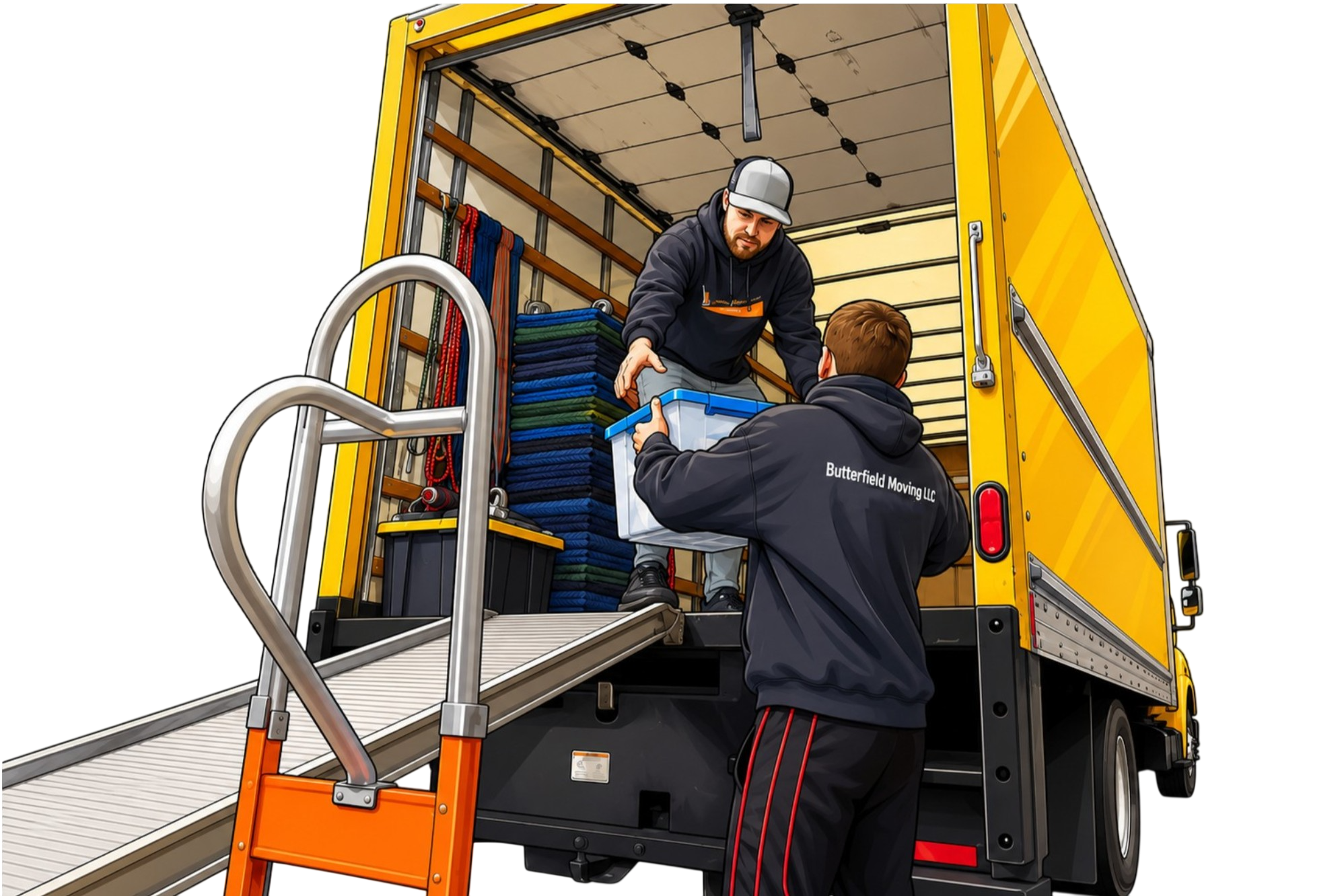
The Pieces That Make Movers Slow Down
-
• Framed paintings and prints: paper-faced, padded, vertical
• Mirrors and mirrored furniture
• Large-format art and gallery walls: sequenced and labeled
• Sculpture and ceramics: boxed or padded per piece
• TVs in dedicated TV boxes ($55.85 per use)
• Honest referrals for museum-grade pieces that need a crating specialist
-
• Highboys, secretaries, and china cabinets
• Grandfather clocks: weights and pendulum handled separately
• Antique tables: tops, leaves, and pedestals separated and padded
• Heirloom bedroom sets and cedar chests
• Pieces with old joinery: lifted by the frame, never the trim
• Marble and stone tops: carried vertical, supported full-length
-
• Designer sofas and sectionals: breathable pads on leather, always
• Solid-wood and live-edge tables
• Stone, glass, and composite surfaces
• Oversized statement pieces: the stair math done before the lift
• White and pale upholstery through Oregon rain: wrapped to the threshold
-
• Pianos: capability, equipment, and the straight answer
• Specialty pieces inside large-home moves
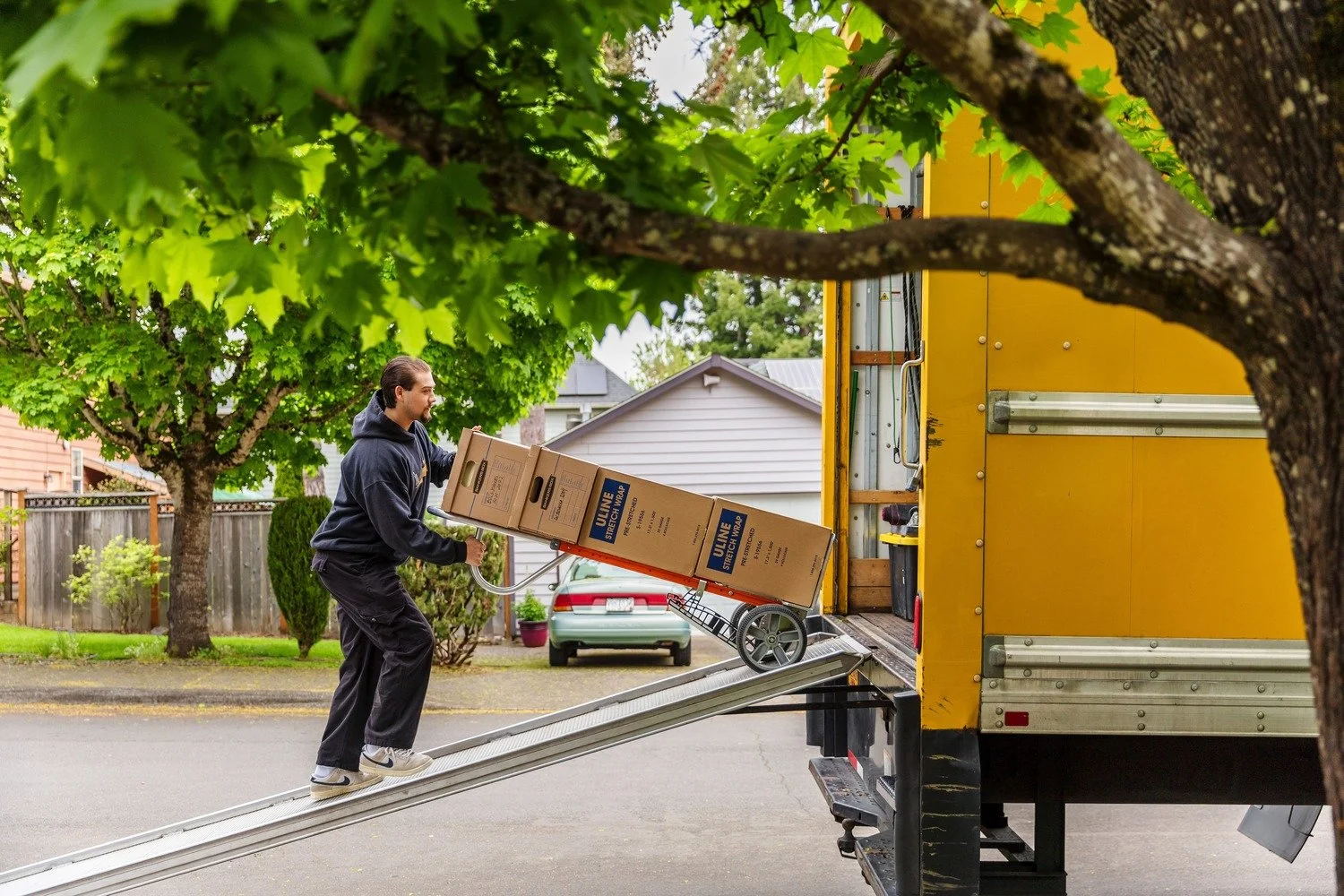
How Specialty Pieces Move Through a Butterfield Job
The inventory call: name the pieces
Every serious piece gets named, described, and planned: dimensions, materials, age, and what it means to you. Walk-throughs are free for specialty-heavy moves; some pieces deserve eyes before estimates.
Time budgeted, honestly
Extra wrap time goes into the per-piece estimate; fifteen careful minutes on a china cabinet are cheaper than any repair that skipping them buys. You see the time in the plan before you book.
Wrap day: the layered method
Pads against the piece, film over the pads, paper on faces and finishes, corner protection where corners meet the world. Glass and art sleeve up vertically. Hardware and keys bag to each piece.
The carry: planned, not improvised
Stair math done in advance, doors off hinges when the numbers demand, more hands called in when the piece demands. The high-low carry and the patience our reviews keep describing.
Loading: anchored, vertical, protected
Specialty pieces ride between anchored tiers, glass and art vertical against padded walls of soft goods, nothing floating, nothing bridging. The load plan knows where every named piece sits.
Delivery and the unveiling
Unwrapped at destination, placed where you direct, inspected with you piece by piece. The walkthrough on a specialty move is the whole point; you see every piece arrive as itself before the crew leaves.
Specialty Pricing: Same Rates, More Honest Hours
There's no 'white-glove surcharge' here; specialty moving is the same published rates with the extra time planned in and quoted up front:
rates
The rates
2 movers + truck: $150.35 per hour
3 movers + truck: $206.75 per hour
4 movers + truck: $263.15 per hour
3-hour minimum
Overtime Rate
after 7 PM Monday–Saturday, and Sundays
2 movers: $195.20 per hour
3 movers, $273.40 per hour
4 movers, $351.60 per hour
Holiday rate (3-hour minimum): 2 movers $230.50 per hour · 3 movers $325.50 · 4 movers $420.50
specialty
What specialty changes
More wrap time per named piece: budgeted in the estimate, visible before booking
More crew when the piece demands it: explained, never padded
TV boxes $55.85 per use · packing help $56.40 per hour per packer
Piano and safe moves: quoted per piece on their own pages
conversation
The coverage conversation, mandatory here
Oregon's default released-value coverage is $0.60 per pound, which values an eight-pound painting at $4.80. On high-value moves, that math makes the replacement-cost protection conversation essential, and we have it with you before booking, not after an incident. If something is damaged on our watch, we will submit a claim upon request.
Our Reviews
Care You Can Verify, Limits We'll Admit
-
The piece our reviews remember best is a customer's beloved old table meeting a historic apartment's too-small doorway: the crew tried every angle and then some until it was inside, unmarked, on a 90-degree day, mid-move, without drama. That patience-at-the-threshold is the specialty product in one scene; the review lives on our residential page and the live feed below.
-
'I was so thankful that my furniture and cherished belongings were handled with care and efficiency! Couldn't believe how fast they packed my things! Yet nothing was broken or marred!' Speed and care reading as the same thing is what the layered wrap method buys. (Susan N., Google review, her words anchor our packing page too.)
-
Not every call ends in a booking, and that's by design. When a piece needs built-to-fit crating or temperature-controlled transport, a significant canvas, a fragile instrument headed cross-country with a van line, we say 'that's a fine-art shipper's job' and explain why, free. The customers who hear that no come back with their whole-house moves, because they know what our yes means.

Butterfield Moving vs. specialty-theater movers
| Feature | Butterfield Moving | Specialty-Theater Movers |
|---|---|---|
| Climate claims | Honest: cargo box isn't, method is | 'Climate-controlled fleet' (check it) |
| Crating claims | None, honest shipper referrals | 'Custom crating workshop' |
| The wrap method | Published step-by-step below | 'White-glove service' (undefined) |
| Specialty pricing | Same published rates + planned time | Premium-tier mystery quotes |
| Named-piece planning | Every serious piece, on the call | Discovered on move day |
| Glass & art handling | Vertical, padded, anchored, always | Blanket and a prayer |
| Coverage talk | $0.60/lb math explained up front | Fine print after the incident |
| Honest referrals out | Yes, even when it costs the job | Never |
| Who prices your inventory | Patrick (owner) | A quote form |
| Deposit | None | Standard on 'specialty' |
High-Value Moving in Greater Portland Has Local Stakes
Estate collections of the western suburbs
Lake Oswego, West Linn, and the west hills concentrate the metro's serious pieces, art collected over decades, antiques with provenance, and designer furniture bought to stay. Specialty work out here usually arrives inside estate-scale moves, which is why our large-home and specialty playbooks are designed to run together: named pieces inside counted households.
Summer heat and the honest truck
Our cargo boxes are not climate-controlled. What that means in practice: on hot days, wax finishes, oil paintings, candles, and vinyl get flagged on the inventory call, scheduled for morning loads, positioned away from box walls, or routed to ride with you. Honesty about the truck is what makes the protection real.
Estate sales, auctions, and multi-stop pickups
Specialty pieces often start somewhere other than home, an estate sale in Tigard, an auction win, or a dealer's floor. Multi-stop pickup runs are native work for us: padded in the seller's driveway, anchored for the ride, delivered into the room it was bought for.
Oregon rain versus everything you love
Moisture is the universal enemy of high-value pieces, it spots silk, swells veneer, and waves canvas. October through May, the wrap method earns its keep at every threshold: pieces stay wrapped until they're standing on dry floor, and the gap between door and truck gets managed like the hazard it is.
Old-Portland houses, older furniture
The antiques of Portland's century homes live up narrow staircases that were narrow when the furniture arrived the first time. Stair math, door-off-hinges patience, and the high-low carry get planned against the named piece before move day, the same discipline our furniture page documents, with higher stakes.
The valuation stakes, locally speaking
A house full of Westside-grade pieces makes the coverage math urgent: a released value of $0.60 per pound treats a $12,000 armoire as $90 of furniture. The replacement-cost conversation happens on every specialty estimate here, five minutes that matter more than any wrap layer.
Hillsboro dispatch, gentle miles
Specialty pieces accumulate risk by the mile and the handling. Westside dispatch means shorter rides and fewer total touches for the suburbs where most of these pieces live. Your highboy spends less time in transit because our trucks start nearby.
The Specialty Method, Written Down
The layered wrap, step by step
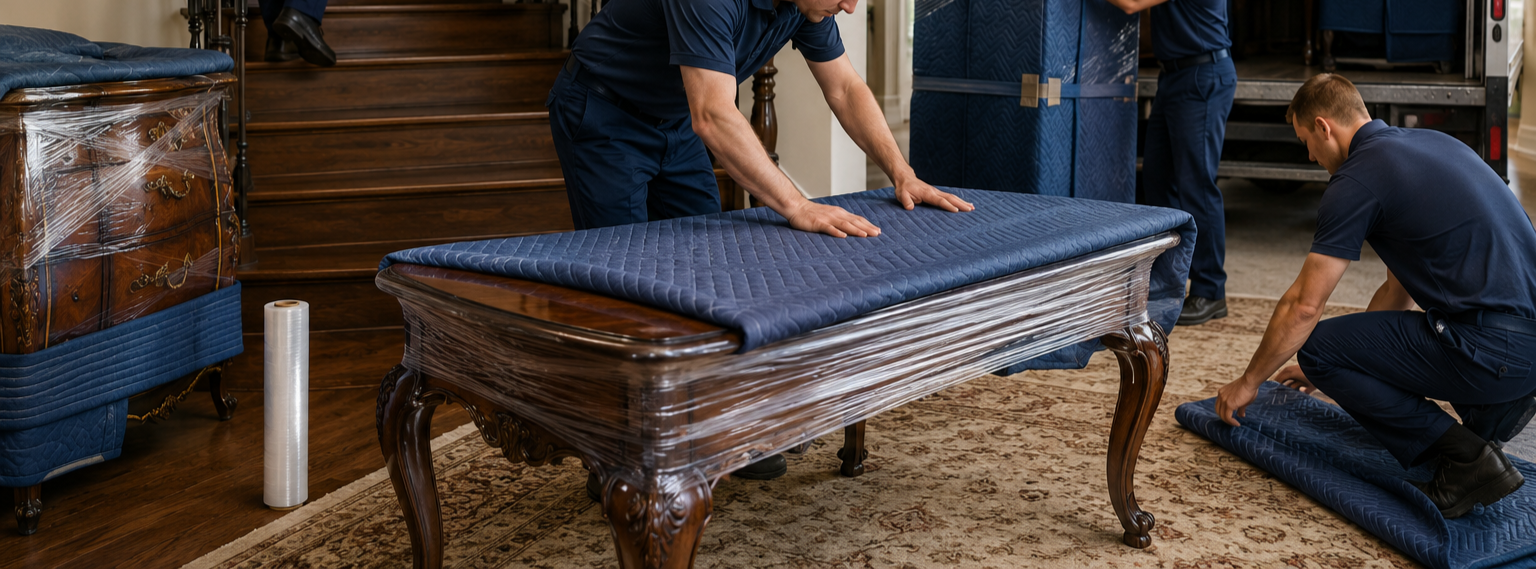
Step one: padded furniture blankets against the piece, never film on finish, never plastic on canvas or leather. Step two: commercial stretch film over the pads, locking them without touching the surface. Step three: paper facing on delicate finishes and gilt. Step four: corner protection, where the world will try to make contact. The order is the protection; reversing it is how 'wrapped' pieces arrive damaged anyway.
Leather, stone, and designer surfaces
Leather sweats under film, so it gets breathable pads only. Stone tops carry vertical and never bridge two supports. Live-edge and lacquered surfaces get paper before pads to prevent imprinting on warm days. Designer modulars disassemble at their engineered joins with hardware bagged, the furniture-page discipline, at luxury stakes.
Where our method ends: drawn precisely
We don't build custom crates, and our trucks aren't climate-controlled, so pieces that genuinely require either get referred out: museum-grade canvases, high-value instruments traveling long distances, collections bound for auction houses. The line is drawn on the inventory call, in plain language, free. Knowing exactly where our method ends is why you can trust it everywhere it applies.
Art and mirrors: the vertical rule
Framed pieces and mirrors travel on edge, vertical, as they hang, padded, sleeved, and anchored between tiers so nothing can lean, slide, or land on them. Flat is how glass dies: one box set on top ends a mirror that survived a century. Multiple pieces get sequenced and labeled, so gallery walls rebuild in order.
Clocks, instruments, and the pieces with insides
Grandfather clocks move with weights and pendulum removed, bagged, and labeled, the movement secured before the case ever tips. Instruments and other pieces with mechanisms get the same inside-first thinking, and the honest assessment on the call: some bellies of some pieces belong to specialist technicians, and we'll name that before move day.
Antique wood: respect the joinery
Hundred-year-old furniture is held together by joinery and old glue that modern handling can shear. Antiques lift by the carcass, never the trim, crest, or legs. Drawers come out and travel separately, keys and hardware bag to the piece, and marble tops come off to ride vertically, supported along their full length. Slow hands around old joints; that's the whole secret.
The coverage conversation, done right
Every specialty estimate includes the valuation talk: what released value at $0.60 per pound actually pays on your pieces, what replacement-cost protection costs to add, and which option fits the inventory. Then it's your informed call. If something is damaged on our watch, we will submit a claim upon request, and the conversation we had up front is what makes that process clean.
Specialty Questions, Answered Straight
-
Yes, padded, paper-faced, vertical, and anchored, with each piece named on the inventory call. For museum-grade or auction-bound pieces that need custom crating or climate control, we'll honestly point you to a fine-art shipper instead.
-
Every week, highboys, clocks, china cabinets, heirloom sets. The method is written out above: carcase lifts, drawers out, hardware bagged, marble vertical, slow hands around old joints.
-
Single-item moves aren't our lane; jobs run on a 3-hour crew minimum. But specialty pieces inside a move, multi-piece collections, and estate-sale pickup runs are exactly our work. Describe the whole job, and we'll tell you honestly if we're the right fit.
-
No, and we won't improvise plywood around your heirloom. Pieces that need true crating need a fine-art shipper; we'll say so for free and handle everything else in the house.
-
The cab is; the cargo box is not, and any mover whose website says otherwise deserves a follow-up question. Our protection for sensitive pieces is method and timing: morning loads on hot days, flagged items positioned away from box walls or routed to your car, and the honest referral when a piece needs true climate transport.
-
We have the equipment and the capability, piano board, skid dollies, straps, and trained hands. Tell us the piano and the stairs on the call, and you'll get a straight per-piece answer. Full details on our piano page.
-
The same published hourly rates as every Butterfield move, $150.35 to $263.15 by crew size, with the extra wrap and handling time budgeted per named piece in the estimate. No white-glove surcharge theater.
-
The default is Oregon's released-value coverage, $0.60 per pound, which is brutal math on art and antiques. Replacement-cost protection is available if you choose to purchase it, and on specialty moves, we walk you through that decision before booking, every time.
-
Mostly: don't. Leave the wrapping to the method above. What helps: photograph each piece beforehand, empty the drawers, locate keys, and tell us everything you know about its quirks, the loose foot, the drawer that sticks. Knowledge is padding.
-
Hot tubs, hazardous materials, ammunition, and pieces that genuinely need crating or climate transport (referred out honestly). Firearms move unloaded only. Everything else: name it on the call and get a real answer.
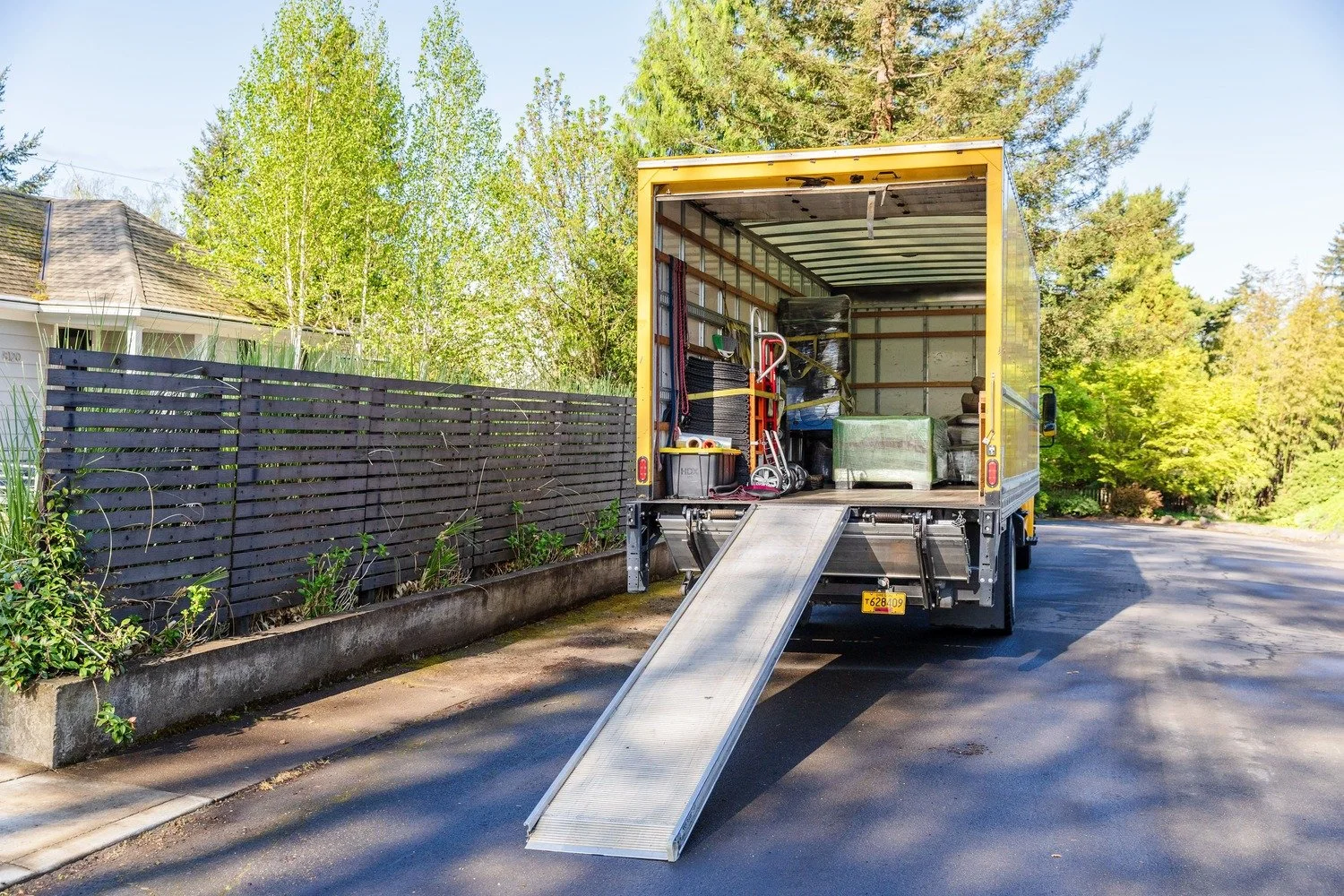
Your Pieces Deserve the Method, Not the Marketing
Name what you've got. Patrick will tell you exactly how it gets wrapped, carried, and covered, and on the rare piece that needs a different trade entirely, he'll tell you that too. That's the whole pitch: care you can verify, limits we'll admit.