
Moving Out of a Portland Apartment: The Complete Renters Guide
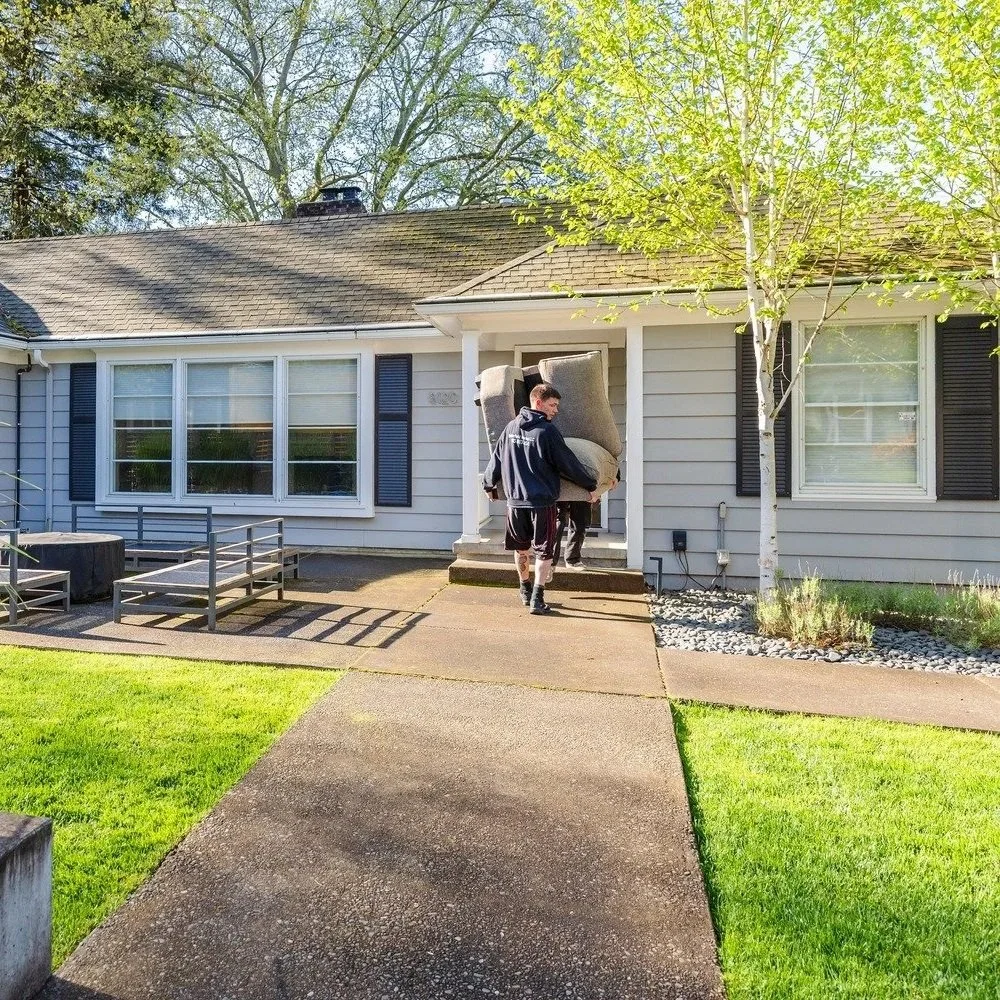
Portland moving crew transports furniture from apartment home during tenant relocation, emphasizing organized move-out planning and professional moving assistance.
You are moving out of a Portland apartment—maybe the lease is ending, maybe a job pulled you elsewhere, maybe you just want a change. Your security deposit matters. Your timing matters. Your landlord’s expectations matter. This guide walks you through what Portland renters actually face: the 1st and 15th move-out cycle, the legal ground you stand on, and the practical steps that keep you from losing money when the movers leave.
Moving Out of a Portland Apartment: A Renter’s Timeline
Portland’s rental market has a rhythm that is not obvious to first-time movers. The vast majority of leases end on the 1st or 15th of the month. This concentration means May through August sees moving trucks everywhere—graduation season at PSU, Reed, and OHSU adds urgency, and summer sunshine makes moving easier than October rain. If your lease ends at an unusual time (the 7th, the 20th), you may find yourself swimming against the current.
The calendar creates two distinct seasons. Summer (May–August) is peak season: crews book three to four weeks in advance, weekend slots fill up first, and pricing is at its highest. September through April is the quiet season, though October through May brings Portland’s rainy season. If you are moving in November or December, expect wet driveways, slick stairs, and movers who will plastic-wrap everything valuable. The trade-off is availability and lower cost.
Most Portland leases require 30 days’ notice to terminate. Some require notice by the last day of the month to end on the next month’s last day. Your lease will specify this—read it carefully. Missing the notice deadline typically extends your lease by another month, which is expensive and frustrating. Once you give notice, mark your calendar: move date planning begins immediately.
What Portland Landlords Actually Expect at Move-Out
Oregon law requires landlords to return security deposits within 31 days of move-out, with an itemized list of deductions if they keep any money. That law is specific and enforceable. But landlords have unwritten expectations too, and they vary by neighborhood and building type.
Downtown high-rise landlords (Pearl District, South Waterfront, downtown core) tend to be formal. They require proof that your moving company carries liability insurance, such as a certificate of insurance (COI). They want elevators reserved in advance. They may charge a move-out fee or deposit protection fee, which is legal in Oregon if the lease states it. They inspect meticulously.
Northeast Portland landlords in older buildings (Alberta, Hawthorne, Sellwood, Mt. Tabor) are more casual about the process but may have different damage standards. Carpet cleaning is a common sticking point: some landlords require professional carpet shampooing (which costs $200–$400), while others accept “broom clean” (swept and vacuumed, no stains). The lease should specify; if it does not, ask the landlord in writing before move-out day.
Wall damage standards follow a pattern: nail holes the size of a finishing nail are normal wear and tear and cannot be deducted. Large holes (from a backed-over shelf, a fist-sized punch, mounting damage) are damaged and will be charged. The landlord cannot charge you for painting the whole wall because of a few nail holes, but they can charge for patching and repainting the damaged area.
The key return procedure matters more than it sounds. Some buildings require keys to be returned to the landlord in person; some accept keys in a mail drop. Get written confirmation that the keys have been returned. Photograph the empty apartment as proof that you left it clean and returned all keys. Use your phone to take videos of each room, empty, with a date and time stamp visible. Landlords sometimes claim tenants broke items or left a mess after move-out; video proof protects you.
The forwarding address is critical. Write it down and give it to the landlord in writing. Oregon law requires the landlord to return the deposit to your last known address. If you skip this step and move to a new state, the landlord cannot find you to return your deposit, even if they want to.
Your Security Deposit and Oregon Deposit Law
Oregon Residential Tenancies Act Section 90.300 sets the standard: landlords have 31 days from move-out to return the full deposit or provide a written, itemized list of deductions with proof. Not 30 days. Not “around a month.” Thirty-one days. This matters because if a landlord returns the deposit on day 32, they are in violation and may owe you penalties.
What counts as deductible? Damage beyond normal wear and tear. Stains the tenant caused. Broken fixtures, the tenant broke. Unpaid rent. Unpaid utilities are the tenant's responsibility. What does not count? Normal wear (faded paint, worn carpet in a 10-year-old building, small nail holes, minor dents). Cleaning costs, unless the lease specifies the tenant must leave the unit “professionally cleaned” (and even then, the amount must be reasonable).
If the landlord deducts $500 for carpet cleaning when the lease specifies “broom clean,” that is an illegal deduction. If the landlord deducts $800 for paint touch-up on two small nail holes, that is a sign of bad faith.
Photograph the unit before you move out. Walk through each room with your phone camera, documenting existing damage, stains, and condition. Do this while the furniture is still there if possible, so the scale is clear. Send these photos to the landlord via email with a timestamp; this creates a record. Then, after you move out, photograph the empty apartment. Landlords sometimes claim tenants left damage that was actually pre-existing; photos are your defense.
If the landlord withholds money without an itemized list, or the itemized list is vague (“general damage: $300”), that is a violation of ORS 90.300. You have the right to a small claims court. The Oregon small claims court has a $10,000 limit. If the landlord wrongfully withheld $1,000 of your deposit, you can sue for $1,000 plus court costs. Many landlords back down after receiving a tenant's demand letter.
The deadline is critical. If 32 days pass and the landlord has not returned the deposit or provided an itemized list, they are in violation. Send a written demand (email is fine) asking for the return of the deposit within 5 business days. Keep a copy. If they do not respond, file in small claims court.
Downtown High-Rise vs. NE Portland: Building Rules That Affect Your Move
Downtown high-rise apartments (Pearl District, South Waterfront, SW Park blocks, downtown core) have formal moving requirements. Most require movers to carry a Certificate of Insurance and provide it before the move. The certificate shows that the moving company has liability insurance for the building. Downtown buildings are protecting themselves: if movers damage the building (broken glass doors, scuffed walls, floor damage), the building wants proof that the moving company can pay for it.
Elevators in downtown buildings must be reserved in advance, sometimes weeks ahead. The building may charge an elevator reservation fee ($25–$75). Some buildings require movers to use only one elevator and at specified times (early morning or evening to avoid resident disruption). The building may require you to pad elevator walls and floors with cardboard or blankets. If you hire movers, this is something to plan for in conversation with Butterfield before move day.
Northeast Portland’s older, smaller buildings (Alberta, Hawthorne, Sellwood, Mt. Tabor) typically have different constraints. They are often four-story walkups with no elevator. Movers will navigate narrower staircases, tighter door frames, and older wood floors that are more prone to scuffing. These buildings often do not require insurance certificates. They are less concerned about the timing of moves. But the physical move is harder because of the stairs and tight angles.
The upshot: tell your movers where you are moving from and to. Butterfield can advise on what to prepare, whether COI is needed, whether elevator fees apply, and how long the move is likely to take, given the building layout.
When to Book Your Mover (And How Summer Shortages Affect Timing)
Summer (May–August) books fast. Butterfield typically has a three to four week lead time during the summer peak. If you are moving on July 15, call in late June to book; calling in early July means weekend dates are gone, and you are picking from weekday slots. Weekday moves are generally cheaper because crews have fewer jobs, but they require you to take time off work.
Off-season (September–April, excluding holidays) has more availability. You can often call two weeks before the move and find open slots. The trade-off is weather: September and October are still dry, but November through April are rainy. Movers will protect your furniture with plastic and padding, but expect wet sidewalks, slippery stairs, and slower loading times because of the weather.
Butterfield’s three-hour minimum applies to all moves. A one-bedroom apartment move typically takes three to four hours, so you will hit the minimum or slightly exceed it. A two-bedroom apartment move takes five to seven hours. If you prepare well—boxes stacked and ready, furniture disassembled in advance, paths clear—the move stays efficient and costs less than if the crew has to wait for you to finish packing.
The money-saving move is to book early. Four weeks out is optimal. This gives you time to coordinate with your landlord, schedule your disconnection (power, internet, gas), and prepare the apartment. It also locks in current pricing; last-minute moves are sometimes costlier if crews have to rearrange their schedule.
Move-Out Day: Condition Walkthrough and Final Steps
The final 48 hours before your move follow a specific choreography. First: your final walkthrough with the landlord (if they offer one—some do, some do not). This is your chance to show the landlord the condition before the movers arrive. If damage is already visible, document it together. If the landlord points out a stain, ask whether they plan to deduct for cleaning; if so, get it in writing.
Second: Movers arrive, load furniture and boxes, and depart. Supervise the move. Be present. Answer questions about furniture. If a mover asks whether an item is fragile or valuable, tell them. If you packed boxes and one is unexpectedly heavy, tell the crew. Communication prevents damage and rushed decisions.
Third: Final walkthrough with the landlord after the movers leave. The apartment should be empty, swept, and keys accounted for. Walk through with the landlord if they are available. Take photos of each room empty. Note any damage (did movers cause this, or was it pre-existing?). Give the landlord your forwarding address in writing.
Fourth: Meter readings. If you pay utilities separately (some apartments have individual meters), record the reading for electric, gas, or water. Take a photo of the meter. This proves you turned off all consumption on move-out day and protects you from charges for the next tenant’s usage.
Fifth: Key return. Deliver keys to the landlord or mail them with tracking. Get written confirmation. Do not assume the landlord received them.
Sixth: Forward your address to the post office and provide it to the landlord in writing.
The goal is documentation. You have done everything properly, and you have proof.
What to Do If Your Deposit Gets Held Unfairly
If the landlord returns your deposit on day 35 (four days late) with an itemized list, they are in violation of ORS 90.300, which requires return or itemization by day 31. You have recourse.
If the landlord provides an itemized list but the deductions are vague (“general damages”), that does not meet the legal standard. Oregon law requires the landlord to list specific damages with amounts and proof (a receipt for repair or replacement, a quote for work needed). “Carpet cleaning: $300” with no receipt is legally insufficient.
If the landlord deducts for damage you did not cause (wear and tear, pre-existing damage, damage caused by the landlord), you can challenge it. Send a written demand letter: “I dispute the deduction for [item]. The damage was pre-existing / was normal wear and tear / was caused by [reason]. Oregon law prohibits this deduction. I request the return of $[amount] within 5 business days.” Email is fine; keep a copy.
If the landlord does not respond or refuses, file in small claims court. Oregon’s process is straightforward and inexpensive (filing fee is around $100–$150). Bring your photos, your lease, the itemized deduction list, and documentation of what similar repairs cost. Judges in Portland are generally familiar with ORS 90.300 and enforce it strictly.
Small claims court is available for disputes under $10,000. If your security deposit was $1,500 and the landlord wrongfully withheld $800, you can sue for $800 plus court costs.
One final protection: if a landlord violates ORS 90.300 (fails to return the deposit by day 31 without a written itemized list), you can recover three times the wrongfully withheld amount in court plus attorney fees. Yes, three times. This is Oregon’s way of discouraging landlord violations. A landlord who intentionally holds a $1,000 deposit past day 31 can end up owing $3,000 in damages.
FAQs
No. Oregon law requires the landlord to return the full deposit by day 31 or provide a written, itemized list of deductions with proof by day 31. If neither happens, the landlord is in violation.
Only if your lease requires it. If the lease says “broom clean,” professional carpet cleaning is not required. If the lease says “professionally cleaned,” the cost must be reasonable, and the landlord must provide a receipt or quote. Typical professional cleaning is $200–$400 for a one- to two-bedroom apartment.
The building may require movers to provide a Certificate of Insurance before the move. Butterfield can provide this. The building may require elevator reservations and move-in window restrictions. Call the building manager ahead of time to confirm requirements.
Send a written demand letter requesting the return of the deposit within 5 business days. If the landlord does not respond, file in small claims court. You may be able to recover three times the wrongfully withheld amount plus court costs.
Summer (May–August) is the peak season. Graduation pressure from PSU, Reed, and OHSU, combined with favorable weather, concentrates moves into these four months. Crews book three to four weeks in advance, and pricing reflects scarcity. Off-season moves are cheaper because fewer tenants are moving and crews have availability.
They cannot prevent you from hiring movers. Leases typically allow professional moving companies. What they can do is restrict the moving window (hours of the day, days of the week) or require advance notice. They can require a Certificate of Insurance. Ask your building manager for the moving policy in advance.
Faded paint from sunlight exposure. Worn carpet in a unit that is 10+ years old. Small nail holes from hanging pictures and mirrors. Minor dents in baseboards or door frames from normal use. Missing or faded caulk in bathrooms. These are expected in a rental home and cannot justify deposit deductions.
Call Butterfield Moving at (503) 506-4149 for a free Portland apartment move estimate. Available 7 days a week, 7 am to 10 pm.