
Moving Into a Portland High-Rise: What to Know About Elevator Rules and COIs
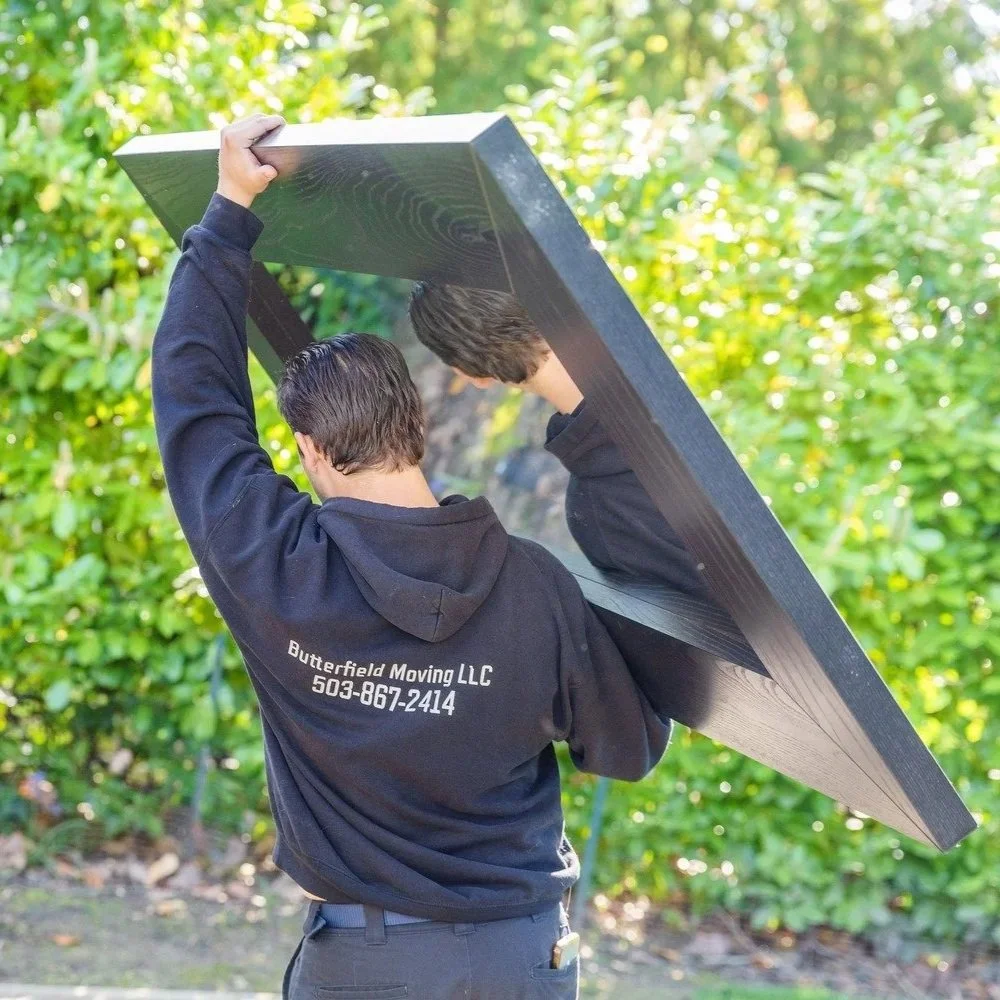
Experienced Portland mover handles large furniture piece during high-rise move, emphasizing building requirements, elevator scheduling, and insured moving services.
If your move is into or out of a downtown Portland high-rise, the rules are different from those for a single-family home. Buildings have their own paperwork. Buildings have their own elevators. Buildings have their own time windows for when moves can happen, and they will not bend the rules because the truck is in the loading zone. The good news is that none of this is hard once the right questions get asked. The bad news is that movers who do not know the high-rise game can show up on move day and discover the elevator is locked, the certificate of insurance has the wrong language, and the $146.95-per-hour clock is running while everyone figures it out.
Why High-Rise Moves Have Different Rules
Downtown Portland high-rise buildings — those in the Pearl District, South Waterfront, downtown towers, and many newer mixed-use developments — have moving rules that single-family homes and low-rise apartments do not. The reasons are practical. High-rise moves use shared elevators, affecting every other resident in the building. The buildings have polished floors, wallpapered hallways, and elevator interiors that cost real money to repair if damaged. The buildings carry insurance that limits their liability for damage caused by tenants’ contractors, which is why they shift the requirement to the mover.
The result is a familiar package across most high-rises: certificates of insurance from movers, reservations for the freight elevator, specific time windows for moves, and floor and wall protection during the work. Movers without these arrangements simply cannot complete the move.
What a Certificate of Insurance (COI) Actually Is
A certificate of insurance is a one-page document issued by the mover’s insurance carrier that shows the mover has specific coverage levels in place. The building requires this document before allowing the mover to work there.
Typical COI requirements for Portland high-rises:
General liability insurance: usually $1 million minimum per occurrence, sometimes $2 million for larger buildings
Workers’ compensation: required for any crew the mover sends into the building
Auto liability: for the moving truck
The building named as additional insured: the certificate must specifically list the building’s ownership entity (usually the LLC that owns the property) as an additional insured party
The “additional insured” piece is where most DIY-mover plans fail. A mover may have insurance, but if their certificate does not name the specific building as an additional insured, the building will not let the move proceed.
A legitimate professional residential mover can produce a building-specific COI in 1 to 2 business days. Last-minute requests sometimes get handled within hours, but most buildings require the COI to be on file 24 to 48 hours before the move.
How Elevator Reservations Work
Most Portland high-rise buildings have a freight elevator, or a designated service elevator, used for moves, large deliveries, and maintenance. This elevator is a shared resource, and the building reserves it on a first-come, first-served basis.
The typical reservation process:
You contact the building management office, usually 1 to 2 weeks before your desired move date
The building checks freight elevator availability and offers specific time slots
Standard time windows: 9 am to 12 pm, 1 pm to 4 pm, or 4 pm to 7 pm (varies by building)
You confirm a slot in writing
The building requires the mover’s COI before the reservation is final
On move day, the mover checks in with the building’s front desk or doorman, who logs the start time and tracks the slot
What happens without a reservation: the move cannot start. The freight elevator may be in use by another resident’s move, by a delivery, or by maintenance. The truck waits. The crew waits. On hourly billing, the clock runs the entire time.
Common Time Windows and What They Mean
Different buildings have different rules, and assumptions are dangerous.
Standard residential time windows. Most Portland high-rises allow moves between 8 am and 5 pm on weekdays. Some allow Saturday moves with advance approval. Sunday and holiday moves are often prohibited entirely.
Some buildings limit move duration. A 3-hour maximum is common. A move that runs over the time window may be charged by the building, fined, or have the elevator privilege revoked mid-move.
Some buildings prohibit moves during specific months or events. Buildings in central Portland that overlap with major events such as the Rose Festival, sporting events, or parades sometimes block move days entirely. Always verify before planning the move date.
Holiday and weekend restrictions vary widely. Some buildings allow Saturday moves at standard fees. Others charge premiums for weekends. Others prohibit them outright. The lesson: assume nothing about timing until the building confirms.
Floor and Wall Protection — Sometimes Required, Sometimes Provided
Many Portland high-rises require movers to protect:
Lobby and hallway floors with floor runners (typically clear plastic or fabric runners)
Elevator walls with corner pads or wall blankets
Door frames and threshold strips with corner guards
Common-area carpet with masonite or plastic sheeting
Some buildings provide these materials and require their use. Others require movers to bring their own. Others charge tenants for any damage to common areas regardless of protection.
A professional mover knows the protection norms for downtown Portland buildings and arrives with the right materials. A casual mover or a DIY move with friends often does not bring these materials, leading to damage charges from the building that are added to the final account statement.
What Goes Wrong When Move Requirements Are Missed
Three common failure modes in high-rise moves.
The COI is not in place by move day. The mover arrives. The building checks the file. There is no certificate, or the certificate does not name the building as additional insured. The move cannot start. The mover charges for the wait time while the COI is sorted out, or the move is rescheduled, and a cancellation fee applies.
The elevator reservation runs out. The move starts on schedule but takes longer than expected. The 3-hour window expires. The building takes over the freight elevator for another resident or a delivery. The remaining items have to be moved either by stairs, which is impossible for full-size furniture, or rescheduled for another day at additional cost.
Damage to common areas. Movers without proper floor protection scuff hallway floors or scrape elevator walls. The building bills the tenant. Damage charges from a Portland high-rise can range from $200 for minor scuffs to $5,000 or more for carpet replacement, drywall repair, or elevator panel damage.
A good mover prevents all three. A casual mover or DIY effort often discovers these issues mid-move, when fixing them is expensive.
What to Ask the Building Before Booking the Mover
Before scheduling a mover, get the following from the building management office in writing:
The exact COI requirements: coverage limits and additional insured language
The freight elevator reservation process and current availability
The time window the building allows for moves
Any move-related fees or deposits that the building charges
Floor and wall protection requirements
Any seasonal restrictions on moving
The contact person on move day (front desk, doorman, building manager)
With this information in hand, you can give your mover specific requirements upfront. A mover who is unsure how to produce a building-compliant COI will have problems on move day.
How Butterfield Moving Handles High-Rise Moves
Patrick’s crew has worked in downtown Portland high-rises and is set up to produce building-compliant COIs on the standard 24 to 48-hour timeline. The team coordinates with building management on elevator reservations and arrives prepared with floor protection materials.
For a downtown high-rise move, schedule a free estimate at least 2 to 3 weeks before your desired move date. That window allows time for the COI to be issued, the elevator reservation to be confirmed, and the move-day logistics to be planned in advance.
FAQs
The mover’s insurance carrier issues the certificate with the building’s specific name and additional-insured language. Request the COI from your mover 1 to 2 weeks before move day so the building has it on file 24 to 48 hours in advance.
The building will not let your move proceed. The freight elevator stays locked, the loading dock stays unavailable, and your mover cannot bring items into the building. You are then choosing between rescheduling the move (with cancellation fees) or finding another mover the same day (rare and expensive). The right time to discover an insurance gap is before booking, not at the front desk on move day.
It depends on the building. Some allow Saturday moves with advance approval, often at premium fees. Some prohibit weekend moves entirely. Sunday and holiday moves are restricted in most downtown buildings. Verify with your building management office in writing before booking your mover for a weekend slot.
You do, ultimately. The building bills the tenant or unit owner whose move caused the damage, regardless of whether the damage was the mover’s fault. If the mover is professional and properly insured, you can pursue reimbursement from the mover, but the building will collect from you first. This is why the COI process exists: it gives you a path to recover damage costs from the mover’s insurance.
1 to 2 weeks ahead is standard for most Portland high-rises. Peak moving season (June through August) requires more lead time, often 3 to 4 weeks for popular weekday slots. Some buildings will not confirm a reservation until the mover’s COI is on file, so coordinating these two steps in parallel speeds the process.
Outcomes vary by building. Some buildings will let you negotiate an extension if the freight elevator is not booked immediately after your slot. Others enforce hard cutoffs and require you to reschedule the remaining work for another day. The best protection is a realistic estimate from your mover at the start. A mover who has worked in similar buildings can usually predict whether a 3-hour slot is enough for your specific move and recommend a 6-hour double slot if needed.
Portland high-rise moves are not harder than other moves once the paperwork is in order. They are harder when the paperwork is missing, the elevator is unreserved, and your move day starts with everyone standing in the lobby waiting. Get the COI, reserve the elevator, confirm the time window, and pick a mover who has done this before. The actual move-in usually goes smoothly from there.
Moving into a downtown Portland high-rise? Butterfield Moving handles high-rise moves with the proper insurance documentation and building coordination. Call (503) 506-4149 to schedule a free estimate at least 2-3 weeks before move day.