
Staging Muscle for Realtors in Hillsboro & Greater Portland
Family-Owned & Operated | ODOT #275978 · USDOT #3604556 | Typical Staging Projects $1,500–$2,000: Published | Google 4.8★ Rated | Open 7 AM–10 PM, Every Day

Every staged listing is a furniture logistics project wearing good lighting. Somebody has to pick the pieces up, deliver them clean, place them in the plan, assemble what ships flat, and pull it all back out after closing, on dates that move with your escrow. That somebody is Butterfield Moving, and we'll say the quiet part plainly: we're not stagers, and we don't pretend to be. We're the movers who make your stager's design, or your own eye, actually happen on the ground, across Hillsboro, Beaverton, Lake Oswego, West Linn, Portland, and the rest of the metro.
Staging work is standing weekly business for us, the repeat kind that only continues when the truck shows up on schedule, the pieces arrive unmarked, and the crew places furniture like the photos depend on it. Because they do. Typical full staging projects run $1,500–$2,000, often less for smaller listings, with the numbers published below, like everything else we do.
One listing or a standing relationship, call Patrick or Amy and put your staging logistics on rails.

Movers, Not Pretend Stagers
Your stager designs; we deliver, place, assemble, and de-stage. Honest division of labor, no blurred lines, no upsold 'design fees.'
Escrow-Speed Scheduling
Listing dates move. With no deposits and rescheduling on notice, your staging dates move with them, free.
Published Project Pricing
Typical full staging rounds $1,500–$2,000; smaller listings less. Hourly rates printed below for the per-piece math.
Placement & Assembly Included
Pieces land to the plan, flat-pack staging stock gets assembled, and everything is photo-ready before the crew leaves.
De-Stage on the Close
Sold? We pull it back out, to the stager's inventory, storage, or the next listing. Multi-stop routes are routine.
One Call, Every Listing
Patrick and Amy both answer and book, 7 AM–10 PM.
Three Calls That Decide Whether Staging Helps or Haunts a Listing
Who carries: the stager, the seller, or a crew built for it
Stagers are designers running inventory businesses; making them move furniture up a Lake Oswego staircase wastes their day rate and risks their stock. Sellers volunteering their backs risk worse. The clean split: design stays with the designer; logistics comes to us; pickup from the stager's inventory; delivery; placement on the plan; assembly; and the return trip after closing. Everyone works their actual trade, and the listing photographs are on schedule.
Decision 1
Stage against the photo date, not the list date
The staging deadline isn't go-live; it's the photographer's arrival, days earlier. We schedule staging deliveries backward from the shoot: pieces placed, assembled, and tag-free with margin to spare, because a listing that misses its photo slot misses its launch week. Tell us the shoot date on the first call, and the rest of the calendar builds itself. Margin matters more than speed here: a staging delivery finished at noon for a 3 PM shoot is a success; one that finishes at 2:45 is a coin flip, with your launch week as the stake.
Decision 2
De-stage the day the rental clock stops mattering
Staging furniture sitting in a sold house is rental spend with no audience, but pulling it before the appraiser or the final walk-through visits is its own mistake. The de-stage books the moment your close date firms, lands right after the contingencies clear, and the pieces route home to inventory or straight to your next listing. We've made that triangle run weekly.
Decision 3

The Full Staging Cycle, On One Phone Number
-
• Pickup from your stager's inventory, storage units, or multiple sources
• Delivery to vacant or occupied listings
• Placement to the stager's plan: or repositioned until your eye says yes
• Assembly of staging furniture: beds, tables, shelving, flat-pack stock
• Art, mirror, and décor box handling (hanging stays with your stager)
• Photo-ready before the crew pulls away
-
• Tear-down, wrap, and load-out after closing
• Return runs to the stager inventory or storage
• Direct listing-to-listing transfers: skip the warehouse leg
• Donation drops for retired pieces on the same route
• Flexible booking against escrow dates: no deposits, no change fees
-
• Decluttering muscle: boxed personal items to the garage or storage before photos
• Furniture repositioning within the home: the budget staging play
• Partial moves to our storage partner in Hillsboro
• Careful crews around sellers still living in the listing
-
• When the staged listing sells, somebody moves, and the realtor who hands their seller a trusted mover finishes the job twice
• Seller moves run on our published residential rates with the same crew standard
• The stage → de-stage → seller-move cycle on one relationship is the quiet referral engine of this whole page
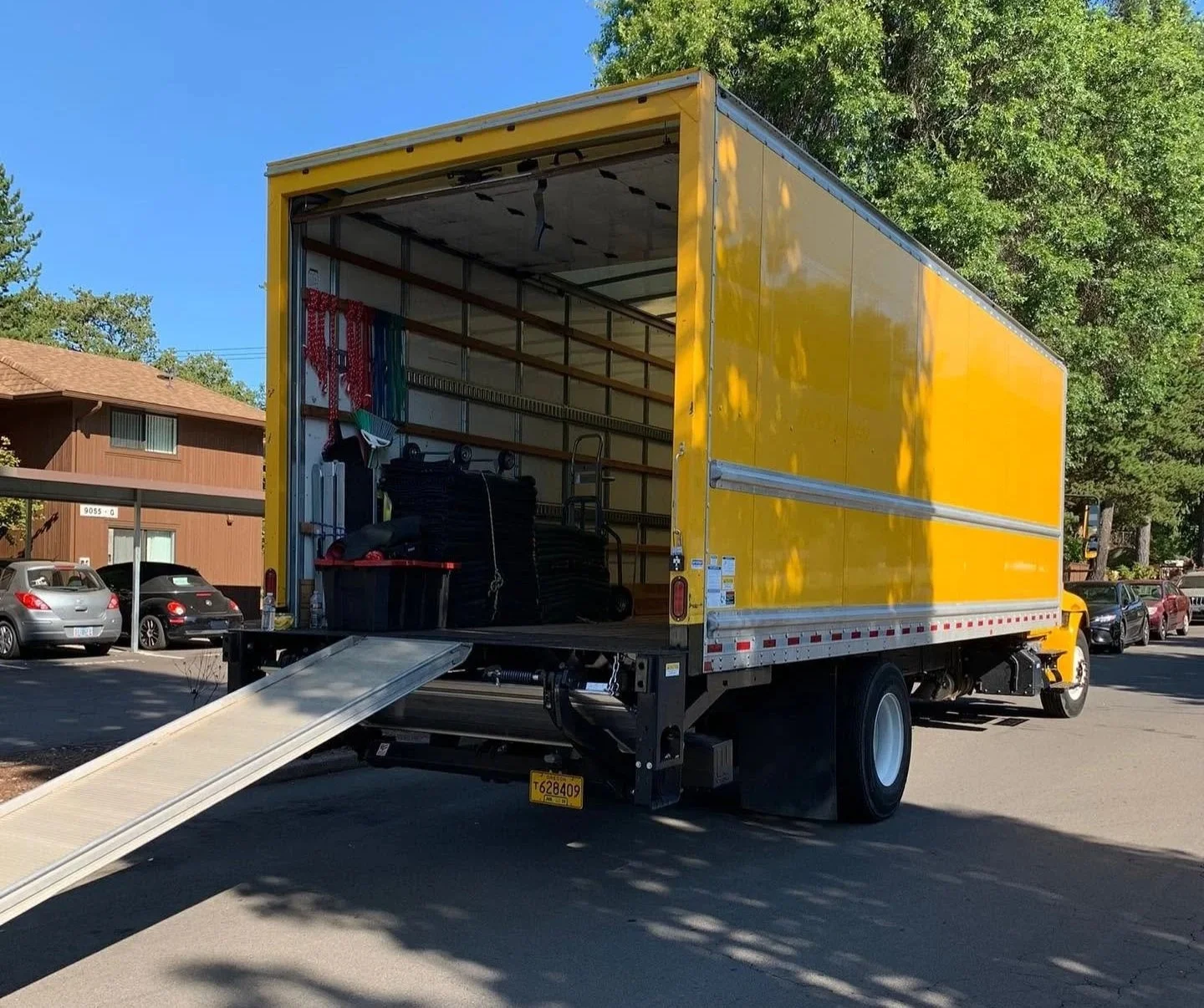
How a Butterfield Staging Project Runs
The logistics call
Listing address, source of the furniture, shoot date, stairs or elevator, occupied or vacant. Five minutes; full plan and number. Walk-throughs are free when the listing or the load warrants one.
Pickup: clean, padded, inventoried
Staging stock is your stager's business asset. It loads padded and wrapped, counted out of inventory, and rides tiered, the same protection a customer's heirlooms get, because that's the only standard we run.
Delivery and placement
Pieces land to the plan, room by room, wall by wall, and get repositioned until the stager or the realtor calls it. Floor protection down in listings with photo-finish flooring; nobody scuffs the product being sold.
Assembly and photo-ready check
Beds built, tables footed, shelving standing, packaging and tags swept out. The crew leaves a room the photographer can shoot, not a room that needs an hour of fixing.
De-stage on your close
Booked when escrow firms, executed after contingencies clear: wrap, load, and route, back to inventory, to the next listing, or to donation. The cycle closes on your calendar, not ours.
Staging Logistics Pricing: Published for the Whole Office
Realtors compare vendors; here's the comparison material in public:
price
Typical project pricing
Full staging round (pickup → delivery → placement → assembly): typically $1,500–$2,000
Smaller listings and partial stagings: often less; scoped on the call
Typical on-site time: 4–9 hours with a 2–3 mover crew
De-staging: quoted the same way, usually lighter than the stage-in
Standard Rate
The underlying hourly rates
2 movers + truck: $150.35 per hour
3 movers + truck: $206.75 per hour
4 movers + truck: $263.15 per hour
Each additional mover: $56.40 per hour
Overtime Rate
after 7 PM Monday–Saturday, and Sundays
2 movers: $195.20 per hour
3 movers, $273.40 per hour
4 movers, $351.60 per hour
Holiday rate (3-hour minimum): 2 movers $230.50 per hour · 3 movers $325.50 · 4 movers $420.50
invoice
What's never on a staging invoice
Deposits: none
Reschedule fees when escrow slides: none
'Design consultation' upsells: we're movers; design stays with your stager
Surprise line items: the number from the call is the structure on the bill
Standing weekly staging relationships get priced per route at the first sit-down. Bring your listing volume, and we'll build the cadence. For one-off projects, the math worth knowing: a typical staging round at our hourly rates lands well under the first price reduction it helps you avoid.
Our Reviews
Placement Is the Product: Here's Ours, Witnessed

Staging clients book on three proofs: placement precision, asset protection, and schedule reliability. The public review record covers all three:
-
'They were very patient and asked me where each piece of furniture should go. Everything was perfect, nothing was damaged.' Swap the homeowner for a stager with a floor plan, and that's a staging delivery, placement as a service, executed until the person with the plan says done. (Aaliyah, Google review)
-
Our staging work isn't theory; furniture staging is named in our repeat-business core, running on standing coordination with a Portland-area real-estate partner. Weekly cadence, recurring routes, the same crew standard every time. (Named reference available on request; we ask our partners before we put them on the internet.)
-
Close confirmed Tuesday; de-stage books Thursday morning. The crew arrives at the sold listing at 8, wraps and loads the staged pieces by 10:30, drops two retiring chairs at donation, and lands the rest back in the stager's inventory by noon, counted in, padded the whole ride. Rental clock stopped, stager restocked, next listing already asking about the sofa. That's the cycle this page exists to sell.
Butterfield Moving vs. larger regional movers
| Feature | Butterfield Moving | Larger Regional Movers |
|---|---|---|
| Staging as a service line | Standing weekly work, named on the site | An odd job between van loads |
| Scope honesty | Movers supporting your stager | 'Full-service staging' with no stager |
| Project pricing | Published: $1,500–$2,000 typical | Quote-form roulette |
| Escrow-date flexibility | Free rescheduling, no deposits | Change fees on every slide |
| Placement patience | Repositioned until the plan is met | One drop per piece |
| Assembly of staging stock | Included | 'We don't assemble' |
| Multi-stop routing | Inventory → listing → donation, one bill | Per-stop surcharges |
| Stager-inventory protection | Padded & wrapped like heirlooms | Rental stock, rental care |
| De-stage turnaround | Booked to your close, same week | Back of the queue |
| Seller-move handoff | Same crew, published rates | Separate sales funnel |
Staging Logistics in Greater Portland Has Market Physics
Westside listing velocity
When Washington County listings move fast, staging windows compress: stage Tuesday, shoot Wednesday, live Thursday. Our scheduling is built for that tempo, owner-dispatched, no committee between your call and a confirmed truck. When the market slows, the de-stage timing question gets bigger instead; either way, the calendar pressure lands on logistics, which is to say, on us.
Lake Oswego and West Linn: staging at estate scale
Luxury listings stage heavier, bigger sofas, real art, multiple living areas, and staircases that eat amateur crews. Estate staging runs on our large-home playbook: more pads, more hands when warranted, and placement that respects both the stager's plan and the seven-figure floors under it.
The photographer-day choreography
Listing photographers shoot on tight routes; a staging crew still hauling boxes at shoot time costs the slot. We schedule staging completion with a margin before the camera arrives, and when the stager wants final fluff time, we build that buffer in too. The photo is the finish line; everything we do is measured backward from it.
Vacant listings and the empty-house premium
Vacant homes photograph cold and sell slower, which is why vacant staging is the bread of this trade. Vacant also means nobody's home: access coordination runs through your office's protocols, the crew documents the condition on arrival, and the listing locks the way it was found. Boring professionalism, the kind vacant-property insurance likes.
Eight months of rain vs. white staging furniture
Staging stock skews pale, cream sofas, white linens, light rugs, and Oregon skews wet. Pieces travel padded and wrapped, stay wrapped to the threshold, and cross-floor protection into the listing. A rain-spotted sofa doesn't just cost cleaning; it costs the shoot date.
De-stage economics in a normal market
At typical staging-rental rates, every extra week a sold listing stays furnished burns real margin. The Thursday-after-close de-stage isn't a nicety; it's the cheapest money in the whole staging cycle. Standing clients book de-stages the day contingencies clear, by text.
The stager-warehouse triangle
Most staging routes run a triangle: the stager's warehouse or storage, the listing, and sometimes a second listing or donation stop. Multi-stop routing is native to how we work: one truck, one bill, counted at every vertex, and our liftgate truck handles the storage-unit legs with no dock.
What Professional Staging Logistics Actually Involves
Placement to plan: reading a stager's map
A staging plan is a sightline document, which shows what the camera sees from the door, which wall anchors the room, and where traffic flows. Our crews follow the plan first, then adjust to the stager's eye on-site, piece by piece, without the sighing that makes designers stop calling movers. Repositioning is part of the service, not a favor.
Counting in and out of inventory
Staging stock moves against a manifest: counted out of the warehouse, counted into the listing, reversed at de-stage. Lost-lamp disputes end before they start, and the stager's inventory system stays true. It's the same witnessed-count discipline we run on warehouse work, scaled to décor boxes. Stagers running their inventory on software get the counts in whatever format their system wants: photos, lists, or a signed manifest at the dock.
Scheduling against an escrow
Stage-in dates chase the shoot; de-stage dates chase the close; both slide. Our no-deposit, reschedule-on-notice model isn't generosity; it's the only honest way to serve a calendar that real estate itself can't pin down. Standing clients get the cadence version: text the new date, get a thumbs-up, done.
Assembly of staging inventory
Staging stock ships flat and lives hard: beds that build weekly, tables that travel footless, shelving that's been assembled forty times. Our furniture D&R discipline, bagged hardware, labeled parts, and photographed configurations keep a stager's inventory buildable for its whole working life instead of dying of stripped cam locks in year two.
Occupied-listing craft
Staging an occupied home is moving in miniature: personal items boxed and staged to the garage, bulky pieces to storage, the keepers repositioned to the plan, all while the sellers still live there. The crew works tidy, labels everything for the move-back, and treats the family's stuff like the paying cargo it eventually becomes when the listing sells.
COI and brokerage paperwork
Brokerages and vacant-property policies increasingly want proof of insurance before vendors enter a listing. Our COI lands usually within an hour, and our licensing. ODOT #275978, USDOT #3604556, is painted on the truck your clients will see in the driveway. The vendor-packet question, pre-answered.
Protecting someone else's business asset
A customer's sofa has sentimental value; a stager's sofa has revenue-per-listing value. Both ride padded and wrapped, pads against the fabric, film over the pads, vertical glass, strapped tiers. Pieces return to inventory rentable, which is the entire economics of the stager relationship.


Staging Questions, Answered Straight
-
No, and the listings are better for it. We're the licensed moving crew that executes staging logistics: pickup, delivery, placement, assembly, and de-staging. Design and inventory stay with your stager, where they belong.
-
No. The furniture comes from your stager's inventory or the seller's own pieces. What we bring is the truck, the pads, the placement patience, and the schedule that holds.
-
Typical full rounds run $1,500–$2,000; smaller listings are less. Underlying rates are published above, $150.35–$206.75 per hour by crew size, 3-hour minimum. One call scopes your listing exactly.
-
Usually, within the week, often faster, tell us the photographer's date, and we schedule backward from it. Standing clients book by text at whatever cadence their listings demand.
-
That's the design: book when escrow firms, execute after contingencies clear, typically same-week. Pieces route to inventory, the next listing, or donation on one bill.
-
Yes, beds, tables, shelving, and flat-pack stock, with the same bagged-hardware discipline we use on customer moves. The room is photo-ready before we leave.
-
Yes, decluttering muscle (boxed items to the garage or storage), furniture repositioning to the plan, and partial moves to our Hillsboro storage partner. The budget staging play, executed carefully around the people still living there.
-
Yes, multi-stop staging routes are normal: warehouse to listing A, de-stage listing B on the way home, and a donation drop between. One truck, one bill, counted at every stop.
-
Done. COI is usually within an hour, with licensing painted on the truck. Send your office's vendor requirements with the first call, and the paperwork beats the crew to the listing.
-
Yes, and that handoff is the best part of the relationship. Your seller gets a vetted crew at published residential rates; you get to be the agent whose vendor list actually works. Half our business is referrals for exactly this reason.
Put Your Staging Logistics on Rails
One call sets up the first listing; the first listing usually sets up the relationship. Pickup, placement, assembly, de-stage, and the seller's move at the end, one number for the whole cycle, with pricing that your whole office can read before anyone dials.