
How to Make a Stairs-and-Apartment Move Easier: Beat the Choke Points
Quick Answer: A stairs-and-apartment move is slower and riskier because it forces everything through choke points: stairs, a lift, tight hallways, and the distance from the truck to the door. Plan around each one ahead of time, protect the surfaces you have to touch, and use the correct two-person carrying technique on the steps.
Moving into or out of an apartment building is a different animal than moving into a single-family house. A house move is mostly a flat run: back the truck to the garage, roll a dolly across level ground, and walk items through a wide front door. An apartment building takes that flat run and folds it through a set of pinch points, and every one of them costs you time and adds a chance of getting hurt. The trick to making the whole thing easier is to find those pinch points before moving day and build your plan around them.
Why an Apartment Move Behaves Differently
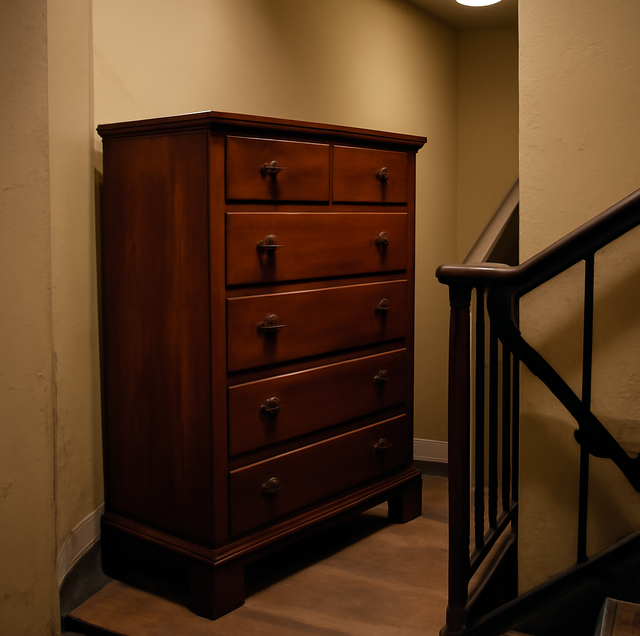
Think of a single item, a loaded dresser, traveling from the truck to the unit. In a house, that dresser meets almost no resistance. In an apartment building, the same dresser has to squeeze through one narrow opening after another, and the whole move can only move as fast as its slowest opening. That is the mechanism behind everything that follows: the building acts like a funnel, and a funnel is only as fast as its narrowest point.
The choke points fall into a handful of categories, and naming them is the first step to beating them:
- Stairs- Narrow flights, tight turns at the landings, and railings that eat into the usable width. Stairs are where the most serious injuries happen because gravity is now working against a heavy object with a person underneath it.
- The lift- A single car that everyone in the building shares, with its own weight limit, its own interior depth, and a door opening that a tall or long item may not clear.
- Hallways and doorways- Corners you must pivot around, doors that swing the wrong way, and thresholds that catch a dolly wheel.
- Parking and loading distance- The gap between where the truck can legally sit and the building entrance. When that gap is large, it becomes a "long carry," quietly doubling the length of every trip.
- Building rules- Reserved lift windows, required move-in hours, a certificate of insurance that the building wants on file, and protection requirements for shared spaces.
Measure the Path Before You Lift Anything
Before a single box gets carried, walk the route the movers will actually take and measure it. Take a tape measure to the stairwell and note the width at the tightest turn, not the widest straight run. Measure the lift car's interior depth and the height and width of its door opening. Measure the front door of the unit and any interior doorway that a large piece has to pass through.
Then measure your biggest and most awkward items against those numbers: the sofa, the mattress and box spring, the refrigerator, the tall dresser or armoire. If a couch is longer than the lift car is deep, you already know it is going up the stairs or standing on its end, and you can plan for that instead of discovering it while three people are wedged in a hallway.
This is also when disassembly pays off. Take the legs off tables, break bed frames down to rails and slats, pull drawers out of dressers, and remove shelves from bookcases. A piece that comes apart into two flat halves clears a stairwell turn that the assembled piece never could, and it weighs less per trip.
Protect the Surfaces You Cannot Avoid
Because every item touches the same handful of surfaces on the way through, protecting those surfaces once protects them for the whole move. Lay floor runners or moving blankets down the hallway and across the stair treads to prevent wheels and feet from grinding grit into the finish. Pad the railings and the lift interior. Slip corner guards or a folded blanket around door frames at the choke points. Prop doors open with proper stops so nobody is fighting a swinging door with full hands.
Protection is not just courtesy. Many buildings inspect the common areas after a move, and a scuffed lift wall or a gouged stair tread becomes your problem. Protecting up front is far cheaper in time and hassle than explaining a scrape afterward.
Reserve the Lift and Claim the Close Spot
Two reservations decide how smoothly the day runs. First, book the lift for a block of time if the building allows it, so you are not waiting on neighbors between every load. Second, claim the closest legal loading spot to the entrance you can get. Cutting the walk from the truck to the door by even thirty feet saves that distance on every single trip, and over a full move, that adds up to a real chunk of the day.
Load the Truck So the Move Runs in Order
Loading is where a little planning removes a lot of walking. The rule of thumb is that the first items you will need off at the destination should go on the truck last, so they come off first. Group items by which room they land in and keep a clear path down the middle of the load for the dolly. At an apartment, you are making many trips through one door or one lift, so a truck that unloads in the right sequence keeps the lift tied up for less total time and cuts the number of trips people make empty-handed.
Technique on the Stairs Is Where Safety Lives
Stairs are the single most dangerous part of an apartment move, so the technique here matters more than anywhere else. The failure modes are specific: a fall on the steps, a back strain or crush injury from a heavy load, and a tip where a tall item gets away and topples.
A few rules keep those from happening:
- Two people, high side and low side- One person is above the item on the stairs, one below. The person on the downhill side carries the low end and sets the pace; the uphill person guides and carries more of the weight because the item is angled toward them.
- Go slow and communicate- Call every step out loud. The pace is set by the low-side carrier going down, and nobody moves until both people are ready.
- Use straps and the right dolly- Lifting straps let two people share a heavy load through the legs instead of the lower back. A stair-climbing dolly with rear wheels or tracks designed to ratchet down one step at a time turns a carry into a controlled roll.
- Keep the spotter clear of the fall line- If someone spots the load, they stand to the side, never directly below a load that could come down on them. A spotter under a falling object cannot stop it and only adds a person to the injury.
If an item is heavy enough that either carrier is straining, that is the signal to add a third set of hands or stop and reset, not to push through. There is no piece of furniture worth a back injury on a stairwell.
Three Different Moves, Three Different Plans
It helps to treat the building's choke points as three distinct jobs, because each one calls for its own approach:
- The stairs carry is the two-person, high-side/low-side job above, run slowly with a spotter clear of the fall line and a dolly built for steps.
- The lift move is a reservation-and-measurement job. If the item fits in the car and you have booked the lift, it is far safer than using the stairwell for anything heavy. Measure first, load in order, and keep your time slot tight.
- The long carry is a distance-and-parking job. The fix is to claim the closest legal spot and use wheels for as much of the flat run as possible, since the problem here is total steps walked, not any single obstacle.
Sort your inventory into those three buckets ahead of time, and the day stops feeling like one giant obstacle and starts feeling like three manageable ones.
Frequently Asked Questions
Ask building management for lift pads and the quilted blankets that hang inside the car, and confirm the truck's height against any garage or loading dock clearance. A box truck that will not fit under a parking structure changes where you can even stage the load, so that one measurement can move your whole staging point out to the street. Reserving the lift window and obtaining a certificate of insurance for the movers, when the building requests one, is the other half of the pre-move paperwork.
The uphill carrier stays a full step behind the load and keeps their knees bent, so the piece never gets ahead of them and pins them against the rail. Both people reset their grip at each landing rather than mid-flight, because a landing is the only spot flat enough to let go and swap hands safely. Between landings, nobody changes grip, and nobody moves until both carriers say they are set.
Tape ram board or Masonite over the floors rather than trusting a loose blanket, because a blanket slides underfoot and a loaded dolly wheel cuts straight through it. Save the moving blankets for padding the railings and the lift walls, where the risk is a hard impact rather than the abrasion a floor takes. Prop doors with real stops so nobody is scraping a frame while wrestling a swinging door with full hands.
A long carry is the stretch between where the truck can legally sit and the building door, and on a bad one, a relay beats having everyone walk the full distance. One crew shuttles items to a staging point near the entrance, while another carries them the rest of the way inside, so no single person walks the entire run on every trip. Save the closest legal spot for the heaviest pieces, since those are the ones you least want to carry any farther than you must.
Use the lift if the item fits and you have reserved it, because it is far safer than a stairwell for anything heavy. But measure first: a tall dresser or a long couch may exceed the car's depth or the door opening, and in that case, the stairs or standing the piece on its end becomes the only route. Knowing which items fit before the day starts saves a jammed lift later.
Load the heaviest, lowest items against the front wall of the box, then tier the rest by weight, working toward the door, and strap each tier to the truck's load bar or E-track. An apartment move is stop-and-go, pulling up to one door after another, so an unstrapped tier shifts and leans every time you brake. A load that stays locked in place also unloads in a predictable order, which is what keeps the lift tied up for less total time.
Book your apartment or stairs move with a crew that plans the choke points first — fewer trips, no damage, no strained backs. Butterfield Moving LLC serves Hillsboro, Beaverton, Portland. Call (503) 867-2414.
