
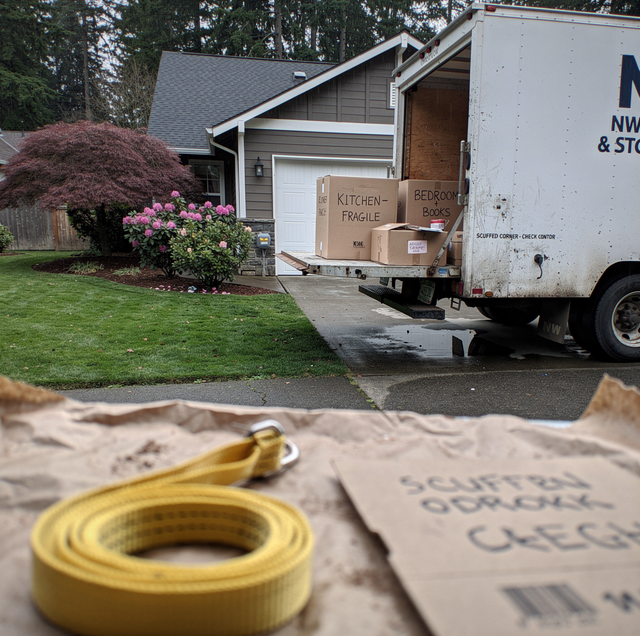
Everything you own leaves the old address as a single shipment, and it has to arrive at the new address as the same shipment, item for item. An inventory is what makes that promise checkable. It gives you a way to check the boxes and furniture that reach the new address against the list you started with, describe an item's condition before anyone lifts it, and point to something specific if a piece turns up damaged or is missing entirely. Each of those depends on someone writing it down first. What's worth recording changes by category, from the serial number on a router to a photographed dent in a dresser, and it's worth sorting out before a single box is taped shut.
| Item Type | What to Record |
|---|---|
| High-value items (jewelry, small electronics, collectibles) | identifying marks, an estimated value, and whether it's riding the truck or with you |
| Electronics (TVs, computers, routers) | model and serial numbers, current condition, and which accessories and cables belong with it |
| Furniture with existing damage | a written note plus a dated photo of the exact spot |
| Boxes by room | a box number, the destination room, and a short contents note |
| Items going into storage | a flag on the list noting they won't arrive at delivery, plus the date they're expected back |
Choosing a Format You'll Keep Updated
A spreadsheet, a running note on your phone, a numbered legal pad, or a folder of dated photos can all work as an inventory, as long as you keep it current, box by box, instead of trying to reconstruct it later. Pick whichever one you'll open again the same day you seal each box, since a list built from memory the night before the move can leave out whatever got packed early and forgotten.
Keep a second copy somewhere other than only your phone: a printed page, an email draft, or a shared document. A dead battery or a charger that got packed by mistake shouldn't be the one thing standing between you and your own record. If more than one person is packing, decide up front who owns the master copy so entries don't end up split across two notebooks or two phones that don't get compared with each other.
How you word the label on the outside of each box is a separate decision, covered by whatever labeling system you're using; what matters here is that whatever goes on the box also gets a matching line on the list. A contents note doesn't need to be an inventory of every item, just enough detail, two or three words, to tell one box apart from another with the same room and a similar shape.
Photographing Condition Before It's Packed
Before anything gets wrapped, photograph furniture, rugs, and electronics from multiple angles: an existing scratch, a worn armrest, a dented corner, a hairline crack in the veneer. Phone cameras timestamp photos automatically, so keep them in the same folder or album as the written list rather than scattered across a week of random shots.
Upholstered pieces and rugs need the same treatment as hard furniture, even though damage there is easy to overlook. A stain, a pulled thread, or a worn patch on a rug's edge is worth its own photo before it's rolled and wrapped, since a wrapped rug looks identical to every other wrapped rug once it's on the truck.
Include the underside and the legs of each piece in its photos, along with any spot with existing wear. A single front-facing shot won't show a mark on the back or base if one turns up damaged later.
This step is what turns "it was already like that" into something you can show. A dated photo taken before the truck is loaded records the condition at that moment; a description written afterward is one memory against another.
Numbering Boxes and Matching Them to the List
Every box gets a unique number, written on the box and matched to a line on the list that notes the room and a short contents description. That number is what gets checked off, one at a time, as boxes come off the truck; a number skipped in the count is the first thing to chase down, whether that box stayed behind or was merged into another. Anything going into storage instead of coming to the new address gets the same treatment on the list, just flagged, so it isn't mistaken for something missing on delivery day.
Keep the numbering sequence unbroken across the whole move rather than restarting it room by room. A single running count is what lets you say, at the end, that the number of boxes unloaded matches the number that left, without doing separate math for the kitchen and the garage.
What the Moving Crew's Own Inventory Records and How the Two Line Up
Some crews keep their own inventory at pickup, tagging furniture pieces with a number and a short condition note as each one is carried out the door. That sheet exists to track furniture piece by piece and record its condition when it left your hands, which is useful if a piece needs to be checked against how it looked before the truck pulled away.
Your list and the crew's sheet are not the same record and are not meant to replace each other. Yours tracks contents, box by box. Theirs tracks furniture, piece by piece, with its own numbering. At delivery, checking your box count and the crew's piece count against what comes off the truck catches more than relying on either one alone. Ask ahead of moving day whether the crew you've booked keeps this kind of record, so you know what pickup will look like and can plan your own list around it rather than duplicating it.
Checking the List at Delivery
Check off each number as it comes off the truck and is set down, rather than waiting until everything is inside and trying to reconstruct the count from memory. If a number isn't accounted for by the time the truck is empty, say so while the crew is still in the driveway; a gap noticed on the spot is easier to trace than one you notice a week later while unpacking a closet, since the crew is still there to say where a box was last seen.
Do the same with condition. Compare the photos taken before the move to how each piece looks now, in the same afternoon, while both are fresh. Add anything you find, whether it's a box that didn't make the trip or a scuff that wasn't there before, to the same list rather than starting a second one, so there is only ever one record to check against.
If the crew has already left by the time you spot a problem, the same list still does its job. Note the number, the room it belongs to, and what's wrong while the delivery is still fresh in your mind, then contact the crew with the specific detail rather than a general complaint about missing boxes. A number and a room name give them something to check against their own paperwork; a vague description doesn't.
Frequently Asked Questions
Give each person a separate block of numbers before either one starts, for example one takes 1 through 40 for the kitchen and garage while the other takes 41 through 80 for the bedrooms. That keeps two boxes from ever landing on the same number on the master list.
Keep them on their own separate list entirely, since they aren't part of the shipment leaving your old address that day. Putting them on it instead folds a second shipment into the truck count, so the tally at delivery no longer matches what left the house.
Ask the crew lead to note the new number on their own tag sheet when this happens. A repacked box that keeps only one of its two original numbers will otherwise show up as a box missing from your list, when it was merged rather than lost.
A claim is easier to support with three things next to the item: a description, an estimated value, and a condition note or photo from before the move. The paperwork your mover hands you sets what a claim must include and the window for filing it; a list with only a box number and a room name gives a claim little to stand on.
Add it with the date and give it the next unused number instead of squeezing it onto an existing line, so the running count still matches the boxes on the truck.
Mark that box number on the list as crushed before opening it, then unwrap and check every item inside the same afternoon. Damage inside a crushed box may not appear until items are unwrapped, and the note ties any findings back to that number.
Include packing in your moving booking — the crew packs each room with the materials its contents need and unpacks at the new address. Butterfield Moving LLC serves Hillsboro, Beaverton, and Portland. Call (503) 867-2414.