Piano Moving in Hillsboro & Greater Portland: Quoted Straight, Moved Right
Family-Owned & Operated | ODOT #275978 · USDOT #3604556 | Quoted Per Piano, Per Path | Google 4.8★ Rated | Open 7 AM–10 PM, Every Day
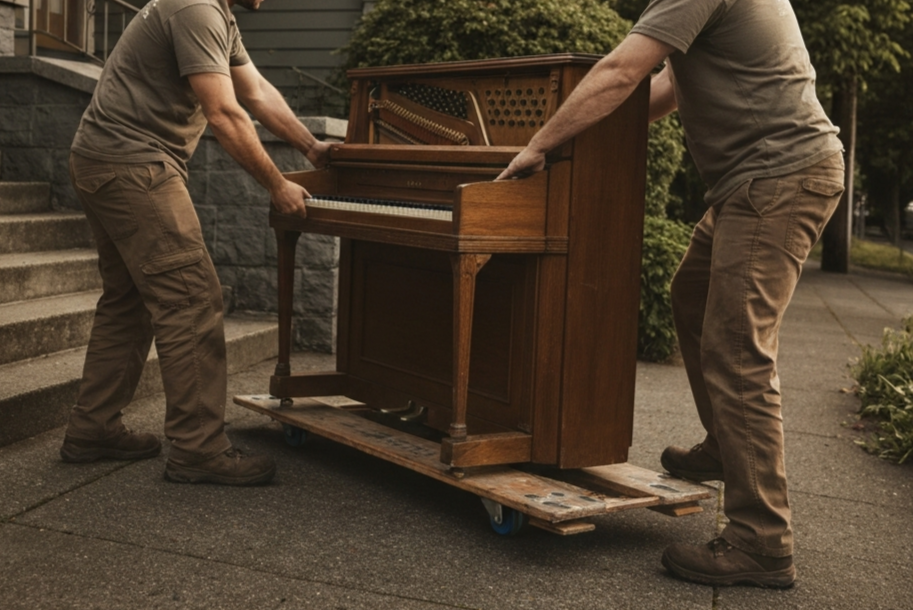
Let's start where most piano pages won't: we're a moving company that moves pianos well, not a piano company that does nothing else. We carry the right equipment, piano board, skid dollies, straps, and crews trained to use them, and we move uprights, consoles, and spinets across Hillsboro, Beaverton, Portland, and Greater Portland regularly, most often as the heavyweight centerpiece of a household move.
What we don't do is pretend. Concert grands and crane-or-hoist jobs belong with dedicated piano-rigging specialists, and we'll tell you so on the phone, free. Baby grands get a case-by-case answer after we hear the piano and the path. And pricing? Every piano-move quote is built per piece, the instrument, the stairs, the distance, because a flat teaser rate for 'piano moving' is how 600 pounds of family history gets handled by whoever was cheapest.
Tell Patrick what you have and where it's going. You'll get the honest answer in one call, including when it's somebody else's number.
Real Equipment, Trained Hands
Piano board, skid dollies, straps, and a crew that's done this before, not improvised muscle around a borrowed dolly.
Quoted Per Piano, Per Path
The instrument, the stairs, the distance, your quote prices your actual job, before anything moves.
Honest Limits, Stated Plainly
No concert grands, no crane or hoist work, those need piano-rigging specialists, and we'll say so for free.
Strongest Inside a Move
Most of our piano work rides inside household moves, one crew, one plan, the piano handled as the centerpiece it is.
The Same Crew Standard
The patience and care our reviews describe on heirloom furniture is the same standard that touches your piano.
Patrick Quotes Every Piano
Describe the piano and the path, 7 AM–10 PM, any day. Straight answer, every time.
Three Decisions That Decide Whether Your Piano Survives Its Move
Match the mover to the piano: honestly
Piano moving is a spectrum, and pretending otherwise hurts pianos. An upright down a straight hallway is skilled moving-company work, ours. A baby grand with a tight stairwell turn is a judgment call we'll make with you after hearing the details. A concert grand, a hoist over a balcony, a crane lift through a window: that's piano-rigging specialty work, full stop, and any general mover who says yes to it is gambling with your instrument. We sort your job into the right lane on the first call, even when the right lane isn't ours.
Decision 1
Quote the piece, not the category
A flat-rate 'piano moving special' ad can't know whether your piano is a 350-pound spinet or a 900-pound upright grand, on the ground floor or up a split-level, going across town or across the county. Ours gets built per piece: piano type and approximate age, both paths walked verbally (photos help), stairs counted, distance mapped. The number you get is for your piano and your doors, which is why it's the number you pay.
Decision 2
Move it with the house when you can
The most economical piano move is the one within your household; the crew, truck, and equipment are already on the job, and the piano is planned as the day's centerpiece rather than a standalone dispatch. If the piano is the whole job, we quote that honestly too, but if a move is anywhere on your horizon, tell us about the piano on that call first.
Decision 3

Pianos We Move: and the Line We Won't Blur
-
• Upright pianos: full uprights, studios, consoles, spinets
• Digital pianos and keyboards with weighted cabinets
• Pianos inside household moves: our most common piano job
• Estate and downsizing piano relocations
• Family handoffs: the piano going to a daughter in Tigard
• Donation deliveries to schools, churches, and community rooms
-
• Baby grands: depend on the piano, the paths, and the stairs at both ends
• Tight-access uprights: split-level turns, narrow basement stairs
• Long-distance piano moves within Oregon: quoted with the route
-
• Concert grands and full grands requiring specialist handling
• Crane, hoist, or window-removal lifts
• Pipe organs
• Pianos requiring climate-controlled transport: a specialist trade we won't fake
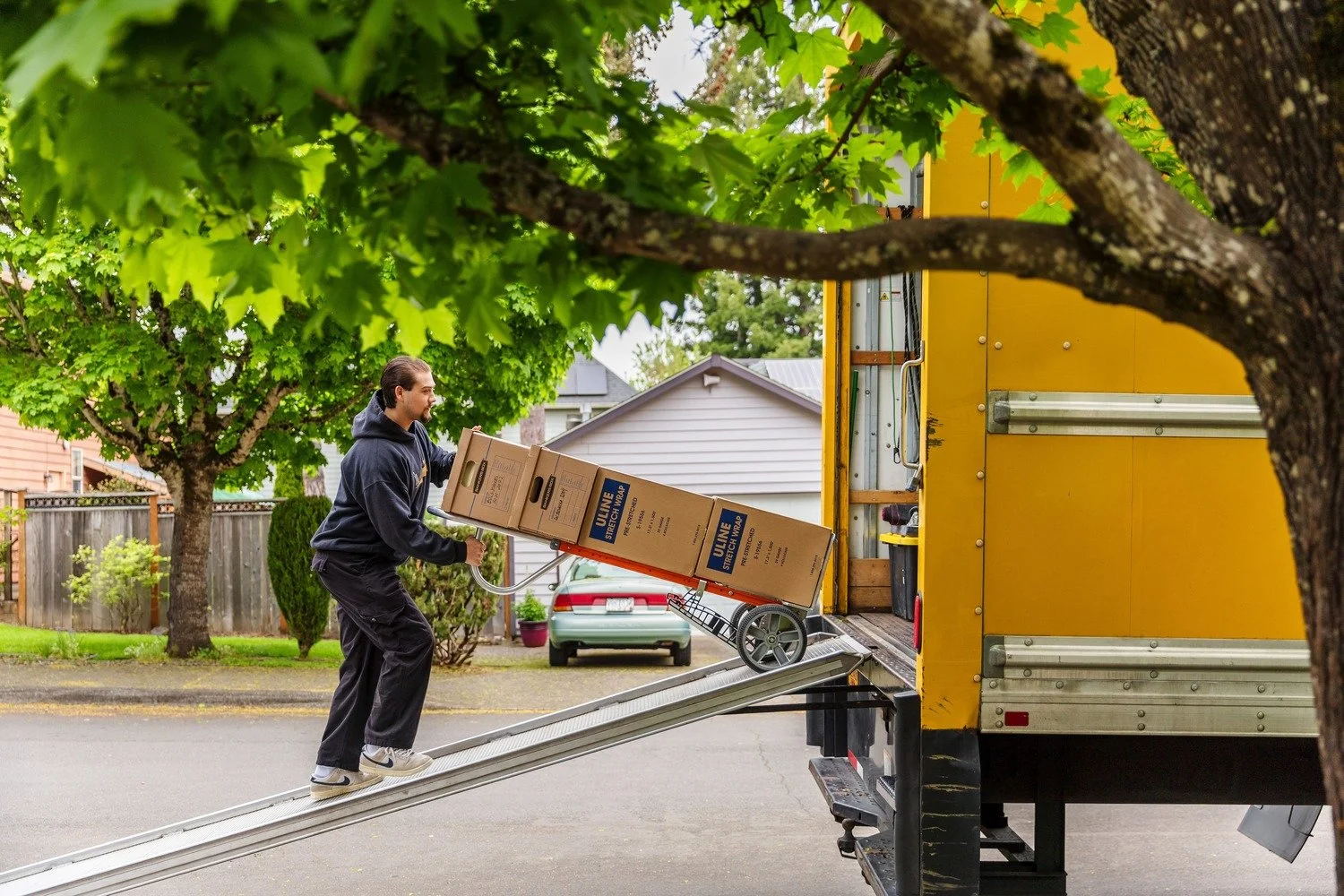
How a Butterfield Piano Move Runs
The piano call
Type, age, and condition of the piano; the path at both ends, stairs, turns, door widths; the distance between. Photos of the piano and the tricky spots help the quote land exactly. Five minutes, straight answer: yes with a number, case-by-case with questions, or an honest referral.
The per-piece quote
Your quote prices your actual job. Piano inside a household move? It's planned into the move's estimate as the centerpiece. Piano-only? Quoted standalone, honestly.
Prep: the piano gets dressed
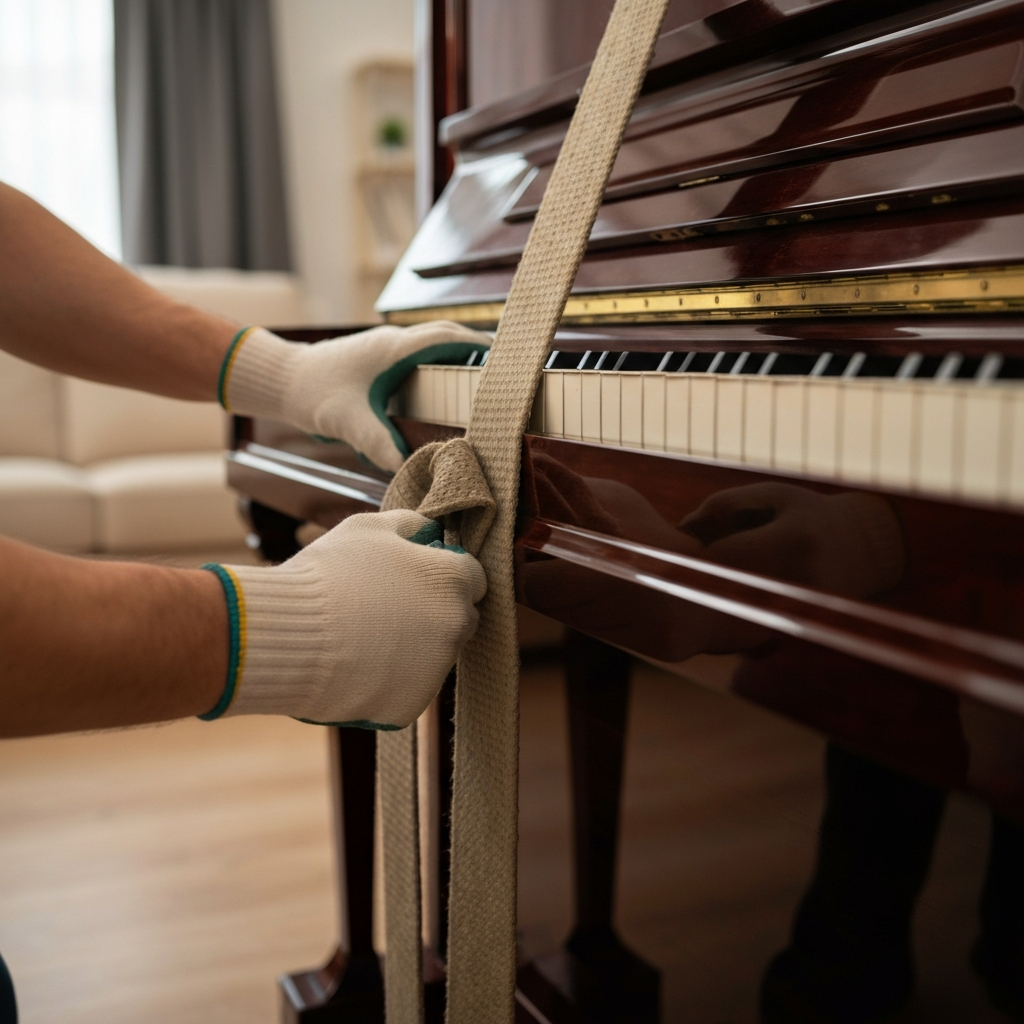
Lid closed and secured, pedals and corners padded, the whole case wrapped in padded blankets with film over the pads, the same layered method our specialty page documents, sized for the heaviest piece of furniture most homes own.
Board, skid, and the careful geometry
The piano rides a piano board, strapped onto skid dollies, weight-controlled at every transition. Stairs get the slow version: crew positioned high and low, moves called out loud, nobody's pride steering 600 pounds.
Loading: anchored like it matters
Pianos load against the truck's front wall, strapped to the rail, padded on every face, with the load plan built around them. Nothing leans on a piano; a piano leans on nothing.
Placement, and the tuning truth
At the destination, the piano lands where it will live, walls, windows, and heat vents considered, and we'll tell you the truth every pianist knows: any moved piano wants tuning after it settles, a few weeks in. Budget the tuner; thank us later.
Piano Pricing: Why There's No Price List Here
We publish our hourly moving rates on every page of this site, so an unpublished price list here means something specific, and it's worth thirty seconds to explain:
piano
Every piano quote is built, not listed
The honest cost of a piano move lives in variables no price list can hold: the piano's type and true weight, stairs and turns at both ends, the carry distances, and the miles between. Two 'upright piano moves' can differ by half a day of careful work. So we quote per piece, per path, free, in one call, with photos welcome.
quote includes
What the quote includes, always
The padded-and-wrapped prep, the board, the skid, the straps, the crew
Both paths planned, stairs included: no surprise 'stair fees' appearing later
Anchored loading and placement at the destination
The same no-deposit booking and reschedule-with-notice flexibility as every Butterfield job
move
Inside a move vs. piano-only
A piano inside your household move is usually the better economics, the crew and truck are already yours for the day. Piano-only jobs quote standalone. Both start with the same call.
Our Reviews
The Standard Your Piano Inherits
Piano customers are really asking one question: how does this crew behave around the heaviest, most-loved thing I own? The public record answers it:
-
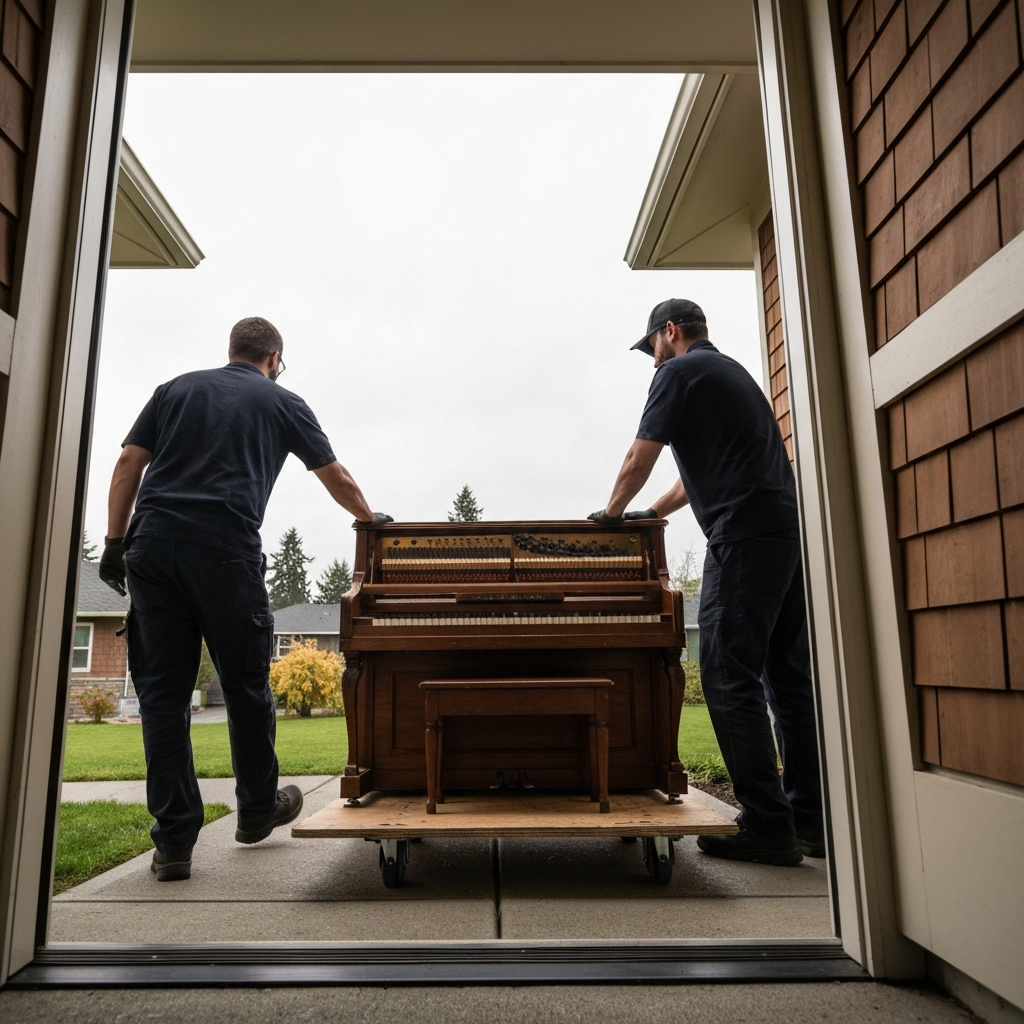
'Butterfield moving delivered a large item to my house without any struggles, despite tight corners and narrow stairs. They were on time and gave me text updates on their ETA. They are a team of true professionals.' That geometry, oversized piece, hostile staircase, zero drama, is the piano job's exact shape. (Brent S., Google review, also cited on our large-home page; the heavy-piece evidence pool is one record, honestly shared.)
-
A typical run, so you can picture yours: the call names a 1970s console, ground floor to a split-level's main level, eight miles. Photos confirm one four-step porch and a wide door. The quote lands that afternoon. On the day: twenty minutes of prep and wrap, the board and skid through the porch geometry, anchored against the front wall for the drive, placed on the new living-room wall away from the heat vent by lunch. The tuner visits in three weeks. That's the whole story, and the boring middle is the product.
-
When a caller describes a six-foot grand and a second-story window, our answer is a piano rigger's phone number and an honest 'that's their trade, not ours.' It costs us a job and buys something better: every yes we give on this page means exactly what it says. The customers who got our no come back with their household moves, which, candidly, is the business we'd rather earn anyway.

Butterfield Moving vs. 'piano special' movers
| Feature | Butterfield Moving | 'Piano Special' Movers |
|---|---|---|
| Quote model | Per piano, per path, free | Flat teaser + day-of 'adjustments' |
| Equipment | Board, skid dollies, straps, owned | Whatever's in the truck |
| Concert grands | Honest no + specialist referral | 'Sure!' (your piano, their first) |
| Stairs | Counted in the quote | Surcharge surprise on arrival |
| Piano inside a move | Planned as the centerpiece | Afterthought at hour six |
| Wrap standard | Padded + filmed, layered method | A blanket and optimism |
| Load position | Front wall, strapped to rail | Wherever it fits |
| Tuning honesty | 'It'll need tuning' said up front | Silence |
| Who prices your piano | Patrick (owner) | A lead-gen call center |
| Deposit | None | Card-on-file 'specials' |
Moving Pianos in Greater Portland Is a Local Skill
The family-upright belt
The Westside's piano population is mostly uprights and consoles, lesson pianos, inherited pianos, and the console that's anchored a living room since the kids were small. That's good news: it's exactly the piano our equipment and crews handle best, usually inside the household move that's relocating the rest of the family too.
Split-levels and the half-flight problem
The Westside's split-level stock puts living rooms a half-flight from every door, short stairs, tight turns, and a landing that wants the piano pivoted mid-carry. It's the most common piano-path challenge we see, and the reason the quote call asks about your entry in detail.
Heat, honestly handled
Our cargo boxes aren't climate-controlled, and pianos genuinely sensitive to a hot afternoon (high-value instruments, long summer routes) deserve either a morning slot or a specialist's climate truck. We'll tell you which on the call; the honest answer about our truck is part of the service.
Old Portland staircases vs. 600 pounds
Portland's century homes put pianos up narrow staircases with winder turns and low landings, geometry that demands slow technique and sometimes an honest 'measure first' callback. We'd rather send you a tape-measure question than send your banister a repair bill.
Rain and the instrument that hates it
A piano's finish, strings, and soundboard all resent water. October through May, pianos cross thresholds fully wrapped, the path gets runners, and the truck gap gets managed tight, the same rain discipline as everything we move, with less forgiveness for error.
Where pianos go next
Half of piano moving is succession: to the grandkids in Tualatin, to the church basement, to the school music room. Donation and family-handoff deliveries are normal work, often as a stop inside a bigger move, and the piano arrives wrapped and placed, not dropped and dared.
After the move: the settling truth
New room, new humidity, new soundboard mood, every moved piano drifts out of tune as it settles. Plan a tuning two to four weeks after the move. We say it on every piano job because it's true, and because the mover who tells you about the tuner is the mover who didn't bump the action on the stairs.
What Careful Piano Moving Actually Involves
Why pianos humble strong crews
A piano is the worst combination in moving: extreme weight, top-heavy balance, a finish that marks if you breathe on it, and insides that keep score. Six hundred pounds that wants to tip and can't be grabbed by most of its surfaces is a technique problem, not a strength problem, which is why piano work goes to crews trained on the board and the skid, never to whoever's biggest.
The stair protocol
Stairs get walked before the piano arrives at them: rise, turn, landing, handhold options, where each crew member stands. The carry runs slow, called out loud, crew high and low, the board taking the load at every step edge. When the measurements argue with the piano, we stop and say so; there's no version of forcing a piano that ends well.
The settling science, briefly
Pianos hold tension, strings pulling against a soundboard that responds to every humidity change. Moving day shakes nothing loose in a well-handled move, but the new room's air will retune the instrument over weeks regardless. Tuning at two to four weeks lets the piano finish arguing with its new climate first. That's not upsell; it's physics, and your tuner will say the same.
The piano board, explained
The board is the piano's exoskeleton: the instrument straps to it keyboard-side protected, weight spread along its length, and from that moment the crew moves the board, not the piano. On stairs, the board is the difference between a controlled slide and a prayer; on the skid dollies, it's the difference between rolling and wrestling.
Anchoring 600 pounds in a moving truck
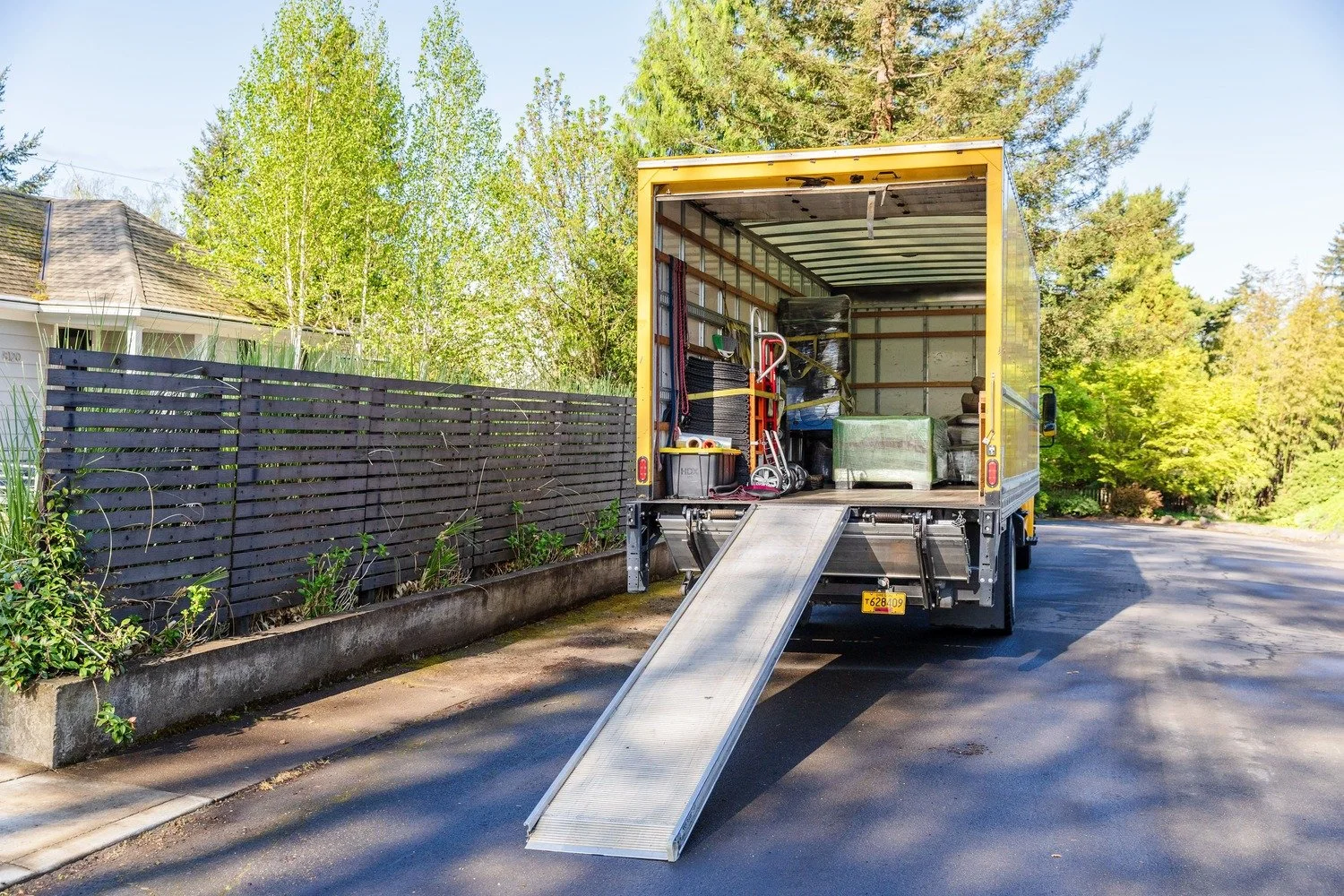
Pianos load first, front wall, strapped to the rail, padded on every face, and the rest of the load plan respects them: nothing stacked against the case, nothing able to shift into it on Highway 26's curves. A piano damaged in transit was loaded incorrectly an hour earlier; the anchoring is the issue.
Upright vs. grand: two different physics problems
Uprights carry their weight high and tip easily; they move vertically, strapped, and balance managed at every transition. Grands carry their weight in a horizontal harp: legs and lyre come off, the case tips onto the board on its straight side, and everything travels padded and labeled. The second is a bigger judgment call in tight spaces, which is exactly why baby grands get a case-by-case answer here instead of a checkbox.
Coverage math on an instrument
Released-value coverage. Oregon's $0.60-per-pound default values a 600-pound upright at $360, which is not a number any piano owner accepts on purpose. The replacement-cost conversation is mandatory on piano jobs here, before booking. And if something is damaged on our watch, we will submit a claim upon request.


Piano Questions, Answered Straight
-
Yes, uprights, consoles, and spinets regularly, with real equipment and trained crews. Baby grands case-by-case after we hear the details. Concert grands and hoist work, honestly, no, those get a specialist referral, free.
-
Quoted per piano, per path, type, stairs, and distance, in one free call. We publish hourly rates site-wide, so an unpublished list here is deliberate: piano moves vary too much for honest flat pricing, and dishonest flat pricing is the industry's favorite trick.
-
Because doing it right requires dedicated piano-rigging equipment and crews who do nothing else, and your instrument deserves that, not a general crew's best attempt. We'll point you to the right trade and feel good about it.
-
That's the best version, the crew and truck are already on the job, and the piano gets planned as the centerpiece. Name it on your moving estimate call, and it's built into the day.
-
Describe it, rise, turns, landings, and send photos if you can. Most stairs work with the board and the slow protocol; the ones that don't get an honest 'measure first' answer instead of a damaged banister.
-
Yes, every moved piano does, once it settles into its new room's humidity. Book your tuner for two to four weeks after the move. A mover who doesn't mention this is hoping you won't connect the dots later.
-
Digital pianos and weighted keyboards, easily. They are furniture-grade jobs. Pipe organs, no: that's specialist disassembly work and an honest referral.
-
Yes, donation runs and family handoffs are regular piano work, often as a stop inside a larger move. Same wrap, same board, same care at the receiving end.
-
Close and latch the lid, clear the top, pull anything stored inside the bench, and locate the key if it locks. Leave the rest, the wrapping, the board, and the geometry, to the crew.
-
Default coverage is Oregon's released-value rate, $0.60 per pound, brutal math on a piano, so the replacement-cost protection conversation happens on every piano quote, before booking. If something is damaged on our watch, we will submit a claim upon request.
One Call, One Honest Answer About Your Piano
Describe the piano. Describe the path. Patrick will tell you what it takes, what it costs, and, on the rare job that needs a rigging specialist, exactly who should do it instead. Around here, even the no is worth the call.