Warehouse Moving in Hillsboro & Greater Portland: Inventory That Arrives Sellable
Family-Owned & Operated | ODOT #275978 · USDOT #3604556 | Published Rates: Evenings & Weekends Available | Google 4.8★ Rated | Open 7 AM–10 PM, Every Day
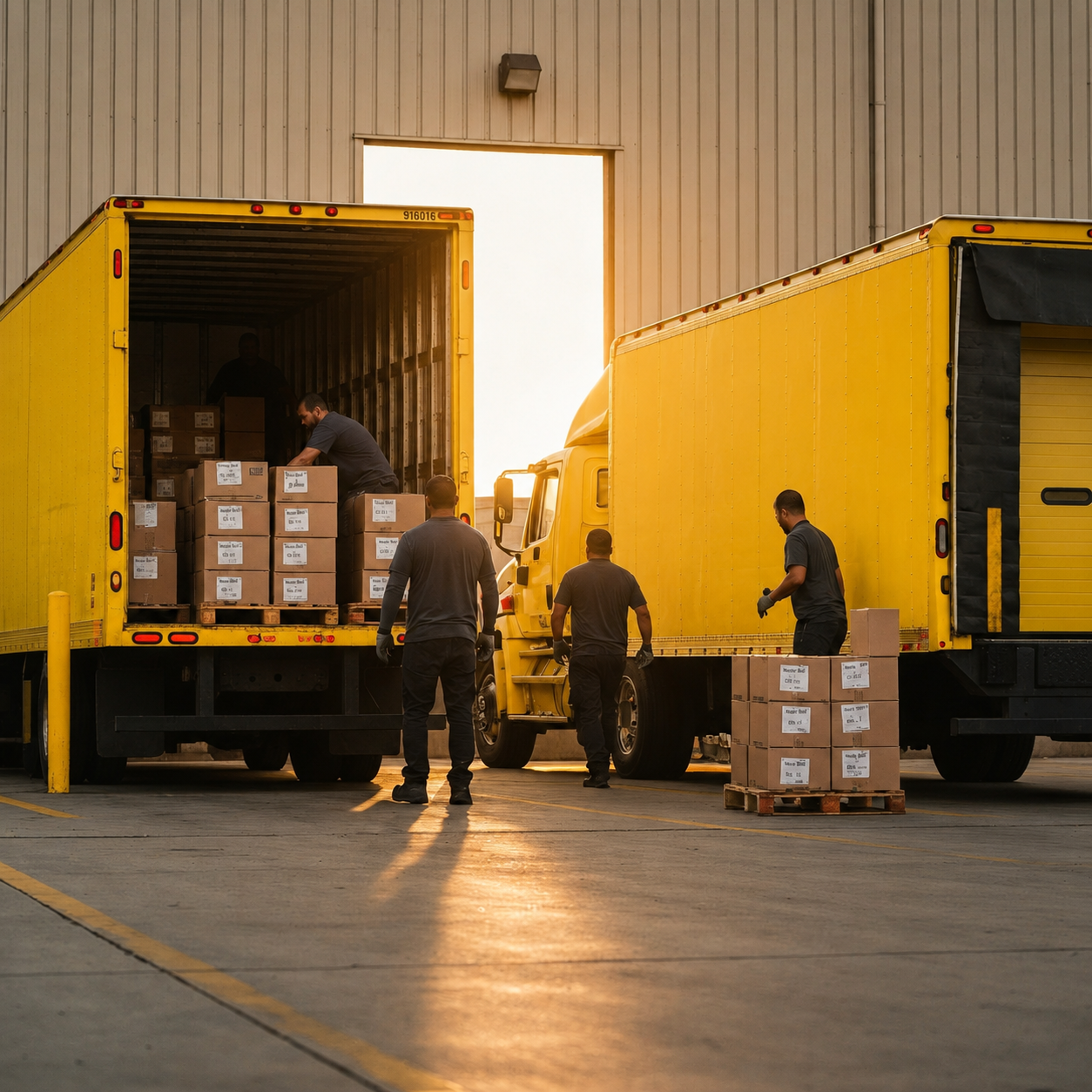
Warehouse moves are inventory moves, and inventory that arrives disorganized, dinged, or miscounted costs more than the truck ever did. Butterfield Moving runs warehouse and stockroom transfers across Hillsboro, Beaverton, Portland, and Greater Portland with the discipline the goods deserve: loaded in organized tiers, counted on and counted off, and delivered ready to put away, not ready to re-sort.
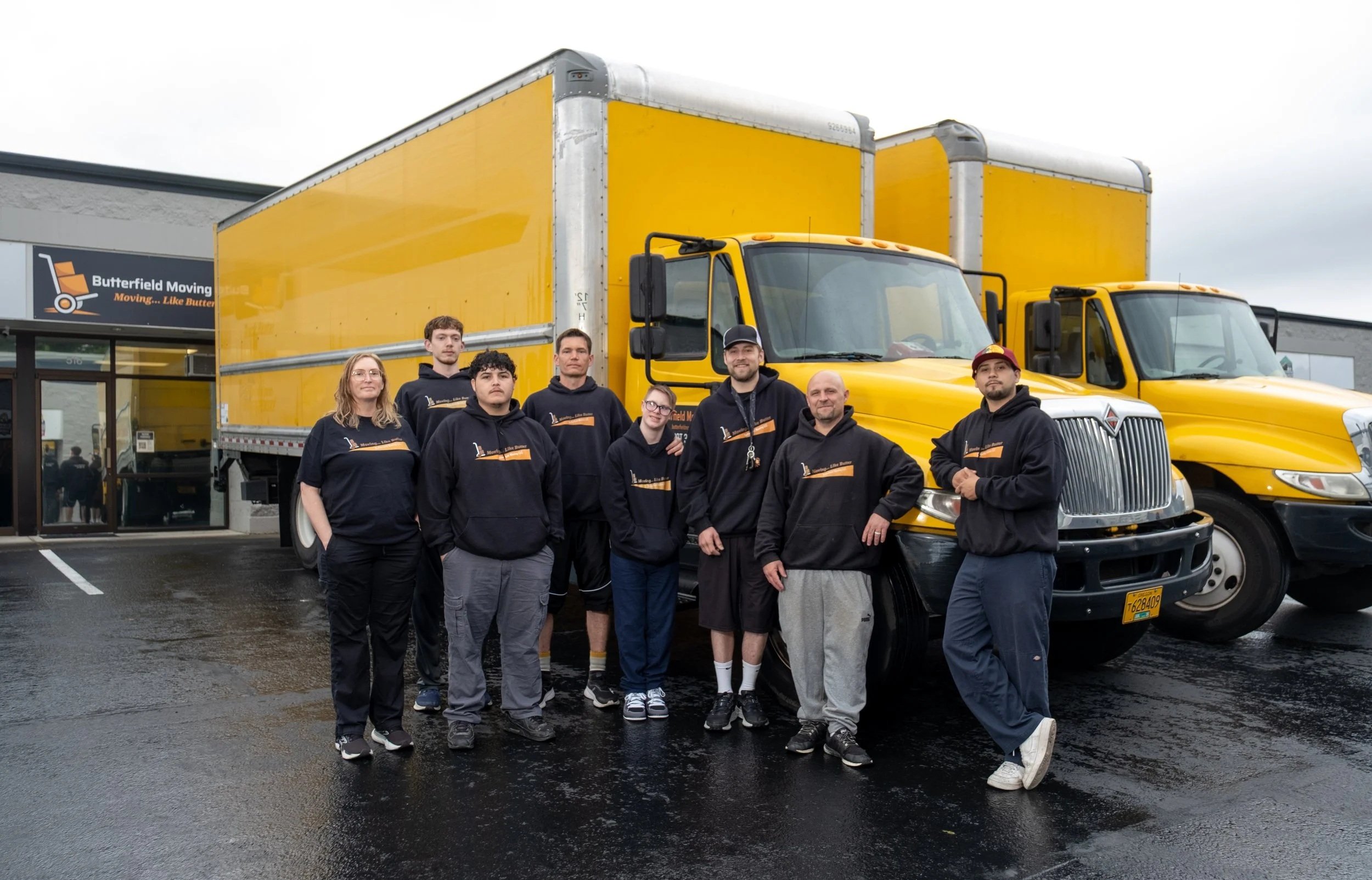
We know this work because we do it every week. Butterfield runs standing weekly warehouse delivery logistics for business clients, the kind of recurring contract that only survives when crews show up on schedule, every schedule. That weekly discipline is the audit no sales pitch can fake. Published rates and certificates of insurance are usually available within an hour, with evening and Saturday windows that keep your operation shipping while the move happens around it.
We're also honest about the boundary lines: we move inventory, fixtures, and light shelving; your forklift work stays with your operators, engineered racking stays with rack installers, and heavy machinery stays with riggers. A mover that knows its lane is a mover whose schedule you can build on.
Inventory-First Discipline
Goods load in organized tiers by zone, counted out and counted in, arriving sellable, not re-sortable.
Dock-to-Dock or No Dock at All
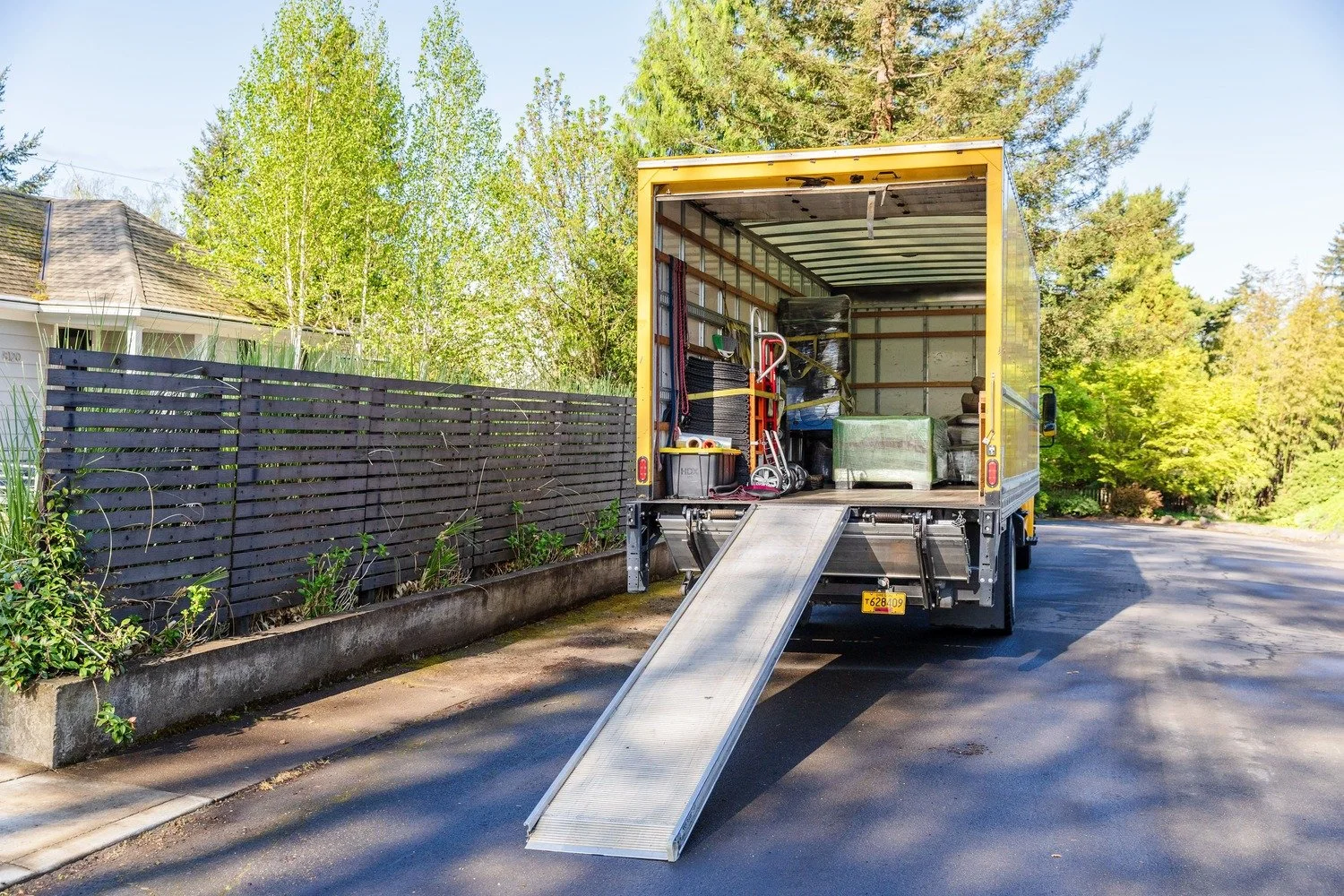
26-foot box trucks for dock-high transfers, liftgate capability for grade-level and dock-less endpoints.
Weekly-Contract Proven
We run standing weekly delivery logistics for business clients today, reliability you can audit by the calendar.
Published Rates
$150.35–$263.15/hr by crew size, same as every Butterfield job. No 'industrial' markup invented for the word warehouse.
Honest Boundaries
Forklifts, engineered racking, and machinery rigging belong to specialists; we'll say so on the first call and work alongside them.
The Owner Quotes It
Patrick walks the space, builds the plan, and answers for it. One contact, no account layers.
Three Calls That Decide Whether Your Inventory Survives Its Own Move
Move it organized, or move it twice
A warehouse move done as 'get it all on trucks' gets paid for twice, once to move it, once in the weeks of re-sorting, re-counting, and discovering what got crushed at the bottom of an improvised stack. The organized version costs the same truck hours: zones labeled before loading, as goods tiered together, fragile stock topped, and counts taken at both docks. Your put-away team works from order, and your books never lose track of a SKU. The walk-through includes the one question that predicts the whole job: 'show me your fastest-moving zone', because that zone moves last, ships first, and gets the best spot on the final truck.
Decision 1
The right contractor for each piece of the job
Warehouse relocations are really three trades wearing one schedule: movers for inventory, fixtures, and shelving; rack installers for engineered pallet racking; riggers for machinery. Companies that claim all three usually subcontract two of them at a markup, or worse, improvise. We bid our lane, tell you plainly which pieces need the other trades, and coordinate timing with them so the racking is standing before the first pallet of stock arrives.
Decision 2
Shut down for a weekend, or phase around operations
Some operations can close from Friday to Monday and move everything at once. Saturdays bill at our standard rate, which makes the budget play. Operations that can't stop phase instead: evening loads of slow-moving stock first, the fast-moving wall last, shipping never dark for more than a window. The walk-through is where we figure out which version your order flow can afford.
Decision 3
What We Move: and What We Hand to Specialists
-
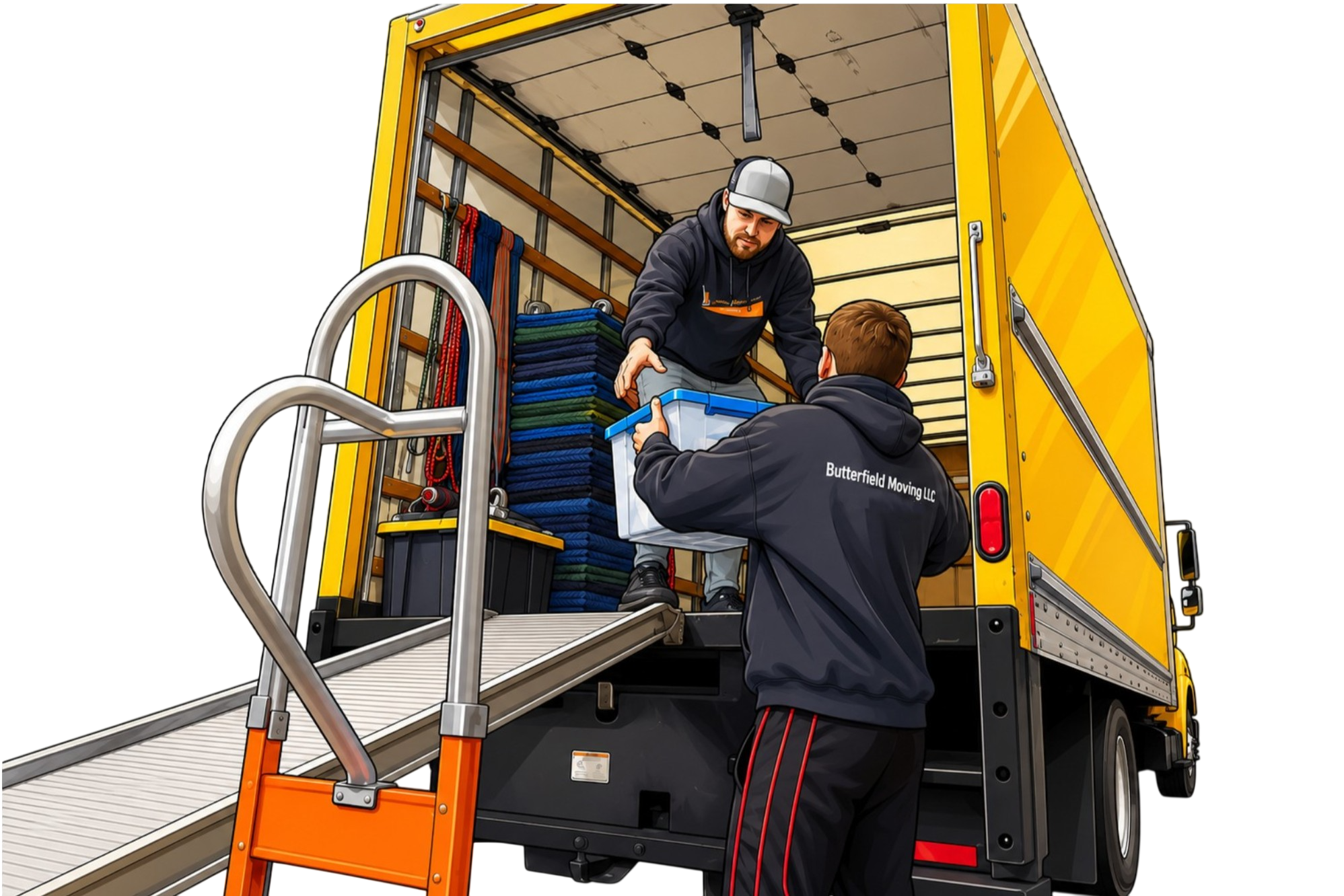
• Boxed and palletized inventory: loaded, organized by zone
• Retail stock and back-of-house storerooms
• Furniture inventory: our standing weekly specialty
• Fragile and high-value stock with extra wrap time planned in
• Counted transfers: out at one dock, in at the other
• Overflow and seasonal stock moves to and from storage
-
• Light-duty shelving: disassembled, bundled, rebuilt
• Workbenches, tables, and packing stations
• Office areas inside warehouses: desks, files, the works
• Display fixtures and gondolas for retail back rooms
• Carts, bins, and material-handling smallware
-
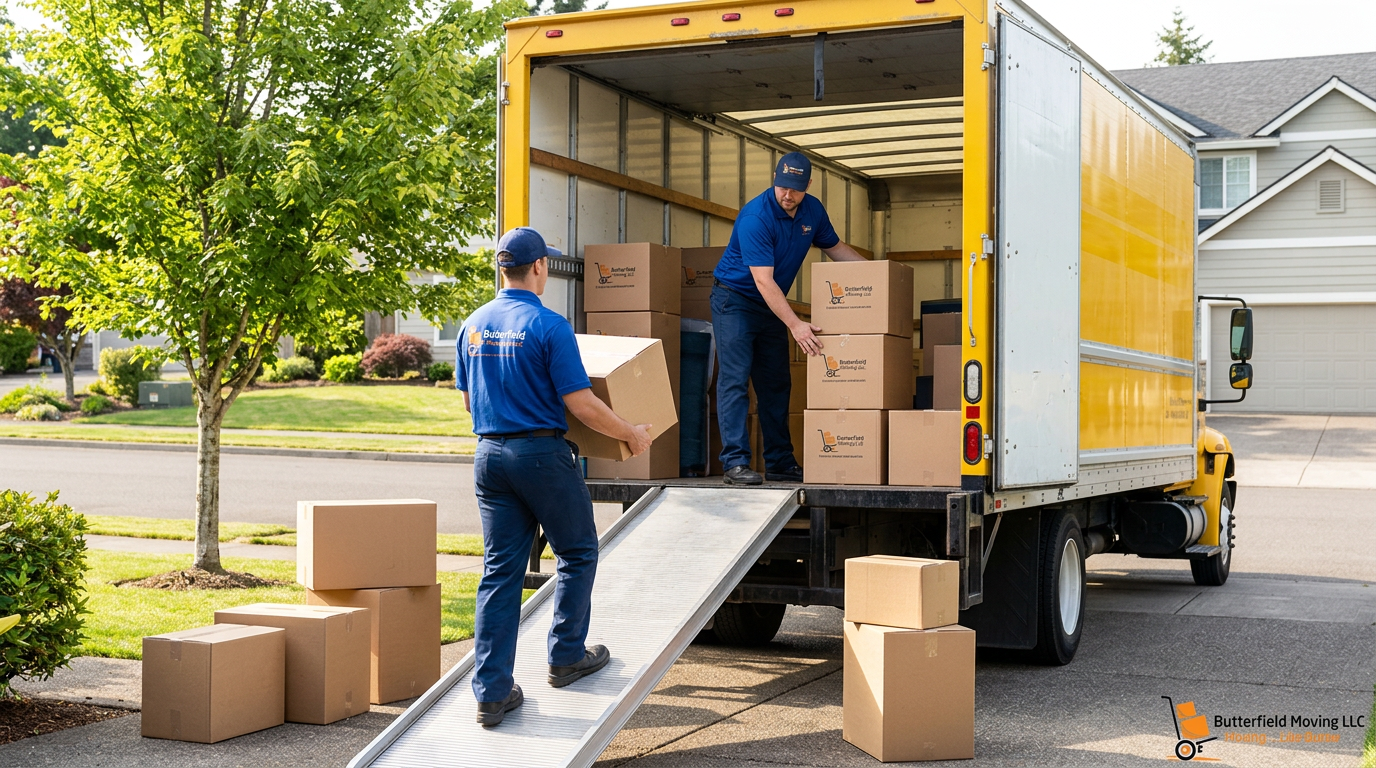
• Dock-to-dock transfers: 26-foot box trucks
• Liftgate service for grade-level and no-dock endpoints
• Evening and Saturday windows around your shipping schedule
• Phased multi-trip transfers for operations that can't stop
• Recurring weekly delivery routes for business clients
• Anywhere in Oregon: intrastate, door to door
-
• Engineered pallet racking: your rack installer (we move what's ON it)
• Forklift operations: your equipment, your certified operators
• Heavy machinery and shop equipment: rigging contractors
• Live IT infrastructure: your IT provider
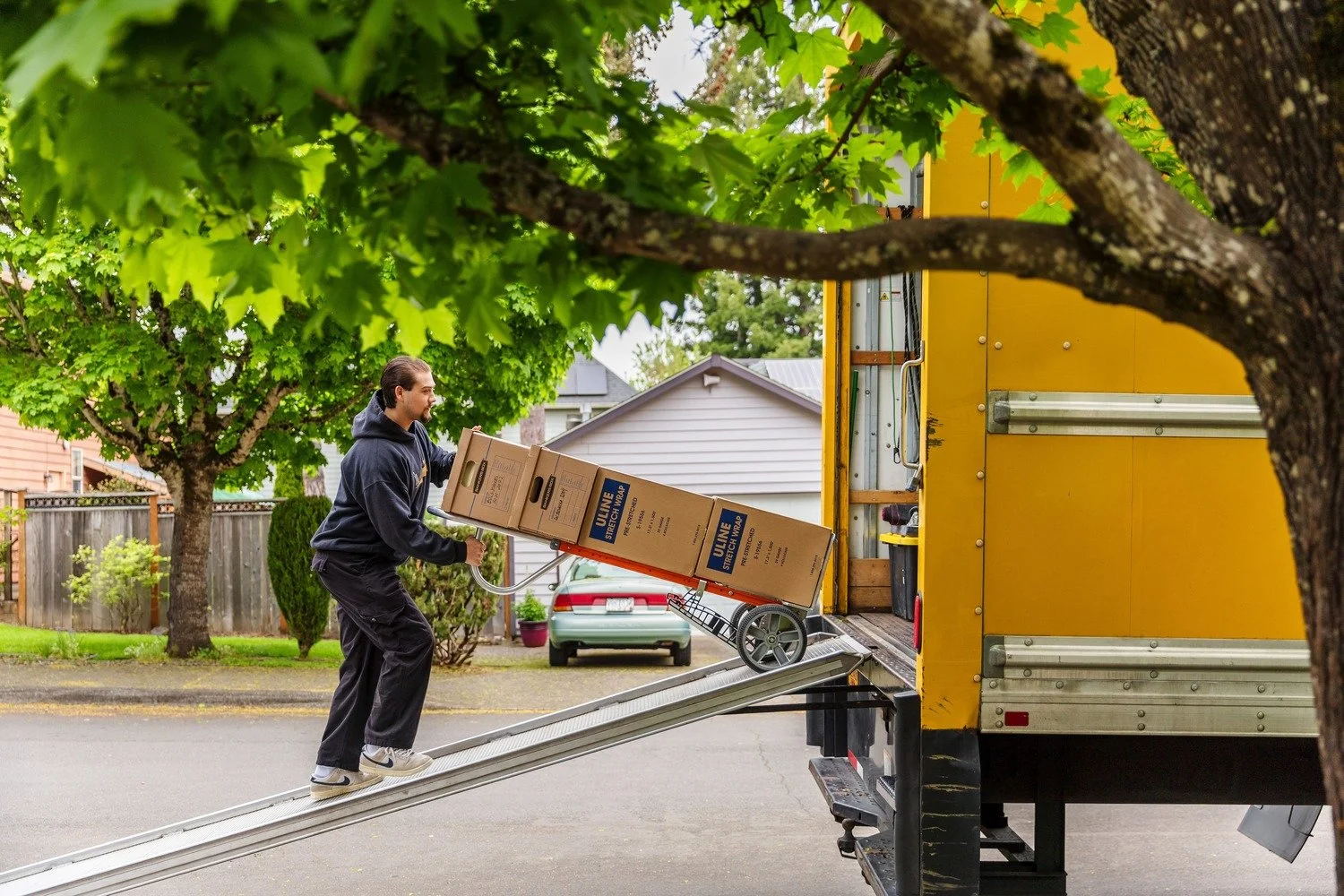
How a Butterfield Warehouse Move Runs
The walk-through: both buildings, dock to dock
Patrick walks the space: zones, stock condition, shelving inventory, dock heights, and staging room at both ends. You get the honest split, what we move, what needs your rack installer or rigger, and the full cost structure on the spot.
The schedule your operation can afford
Weekend shutdown at Saturday-standard rates, or phased evening windows that keep shipping live. Either way, the plan is built backward from your first must-ship day at the new address.
Zones labeled, counts agreed
Before anything loads, zones get labeled to match the new layout, and the counting method gets agreed upon, your manifest or our box count, witnessed at both docks.
Load in tiers, by zone
Heavy stock low, fragile stock high, like goods together, straps at every tier. The truck unloads in put-away order because it loaded in reverse.
Fixtures and shelving on the bag-and-label system
Light shelving and workstations come apart with hardware bagged and labeled, travel bundled, and rebuild at the new space, same discipline as every Butterfield disassembly.
Count in, walk the space, ship
Stock is counted off at the destination dock, zones are landed to the new layout, and a final walkthrough with your ops lead before the crew leaves. Payment at completion; no deposit ever held for your dates.
Warehouse Moving Rates: Published, Like Everything Here
No industrial markup, no quote theater, the same public rates as every Butterfield move:
Standard rate
Monday–Saturday, 7 AM–7 PM
2 movers + truck: $150.35 per hour
3 movers + truck: $206.75 per hour
4 movers + truck: $263.15 per hour
3-hour minimum
Evening & Sunday rate
(after 7 PM Mon–Sat, and Sundays)
2 movers: $195.20 per hour
3 movers: $273.40 per hour
4 movers: $351.60 per hour
Holiday rate (3-hour minimum): 2 movers $230.50 per hour · 3 movers $325.50 · 4 movers $420.50
numbers
The numbers around the number
Saturday transfers: standard rate (the shutdown-weekend advantage)
COI: free, usually within an hour, both buildings
Deposits: none · Payment at completion
Recurring delivery routes: priced per route at the walk-through
Multi-trip and phased transfers price as what they are: honest truck hours at published rates, planned so each trip lands put-away-ready. The walk-through turns your square footage and stock into an exact plan.
Our Reviews
Warehouse Work Is Delivery Work: Here's Ours, Witnessed
Warehouse clients don't write Google reviews; the people receiving their goods do. Every week, our trucks run furniture-warehouse delivery routes across Greater Portland, and the receiving end keeps writing the same review:

-
'Had the pleasure of working with Matt, Ziggy and Logan. They did an awesome job delivering my new furniture. They were professional, quick, and conscious of my needs.' That's a warehouse-originated delivery, reviewed by the customer at the door, the last hundred feet of the logistics we run weekly. (Maria A., Google review)
-
'Patrick and Jiggy were on time and unloaded all my furniture like real professionals… I'm super satisfied and very thankful for the delivery service they provide.' Recurring routes live or die on exactly this, the hundredth stop handled like the first. (Candy T., Google review)
-
'Patrick was professional and kind, he took the time to keep me informed of my delivery… Junior and Matt carefully and quickly unloaded my belongings… I was impressed on how well they worked together as a team.' Swap the doorstep for your dock and the cadence is identical: communication, care, count, done. (Josh N., Google review)

Butterfield Moving vs. larger regional movers
| Feature | Butterfield Moving | Larger Regional Movers |
|---|---|---|
| Scope honesty | Movers' lane stated up front | 'We do everything' until the dock |
| Inventory organization | Zoned, tiered, counted both ends | Loaded loose, sorted later, by you |
| Racking & machinery | Coordinated with real specialists | Improvised or marked-up subs |
| Recurring routes | Standing weekly contracts running now | One-off bid model |
| Rates | Published, incl. evenings/Sundays | Industrial-mystery pricing |
| Saturday transfers | Standard rate | Weekend premium |
| Liftgate / no-dock endpoints | Planned at walkthrough | Discovered at delivery |
| COI | Within an hour, both buildings | Paperwork lag |
| Who runs the job | Patrick, walk-through to final count | Rotating project managers |
| Deposit | None | Standard on commercial |
Greater Portland Warehouse Moves Have Local Physics
The Sunset Corridor's industrial flats
Hillsboro's and Beaverton's industrial parks along the 26 corridor mix dock-high warehouses with grade-level flex space, often in the same complex. The dock question is the first question of every warehouse estimate, because it decides equipment, crew, and hours. Our dispatch sits minutes from most of these parks, and the door-to-door clock notices.
Older close-in warehouses, tighter everything
Portland's older industrial buildings bring narrow docks, column grids that fight long carries, and freight elevators with opinions. Those moves get planned around staging space as much as truck space, where stock can wait, organized, while the shuttle runs. If your building is one of these, say so on the call, staging strategy changes crew count, and crew count is the estimate.
Phasing around a live operation
Operations that can't go dark phase their transfer: evening windows after the last truck ships, slow-moving zones first, the pick wall last. Our 7 AM–10 PM, seven-day window covers it without overnight theatrics, and without overnight claims we can't staff.
Grade-level flex space and the liftgate answer
Half the Westside's small-business 'warehouses' are flex units with a roll-up door and no dock. That's liftgate territory, our liftgate-equipped truck bridges the gap between dock-high logic and ground-level reality, and the walk-through plans that your endpoints need.
Rain and cardboard inventory
Eight months a year, a pallet of boxed stock that sits on wet pavement is a write-off in progress. Loads stage under cover at both ends, boxes never touch the wet ground, and the dock gap is bridged quickly. Inventory that stays dry stays sellable, the entire job, in one sentence.
The weekly-route economy
Greater Portland runs on small-business logistics, retailers, furniture sellers, and suppliers who need a reliable truck on a standing schedule more than they need a one-time mover. That's a lane we already drive: weekly delivery routes, same crew, same cadence, reviewed at the receiving end by name.
Anywhere in Oregon, dock to dock
Warehouse transfers to Salem, Bend, or the coast stay inside our intrastate lane: one licensed Oregon carrier, one crew, no freight handoffs, quoted on mileage and weight. Your stock rides with the people who counted it on.
What Professional Warehouse Moving Actually Involves
Loading for put-away, not just transport
The load plan starts at the destination: which zone gets put away first determines what loads last. Like goods tier together, heavy stock rides low, fragile stock high and strapped, and every tier locks before the next builds. A truck loaded this way unloads at a working warehouse rather than at a sorting project.
Counting that survives an audit
The count method gets agreed upon before loading: your manifest, our box count, or both. Counts happen at both docks with a witness from each side, and discrepancies get resolved at the dock, not discovered at inventory time. Sealed-box protocols from our office-move playbook apply to anything sensitive.
What recurring contracts teach
Weekly routes are a different discipline than one-time moves: the same dock, the same window, the same standard, fifty-two times a year. Running them has tuned how we do everything else, pre-trip checklists, load photos, call-ahead cadence, because a standing client audits you weekly, whether they mean to or not.
The three-trade boundary, in practice
Movers move goods; rack installers anchor engineered steel; riggers move machines. The boundary isn't modesty, it's physics and liability. Racking carries tons when it's plumb and anchored, and a machine on an improvised dolly is an insurance story waiting to happen. We sequence with the specialists: racks stand and inspect before stock arrives, machines rig out before the aisles fill with our dollies.
Fixture and shelving D&R
Light-duty shelving, workbenches, and packing stations come apart on the same bag-and-label hardware system we run on every job, bundled uprights, bagged hardware labeled to each unit, and rebuilt to the new layout. Engineered pallet racking is the named exception: we'll move every box off it and on again, and your rack installer owns the steel between.
Coverage and the COI, commercial edition
Released-value coverage at $0.60 per pound is the Oregon default on commercial goods, with replacement-cost protection available if you choose to purchase it, a real conversation when the truck holds sellable stock. COIs go to both buildings, usually within an hour. If something is damaged on our watch, we will submit a claim upon request.
Liftgate logistics
A liftgate turns any curb into a dock, slower than a dock, faster than a ramp, and the only honest answer for grade-level endpoints with heavy pieces. Liftgate stops get planned for their real pace, which is how the estimate stays honest, and the crew stays safe.
Warehouse Questions, Answered Straight
-
No, and we won't pretend otherwise. Dock-equipped facilities use their own equipment and certified operators; our crews handle everything from the pallet down: carrying, tiering, counting, and the liftgate for endpoints without docks.
-
We move everything ON the racking and light-duty shelving around it. Engineered racking itself, teardown, anchoring, and inspection belong to a rack installer, and we'll coordinate schedules with yours so stock lands after the steel stands.
-
Heavy machinery is rigging work, not moving work. We'll tell you that on the first call, help you sequence the rigger into the plan, and move everything around the machines.
-
Usually, yes, phased transfers run evening windows and slow zones first, keeping your pick wall live until the last trip. Full weekend shutdowns at Saturday-standard rates are the budget alternative.
-
Zones labeled to the new layout before loading, like goods tiered together, counts witnessed at both docks. The truck unloads in put-away order because it loaded in reverse.
-
Liftgate service covers grade-level and no-dock endpoints, planned at the walk-through, so the estimate reflects the real pace of gate cycles.
-
Yes, standing weekly delivery routes for business clients are part of our core business today, and we're taking on additional routes now. If your operation needs a reliable truck on a schedule, that's a Patrick conversation.
-
Done, usually within an hour, both buildings if needed, no fee.
-
Anywhere in Oregon. Salem, Bend, the coast, one crew, one truck chain, quoted on mileage and weight. We don't cross state lines, and we say so up front.
-
Published rates, $150.35 to $263.15 per hour by crew size, evening/Sunday rates listed above, 3-hour minimum, no deposits. The walk-through converts square footage, stock, and docks into an exact plan, free.
Move the Stock. Keep It Sellable. Skip the Drama.
One walk-through gets the honest split, our lane, the specialists' lanes, your schedule, and a plan where inventory arrives counted, organized, and ready to ship. From the crew that already runs warehouse routes every week.