Large Home Moving in Greater Portland: Built for 4,000+ Square Feet
Family-Owned & Operated | ODOT #275978 · USDOT #3604556 | Published Hourly Rates: No Hidden Fees | Google 4.8★ Rated | Open 7 AM–10 PM, Every Day
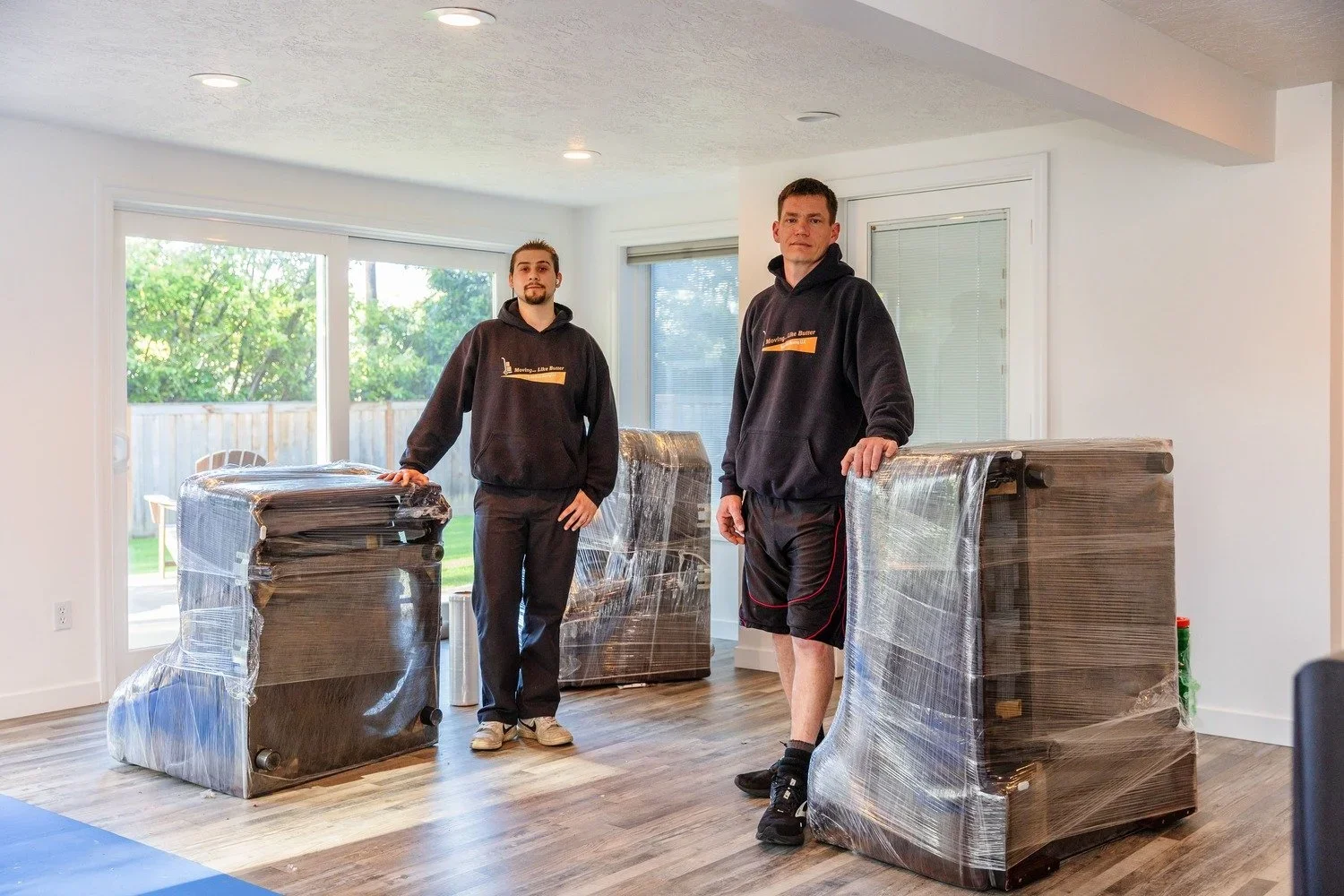
Moving a large home is a different sport. More rooms, more weight, more high-value pieces, more ways for an under-planned move to blow the schedule and the budget. Large square footage moves are Butterfield Moving's specialty, the job Patrick built this company around, across Lake Oswego, West Linn, Bethany, SW and NW Portland, Hillsboro, and the rest of Greater Portland.
Every large home move starts with a free in-person walk-through, because estates don't quote honestly over the phone. From there we build the plan: crew scaled to the square footage, a second truck when the home calls for it, and, when it saves you money, a separate pack day at packer rates before the trucks ever roll. Wrapping, padding, disassembly, and reassembly are in the hourly rate, not on a list of extras.
Our ideal customer books a month or two ahead and wants it done right the first time. If that's you, one call starts it: Patrick or Amy books the walk-through, and the crew runs the move.
4,000+ Sq Ft Is the Specialty
Big homes are where crew scaling, load planning, and pace separate professionals from labor. It's the job we built the company around.
Free Walk-Through Estimates
Homes over 2,000 sq ft get quoted in person, room by room, so the number you get is the number you pay.
Scaled Crews & Trucks
Three or four movers, a second 26-foot truck when needed, sized to the home, never to the invoice.
Multi-Day Plans That Save Money
Pack day at $56.40/hr per packer before move day at crew rates. In big homes, sequencing is the budget.
Reviewed by Name
Greater Portland families review Patrick, Aiden, Logan, and Ziggy personally, live feed below.
Owner-Run, Start to Finish
Patrick walks the home, builds the plan, and answers for it on move day. No sales layer.
Three Decisions That Decide Whether a Big Move Runs Big or Runs Long
Phone quote or walk-through
A 4,500-square-foot home cannot be quoted honestly from a phone script, and movers who try are either guessing high to protect themselves or guessing low to win the job and 'truing up' on your invoice. We walk large homes in person, free, and count what's actually there: the gym in the basement, the armoire that won't fit the stairwell turn, the patio set nobody mentioned. The walk-through is why our large-home estimates hold.
Decision 1
One marathon day, or the multi-day plan
Forcing a big home into a single day means a large crew billing premium hours into the evening, with everyone's judgment fading exactly when the high-value pieces come off the truck. The multi-day structure, packing completed beforehand at $56.40 per hour per packer, then a load-and-deliver day at crew rates, almost always costs less and lands calmer. We'll price both honestly and let the math decide. There's also a quality argument: high-value pieces deserve a crew that's six hours into its day, not eleven. The multi-day plan keeps the careful work in careful hours.
Decision 2
The crew that scales, or the crew that pads
Crew size on a large home should follow square footage and inventory; ours scales to three or four movers at 4,000 square feet and beyond because the job genuinely demands it. What it should never follow is the hourly-rate math of a company stacking extra movers on a job that doesn't need them. You'll get our crew-size reasoning out loud on the walk-through, with the per-hour numbers next to it.
Decision 3

Estate to Estate, Hillside to Flat: the Big-Home Spectrum
Large homes hide their inventory. The main floor everyone remembers is a third of the move; the basement gym, the garage shop, the attic holiday bins, and the patio set are the rest, and they're what blows an estimate built from a phone call. Everything below is in scope, and the walk-through is where it all gets counted.
-
• 4,000–8,000+ sq ft single-family homes and estates
• Lake Oswego and West Linn premium properties
• Bethany and Westside executive homes: three stories, full basements
• NW and SW Portland's older large homes: character, stairs, and narrow streets
• Multi-structure properties: shops, studios, guest houses
• Downsizing from a large home to a smaller one with less square footage
-
• Fragile and high-value items: extra wrap time planned into the estimate
• Antiques, fine art, and luxury furniture
• Pianos, gun safes, and pool tables: quoted honestly on the walk-through
• Home gyms, adjustable beds, and oversized sectionals
• Glass, mirrors, and TVs in dedicated boxes
• Garage, shop, and outdoor living inventories
-
• Second-truck staging and load sequencing
• Steep driveways, hillside access, and gated communities
• HOA notice requirements and truck-staging rules
• Long carries across large lots: no surcharge on local moves
• Multi-day schedules built around closings and back-to-back escrows
• Long-distance large-home moves anywhere in Oregon
How a Butterfield Large-Home Move Runs
The first call: scope and dates
Patrick or Amy takes the addresses, square footage, and your closing or possession dates, then gets the walk-through on the calendar. Large homes book best one to two months out, summer dates especially.
The free walk-through
We walk every room, garage, and outbuilding, count the specialty pieces, check truck access and staging, and talk through what you'll pack versus what we will. You get the crew-size reasoning and the full cost structure on the spot.
The plan: crew, trucks, days
Two, three, or four movers; one truck or two; single-day or pack-day-plus-move-day. The plan is built to the house and priced at the published rates, $206.75 per hour for three movers, $263.15 for four, and packing at $56.40 per packer.
Pack day (when the plan calls for it)
The packers box and label the home room by room before move day, fragile rooms first, working systematically so move day starts with a staged house, not a scramble.
Load day: protection down, tiers built
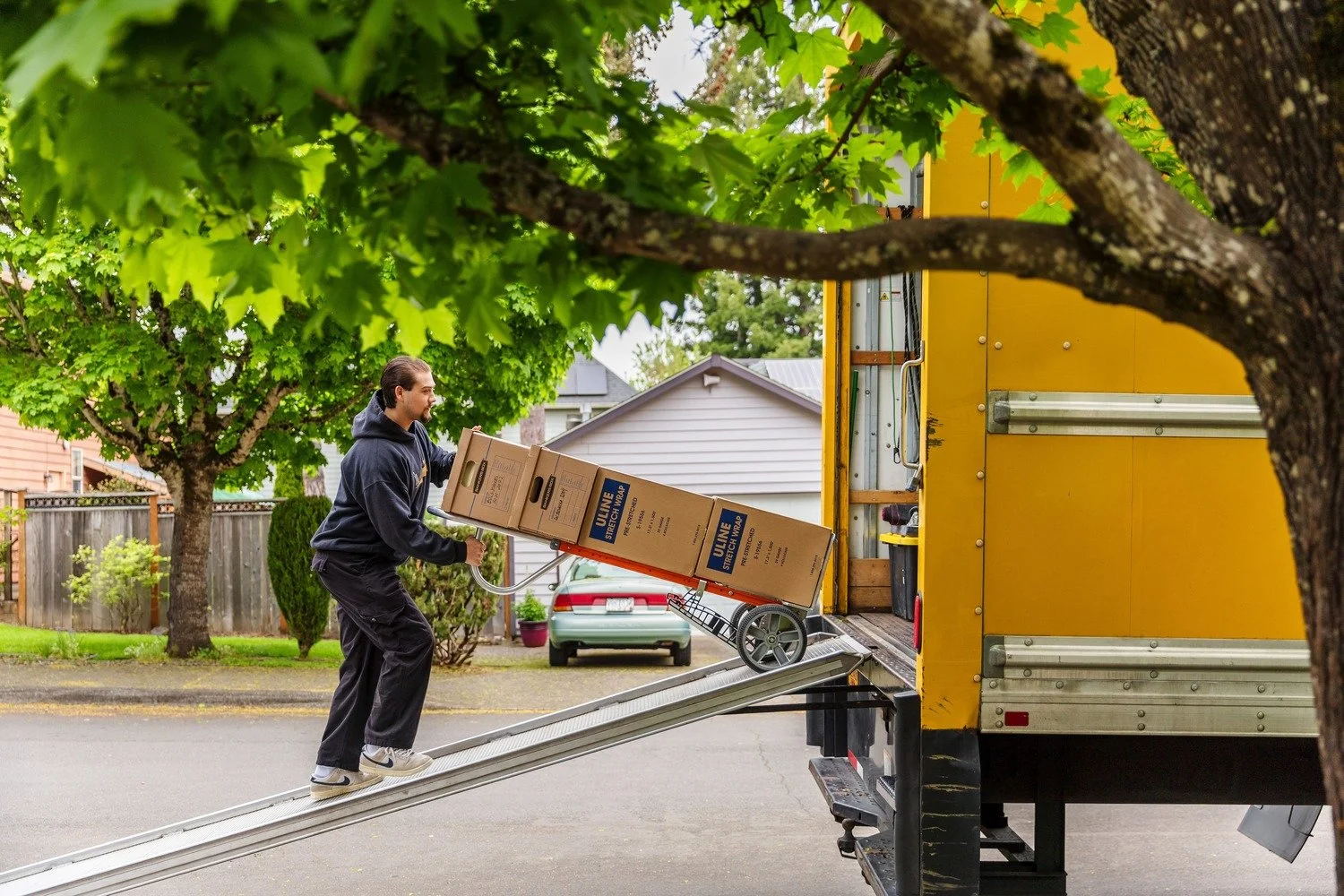
Floor runners and door-jamb protection go down before the first piece moves. Furniture is padded and wrapped, hardware bagged and labeled, and the truck loaded in engineered tiers with tie-downs, the discipline that gets a household across Highway 26 without a scratch.
Delivery: beds and tables first
At the new home, beds and dining tables are reassembled first; then every piece lands where you direct it and is repositioned until it's right. Large homes get the same rule as small ones: nothing is finished until you say it is.
Final walkthrough, payment, and the note
You walk the whole job before the trucks leave. Payment at completion: cash, check, or card. No deposit was ever required. The thank-you note is a Butterfield habit; big move or small, your business paid a family's bills.
Large-Home Pricing: Same Published Rates, Smarter Structure
Large homes don't get mystery pricing. They get the same published hourly rates, assembled into the cheapest structure that fits the house:
Moving crew
standard rate (Mon–Sat, 7 AM–7 PM)
2 movers + truck: $150.35 per hour
3 movers + truck: $206.75 per hour
4 movers + truck: $263.15 per hour
Each additional mover: $56.40 per hour
Second 26-ft truck: planned into the walk-through quote
Pack day
before move day
$56.40 per hour per packer: boxes and supplies at published prices (Small $6.30 · Medium $7.45 · Large $9.45 · Wardrobe $31.55 · TV box $55.85/use)
Overtime
after 7 PM Mon–Sat, and Sundays
2 movers: $195.20 per hour · 3 movers: $273.40 per hour · 4 movers, $351.60 per hour, and a plan built right rarely needs them.
Holiday rate (3-hour minimum): 2 movers $230.50 per hour · 3 movers $325.50 · 4 movers $420.50
Your exact total comes from the walk-through, room count, inventory, access, and distance, calculated in front of you. No deposits to book. No stair, long-carry, or wrapping surcharges on local moves. Long-distance large-home moves anywhere in Oregon are quoted on mileage and weight.
Our Reviews
Big Moves, Real Outcomes
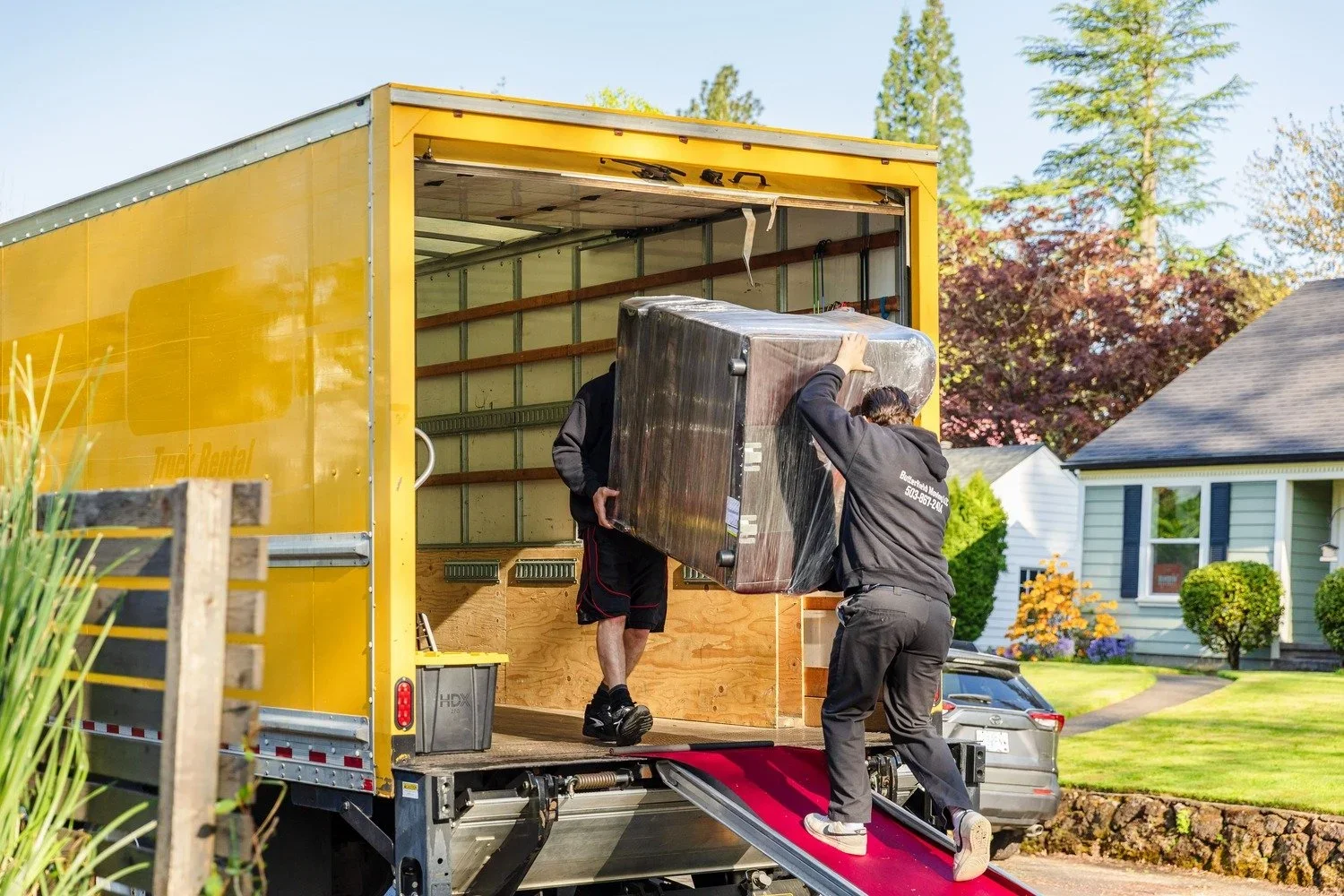
-
The fear in every large-home move is the finish work: hardwood, stone, banisters, doorframes. One customer watched a full crew run her move at speed and inspected afterward expecting the usual toll. Her review: 'There isn't a scratch on my floor or a chip in my furniture', and the crew was 'wildly reliable' on the scheduled window, 'efficient as HELL' in between. Protection and pace aren't a trade-off when the plan is right. (Monet W., Google review)
-
One customer spent his younger years working for a moving company, the hardest audience a crew can get. His verdict on a Butterfield move: admirable work ethic, no wasted time, perfect direction-following, and 'five stars well-deserved.' Large homes are where that discipline shows up most, because every inefficiency multiplies across forty rooms' worth of inventory. (Novak B., Google review)
-
An oversized item, a staircase that didn't want it, and corners that should have ended the attempt: the crew worked it through 'without any struggles,' on time, with text updates on the way. The oversized-piece problem is a daily fact of estate moves, armoires, sleigh beds, sectionals, and it's solved with angles and patience, not force. (Brent S., Google review)

Butterfield Moving vs. larger regional movers
| Feature | Butterfield Moving | Larger Regional Movers |
|---|---|---|
| Large-home estimates | Free in-person walk-through | Phone scripts and 'revised' invoices |
| Crew scaling | Sized to square footage, explained out loud | Sized to the hourly bill |
| Multi-day option | Pack day at $56.40/hr per packer | Rarely offered; premium-priced |
| Second truck | Planned into the quote | Surprise logistics on move day |
| Floor & finish protection | Runners, jamb guards, included | Often, an upcharge or an apology |
| Who runs the move | Patrick, quote to final walkthrough | Rotating crews, no continuity |
| Published rates | Yes, every crew size | Hidden behind estimates |
| High-value handling | Extra wrap time planned in | Flat-rate rush |
| Deposit to book | None | Standard on big jobs |
| Booking pressure | None, compare freely | Sales follow-up sequences |
Greater Portland's Big Homes Don't Move Generic
The Westside's large-home stock splits into three personalities: lake-and-hill estates, new vertical executive builds, and century-old character homes, and each one fails differently when a mover treats it generically. Here's what each demands, and what we plan for by default.
Lake Oswego and West Linn: hills, gates, and high-value inventory
The premium Westside markets concentrate everything that makes large moves demanding: steep driveways, gated communities, lakeside access, and rooms full of pieces worth more than the truck. We stage trucks where the grade allows, plan carries accordingly, and budget extra wrap time for the inventory these homes actually hold, on the walk-through, not on the invoice.
NW and SW Portland: character homes, character streets
The west hills' older large homes bring narrow streets, no driveways, steep walks, and a century of remodels that turned stairwells into puzzles. Truck staging is half the plan - finding where a 26-foot box truck can legally and physically sit - and long-carry experience is the other half.
Closings, escrow chains, and the multi-day buffer
Large-home moves usually ride on a closing, sometimes two, back-to-back. The multi-day structure exists partly for this: packing done early, load day aligned to possession, and the schedule flexibility (no deposits, reschedules with notice) to absorb a title company's surprise without panic.
Bethany and the three-story executive home
Bethany's newer large homes stack square footage vertically, three floors, bonus rooms over garages, and full basements. Vertical square footage moves slower than flat square footage: more stair carries, more crew rotation, more reason the crew-size math matters. It's exactly the home profile our four-mover scaling exists for.
Rain meets hardwood, stone, and white carpet
October through May, a large home's finish surfaces are one wet bootprint from a bad day. Floor runners go down room to room before furniture moves, entry mats stack at every threshold, and wrapped pieces stay wrapped until they're standing on a protected floor. The bigger the home, the more protection inventory rides on the truck.
HOA and gate logistics
Many premium Westside communities have truck-hour rules, gate codes, and staging restrictions. Tell us the community on the first call, and we'll handle the choreography. It's a five-minute conversation that protects a whole move day.
Hillsboro dispatch, Westside Estates
Hourly moves bill door-to-door, and our trucks start in Hillsboro, minutes from Bethany, close to West Linn and Lake Oswego via 217. For Westside estates, that's real money saved before the first box moves, and it's why the premium submarkets are home turf rather than a destination fee.
What Moving 4,000+ Square Feet Actually Involves
The 4,000-square-foot threshold
Around 4,000 square feet, a move changes physics: inventory outgrows a single truckload, carry distances stretch, and crew fatigue becomes a planning input. That's where we scale to a fourth mover and evaluate the second truck, thresholds we apply consistently because they come from the house, not the invoice. Below it, we'll tell you that a three-mover crew is enough. Above it, we'll show you why it isn't.
Protecting finishes at the estate scale
Large homes multiply the surfaces that can't be replaced from stock: site-finished hardwood, natural stone, custom millwork, and iron rails. Our protection standard, runners, jamb guards, banister wrap, and pads on every piece, is the same one that earned 'not a scratch on my floor' in the reviews. At the estate scale, it just takes more of it, and we bring more of it.
Hardware control across forty rooms
Bag-and-tag hardware discipline matters more as bed and table counts climb; six bedrooms mean six chances for the missing-bolt mystery. Every fastener bags to its piece, complex assemblies get photographed before teardown, and reassembly runs beds-and-tables-first so the family sleeps in its own home that night.
Walk-through methodology: what we're actually counting
Room count is the headline; the estimate lives in the details, solid-wood versus flat-pack furniture, glass and stone surfaces, basement and attic inventory, gym equipment, the distance from door to legal truck position, stair turns, and rail heights. Twenty minutes of counting is the difference between an estimate and a guess. It's also where you should interrogate us: ask why the crew is sized the way it is, which pieces get specialty handling, and where the second truck earns its place. Good plans survive questions.
High-value pieces inside a household move
Estates carry specialty inventory, art, antiques, pianos, and safes, inside an ordinary household move. The walk-through flags each piece and budgets its handling time honestly: extra wrap, extra hands, sometimes an honest 'here's what that piece needs' conversation. Fragile and high-value handling is planned, not a surprise cost.
Coverage at large-home values
Oregon's default released-value coverage, $0.60 per pound, was not designed for estate inventories. On the walk-through, we'll explain replacement-cost protection, available for purchase, and which pieces deserve it. And if something is damaged on our watch, we will submit a claim upon request. The honest coverage conversation before the move is part of the service. For perspective: at released value, a 100-pound antique armoire carries $60 of default coverage. That math is exactly why the conversation happens before the move, while the options are all still open.
When a move needs a second truck
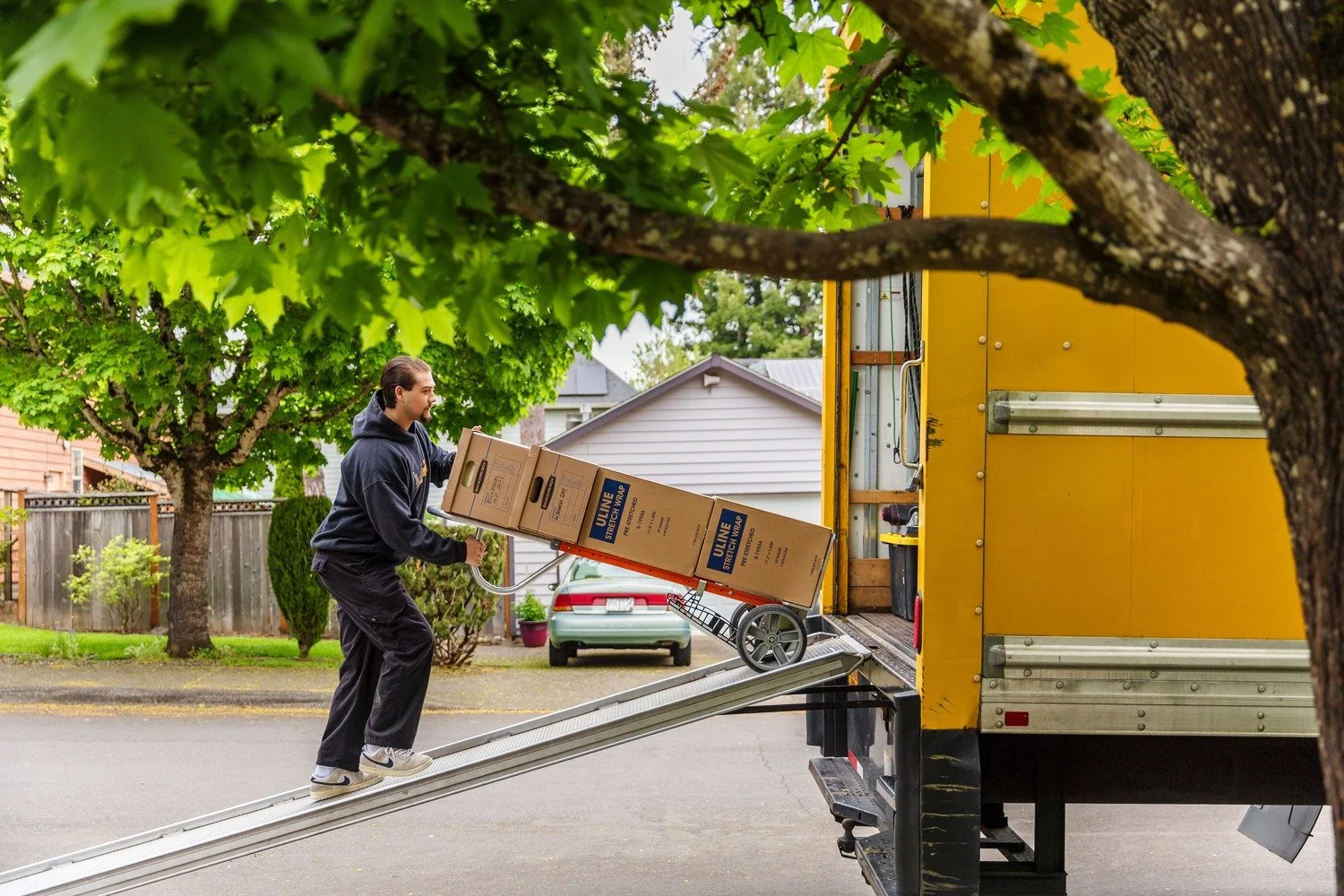
A two-truck move is sequenced, not split at random: first truck carries the build-first rooms, beds, dining, kitchen, so reassembly starts while the second truck loads. Tiers are engineered per truck, weight-balanced across axles, and have straps at every tier. Done right, two trucks don't double the chaos; they halve the timeline. The load order is written down before the first piece moves, which truck takes which rooms, what loads last to come off first, because at the estate scale, improvisation is the most expensive tool on the job.

Large-Home Questions, Answered Straight
-
One to two months is ideal, it's how our best moves book, and it secures summer and month-end dates. Shorter timelines are workable when the calendar allows; call, and we'll tell you honestly.
-
Free either way. You'll get the crew plan and cost structure on the spot, and you're welcome to compare it against anyone. No follow-up pressure sequence; that's not how we got our reviews.
-
Three movers handle many large homes; at roughly 4,000 square feet and up, we scale to four and evaluate a second truck. You'll hear the reasoning out loud, with the published per-hour numbers next to it.
-
Possibly, and when it does, that's usually good news for the budget: packing happens beforehand at $56.40 per hour per packer, and move day starts staged. The walk-through settles it.
-
Tell us on the walk-through. Pianos, safes, and pool tables get an honest capability-and-cost answer per piece; fine art and antiques get extra wrap time budgeted into the plan.
-
No, just tell us the community on the first call. Gate codes, truck-hour windows, and staging rules get planned in advance, which is the only place they're cheap to handle.
-
It's built from the published rates, $206.75 per hour for three movers, $263.15 for four, packing at $56.40 per packer, multiplied by an honest walk-through count. No deposits, no stair or wrapping surcharges on local moves. The number comes from your house, in front of you.
-
Anywhere in Oregon, in-Oregon distance moves quote on mileage and weight; the walk-through still drives the inventory side.
-
We're flexible with one to two weeks' notice, and no deposit is at stake. Escrow surprises are a known feature of large-home moves; the schedule plans for them.
-
Be there for the morning walkthrough and the final one; the hours between are yours. Large-home moves run long, and the crew works from the plan you approved, with a phone call to you the moment anything on the ground changes it.
-
Yes, and it's half the large-home work we do. Packing with sorting patience, coordination with family, and an unpacking plan that fits the smaller floor plan, our senior and downsizing page covers the full approach.
Moving a Big Home? Start With the Walk-Through
One call books it. Patrick walks your home, builds the plan, and hands you a number that holds, from the family company that treats 4,000 square feet as the main event, not a stretch assignment.