
How to Move Plants Without Killing Them: The Real Risks
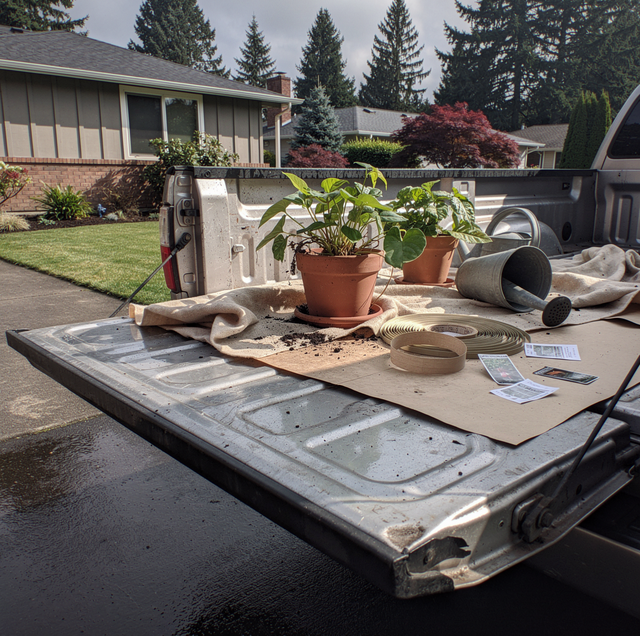
A dropped box gets a dent. A dropped plant usually just tips over and rights itself the next day. What actually finishes off a houseplant during a move almost never involves an impact at all: heat, cold, darkness, and the wrong kind of watering, working over hours instead of seconds. That is also the reason plants sit in a category almost by themselves. Most moving companies will not load them, not because they are heavy or awkward, but because nobody can promise that a living thing will survive in a sealed box for a full day.
Before moving day, find out how the truck actually travels. An enclosed trailer parked in direct sun, or left overnight in freezing weather, swings temperature far more than the outside air ever does.
The Truck Kills Plants Before the Road Ever Does
Most people worry about a plant tipping over in transit. The bigger risk is temperature, and it isn't close. A parked truck sitting in full sun can climb well past the outside air temperature within an hour, and a loaded truck often sits closed and stationary for long stretches of a travel day. On the cold side, an unheated cargo area on a freezing night can end up at or below the outdoor air by morning, with no source of warmth inside to slow it.
A parked car in full sun turns into a greenhouse gone wrong within minutes; a closed trailer does the same thing on a longer timeline, with nobody around to crack a window. Most common houseplants start showing damage at conditions that would barely register as uncomfortable to a person. Cold injury on tender leaves can begin well above actual freezing, and heat stress sets in long before the air inside feels dangerous. A few hours near freezing, or a long afternoon sealed in a hot trailer, can finish a plant that survived the loading and unloading without a mark on it.
How Long a Plant Can Sit in the Dark
Two or three days without light rarely bothers a houseplant that already lives on indirect or artificial light indoors. Most common varieties can coast through several days of complete darkness on stored energy without lasting harm, and that holds most reliably for the thicker-leafed varieties. The trouble starts once darkness stretches out past roughly a week: leaves yellow, growth stalls, and a plant that looked healthy at pickup can arrive looking sick even though nothing hit it and nothing froze it. This is one of the reasons a move that takes several days on the road is a different proposition than one finished in an afternoon.
Time the Last Watering Two to Three Days Out
Skip the instinct to give a plant one last deep drink right before it leaves. A heavily watered pot is heavier, sloshes inside its container, and keeps roots sitting in saturated soil for a day or more with no airflow to dry it out, which is close to ideal conditions for root rot. Watering two to three days ahead instead lets the soil firm up and drain, so the plant travels lighter and the roots aren't sitting in mud by the time the box finally opens. A slightly dry pot also handles a bumpy ride better in every practical sense, since it won't spill in a moving box or soak whatever is packed beside it.
Water two to three days before the move, then check the soil on the morning of the move. If it's dry an inch down, that's the range worth aiming for: moist enough to survive, dry enough that nothing sloshes.
Damage That Never Involves a Drop
Most of the physical damage a plant takes on moving day comes from steady pressure rather than sudden force. A pot packed shoulder to shoulder with another plant on a shelf or in a truck often loses its newest leaves and stem tips to plain crushing, with nothing ever falling. A top-heavy plant, one carrying more foliage than its pot can balance, can tip during a stop-and-go drive and snap a stem right at the soil line even when the box outside never takes a single bump.
The fix is space and support, not extra padding. Give each plant room of its own instead of nesting it against a neighbor, and brace a top-heavy one against something solid rather than trusting the pot's own base to keep it upright through hours of stops and turns. Keep it vertical while you do it, because a stem laid horizontal starts growing back toward vertical within hours, and that correction can set as a permanent bend in the growth that follows.
Losing Leaves Two Weeks Later Doesn't Mean It's Dead
Expect a plant to look worse before it looks better. Leaf drop two weeks after a move is not a dead plant. It's a delayed reaction to shock, and it is the single most common reason people give up on a plant that would have recovered fine. Temperature swings, root disturbance, and a sudden change in light don't always show damage right away. A stressed plant spends its stored energy holding on through the move itself and only shows the real cost once it's settled somewhere new. New growth, or the total absence of it for a month, is a far better sign to watch than leaves dropping in the first two weeks.
A Local Move and a Long One Aren't the Same Trip
Distance changes the entire calculation. On a move across town completed in a single day, plants usually just ride along in the back seat or trunk of a personal vehicle, out of the truck entirely, for an hour or two at most, with light and airflow the whole way. That's a completely different exposure than a move spanning several days on a truck, where a plant would face the darkness and temperature swings covered above for far longer than most houseplants can tolerate. That gap is also why plants are the one thing most movers won't load. Agreeing to transport a plant means promising an outcome that depends on temperature, timing, and how long the truck stays shut, and none of that is under anyone's control once the door closes. It is a different kind of risk from a dresser, where the worst case is a scuff that gets repaired.
For that reason, a longer move is usually the point at which a plant either travels in the family car the whole way, is given to someone who wants it, or is replaced once you're settled, rather than being loaded as cargo. There's also a regulatory piece worth knowing about on a longer trip. Some states run agricultural inspections at their borders specifically because pests and diseases can hitch a ride on live plants, and a plant crossing into one of those states can be inspected, held, or turned back. The rules vary by state and by plant type, so the only reliable step is checking with the destination state's department of agriculture ahead of time rather than assuming a plant will simply cross with everything else.
Getting Ready Before and Settling in After
A plant's odds are largely set in the week before the truck arrives.
The Week Before
Water on schedule, not early: water two to three days out, as covered above, so soil is neither bone dry nor saturated when the plant loads.
Prune anything already stressed: trim yellowing or damaged leaves so the plant's energy goes toward healthy growth rather than holding on to tissue that's already failing.
Check for pests before packing: a pest problem is far easier to spot in familiar light and a familiar spot than after a stressful trip masks the early signs.
Skip repotting and fertilizing: both are stressful events on their own, and stacking new stress onto a move gives roots two disruptions to recover from rather than one.
The First Two Weeks After
Expect a slow week or two rather than an immediate bounce back. Keep the plant out of direct sun until it's settled, since a sun-stressed plant is doing double duty, adjusting to a new spot and recovering from the trip at the same time. Let the soil decide when to water, since a plant that traveled on the dry side may need it sooner than its usual schedule suggests. Hold off on fertilizer and on repotting, since both add a kind of stress the plant doesn't need yet. New growth, even a single new leaf, is the clearest sign the plant made it.
Frequently Asked Questions
Rarely. Standard moving valuation coverage typically excludes live plants outright, as it does other perishables, sometimes described as items with inherent vice, meaning their condition is inherently unstable regardless of how carefully they're handled. In practice, that means there's usually nothing to claim if a plant declines during the trip, which is another reason plants are best treated as something you personally carry rather than something you insure.
Often, yes, for the right plants. A light misting right before closing everything up raises humidity around the leaves without adding sloshing weight to the soil the way extra watering would. That specifically helps humidity-loving plants, ferns and calatheas among them, get through a dark stretch in noticeably better shape than a plant left dry the whole way.
No. Succulents and cacti store water in thick tissue and can often sit two to three weeks in the dark with little visible stress. Thin-leafed foliage plants can start showing stress in as little as three or four days without light. The same moving timeline can treat two different plants very differently, so check what you're moving before assuming a week in a box is fine for everything.
Most common houseplants come from warm, frost-free regions, and chilling injury can begin at temperatures below roughly 50°F, well before anything actually freezes. Damage becomes more likely and lasting the closer conditions get to freezing. Heat damage typically begins once conditions remain above roughly 90-95°F for an extended period. Both ranges sit well before a person would call the air dangerous, which is exactly why a truck can feel fine to a crew member and still be harming what's riding inside it.
Often, for anything too big to ride in a car. Many common houseplants root readily from a cutting in water or damp soil, pothos, philodendron and monstera among them, so a few stems in a jar travel in a cup holder and arrive as the start of the same plant. It also sidesteps the soil question on a long move, since a cutting carries no root ball and no pot.
Wait at least four to six weeks, even if the plant looks like it's struggling in its current pot. Repotting is its own shock to the roots, and doing it too soon stacks that disruption on top of moving stress instead of giving the plant one clear thing to recover from at a time.
Moving a plant collection soon? — Get a move plan that's honest about what travels in the truck and what needs to ride with you instead. Butterfield Moving LLC serves Hillsboro, Beaverton, and Portland. Call (503) 867-2414.
