
Storage in Transit on a Move, and When Goods Come Back Out
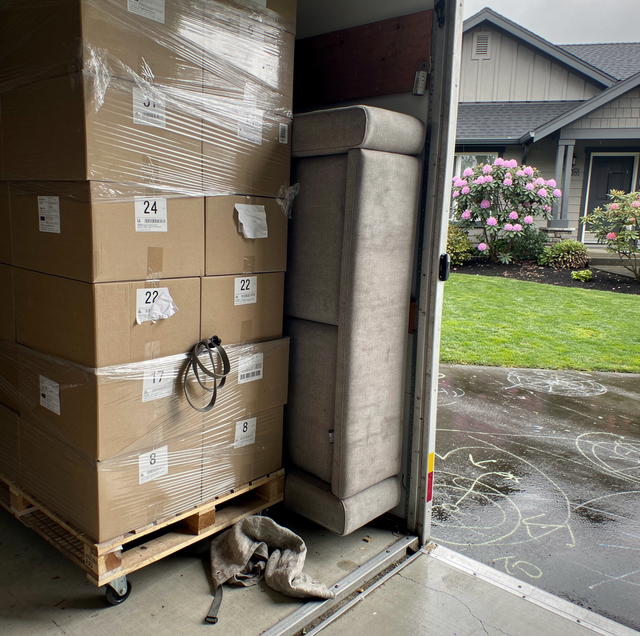
If the closing had held, the truck would have unloaded on Thursday. It did not hold, and the news reaches the driveway with the load already built: boxes tiered to the ceiling, the sofa standing on end against the sidewall, numbered tags stuck to everything that came out the door. None of that work is wasted, and none of it has anywhere to go. Storage in transit is the trade's name for what happens next. Your goods come off the trailer into a warehouse, wait there while the far end of the move sorts itself out, and finish the trip later as the same shipment they started as. What that changes and what it leaves alone are worth knowing well before you plan around it.
The Week That Opens Up Between Two Addresses
A move has two ends written by different people. The day you have to be out is set by a buyer or a landlord, and the day you can take possession is set by a second buyer or landlord. When those dates land together, none of this comes up. When they do not, the gap is not a delay. It is a stretch of calendar with a loaded truck standing in it.
By the time a gap opens, the physical work is already done. A crew that spent six hours building a load will not take it apart and carry it back inside, and the goods cannot ride a trailer for a week while a title company finishes. So the useful question is where the goods stop and under whose terms they sit.
Temporary Warehouse Storage, Pending Further Transportation
That phrase is not marketing language. The federal handbook for household moves that cross a state line defines storage in transit as the temporary warehouse storage of your shipment, pending further transportation, with or without notification to you. Every working part of the idea sits in that sentence, including the last clause. The storage is temporary, it happens in a warehouse, and the shipment has not arrived.
The move is not over while the goods sit. The shipment that left your old address is the one that arrives at the new address, paused indoors partway through, and still carried on the paperwork it started with. That is not a household renting a unit and handling the second half itself, which is why the arrangement has a name instead of a delay.
Goods Can Stop at Either End of the Move
A shipment can wait at either end of its own trip, and the two are not interchangeable. Bekins, which offers the service at both locations, describes storage in transit as available at the origin or the destination. Where your goods stop changes how much of the move is still ahead of you.
Origin storage means the load never made the long part of the trip. It comes off the truck into a warehouse near the address you left, and the drive ahead of it has still to happen, which is why the delivery leg still has to be loaded and driven. Destination storage means the goods have already traveled. They are sitting close to the address they are going to, and what remains is a short run and an unload, which is a smaller day to find on a calendar than a full delivery run. Each stop puts another set of hands on the same furniture, and that is a real difference between the two.
Both arrangements share one property. The shipment stays intact. It goes in as one lot and comes out as one lot, which is why the second half is booked as a single delivery instead of a series of trips.
Which end you land at is not really a preference you express. It follows from where the gap opened, and that gap was written into somebody else's calendar before it was written into yours.
Two Names for One Shipment and the Date Between Them
While it is in storage in transit, the shipment sits under the paperwork the move started on. There is a date on which that stops being true, and the arrangement takes on a second name: permanent storage. The same handbook points to a maximum period provided in a mover's own tariff, so that number lives in a document you can ask to see.
What that date changes is worth knowing before you sign. On one side of it, your goods are a paused shipment belonging to a move. On the other hand, they are stored goods subject to the warehouse operator's own terms. Nothing physical happens to the furniture. What changes is which document the goods sit under.
One scoping note, because it settles whether that reaches you. That handbook is written for moves that cross a state line. If yours begins and ends inside one state, the terms that apply are on the documents your mover hands you, and that date is worth finding before the truck is loaded.
Living Around a Load You Cannot Get Into
A stop does not change what may ride the truck. What a mover will not carry at all is a separate list, and a warehouse leaves it where it was; those items were never making the trip, gap or no gap. What a stop changes is how long everything that did go on is out of reach.
Nothing in the load is available on an ordinary weekday. Your goods are indoors, stacked, and behind a door that belongs to someone else, and access to one item is scheduled work rather than a walk-in. Anything you need across the gap has to be removed before the truck is closed.
The other half of it is the calendar. Delivery from storage is a job in its own right, and it adds to a schedule already carrying other households. A date that firms up on a Tuesday for a Thursday is a harder ask than one given two weeks out.
The Vault and the Card on Its Door
The container your things go into is a plywood box with a door on one face. IWI lists its standard moving and storage vault at five feet by seven feet, standing seven feet ten inches, and calls it a 270 cube. The work cannot be reordered: your furniture is padded and loaded in, then the door is fitted, then a card goes on the outside carrying the customer's name, the load date, and the count of vaults the shipment fills, and only then does a forklift take the whole thing onto a stack.
The load stops being a move at that point and becomes a hold. On a trailer, a household shipment is a weight and a route. On a warehouse floor, it is a count of vaults on a floor plan, and the questions afterward start with how many there are and where they are stacked. What changed is the unit it's counted in, and the second half of the move is scheduled against that unit.
When that second half is booked, the stack comes down in the reverse of the order it went up, the doors come off, and the padded pieces go back onto a truck under the number they carried in. The card on the face names the shipment, so a vault gets pulled without anyone opening it. Your closing date moved, and the only thing that moved with it was the day your furniture comes through the new door.
Frequently Asked Questions
It becomes a second booking. The leg out of storage is scheduled as its own job, with a crew and a truck assigned to it, and it does not run automatically when your new address is ready. You tell the mover the date is firm, and your delivery is then scheduled alongside other households. The sooner that call happens, the wider the choice of days.
At the estimate, before anything on your move is scheduled. A survey produces two different figures a stopped move needs at once: a truck is planned around weight and warehouse space around cubic feet. Saying early that your dates are soft means the person walking your rooms records both numbers while the rooms are still full, so your question can be answered later without a second visit to your house.
By naming it before the vault goes up onto the stack. Once a vault is stacked, reaching a single carton means bringing your vault back down to floor level, taking the door off the face and unloading in front of it until the carton appears, which is warehouse work on a booked day, arranged in advance. Anything you have a real chance of wanting is better kept out of the load in the first place.
You do, and it has to be settled before the first box goes on the truck. A crew loads your trailer in the reverse of the order it will come off, so anything you want kept back has to be identified while there is still floor left to stage it on. The walkthrough is when your list gets made, and it is awkward to make once the tiers are built.
Sometimes, and the obstacle is space before it is paperwork. Goods have to be transferred off your trailer into vaults, which is a separate handling operation requiring an open floor and a crew, so a same-day request depends on whether the warehouse has room and hands available. A warehouse plans its floor days in advance, which is why a soft date mentioned in the survey behaves differently from one mentioned that afternoon.
No. What matters is whether your load comes off the truck at all. A crew that finishes on Wednesday afternoon and delivers Thursday morning leaves the goods sealed on a trailer overnight, and a sealed trailer is not warehouse storage, so neither the name nor the paperwork behind it reaches you. The moment that load is carried into a building, a different arrangement begins and your things sit under it.
Plan storage in transit when you book — if your move-out and move-in dates fall in different weeks, the gap gets scheduled up front, with weekend and evening slots available to fit it. Butterfield Moving LLC serves Hillsboro, Beaverton, and Portland. Call (503) 867-2414.
