
How to Declutter Before a Move: Move Less, Move Faster
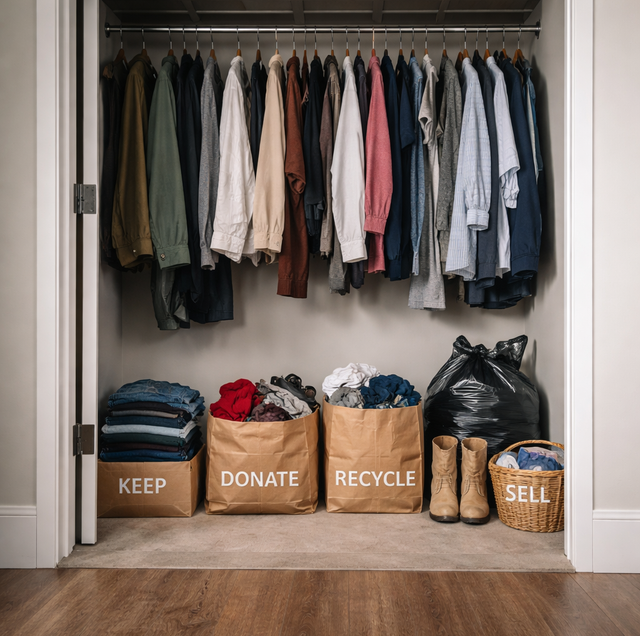
Quick Answer: Start three to four weeks out and work one room at a time. Sort everything into keep, donate, sell, recycle, and trash using three honest questions: have I used it in the last year, would I buy it again today, and does it fit my new home? Handle hazardous items and old documents separately, then pack only what survives the cut.
Every box you carry costs you twice: once when you pack it and again when you empty it on the other end. The math of a move is simple and unforgiving. The less you own on moving day, the fewer boxes you buy, the less you lift, the fewer hours you or your crew spend loading, and the lighter your new place feels when you walk in. That makes decluttering the single highest-value thing you can do before you tape up a single carton.
Why You Should Declutter Before You Pack, Not After
It is tempting to throw everything in boxes now and sort it out once you arrive. Resist that. Sorting after the move means you have already paid the full price of hauling things you never wanted. You packed them, loaded them, drove them, and carried them up the stairs, and now they sit in your new garage in the same boxes for another two years.
Decluttering first flips the order. You make the keep-or-toss decision once, before the item ever touches a box, so you only spend effort on things you actually want in your life. A pantry cabinet you empty into the donate bin is a cabinet you do not pack, label, or find a shelf for later. The savings compound down the whole chain.
There is a second reason. Moving is a rare forced audit of everything you own. You will handle every object in your home at least once. That is a chance to reset that will not come again for years, and doing the sorting up front is what turns a move into a genuine fresh start instead of a relocation of clutter.
Start Early and Work Room by Room
The biggest mistake is starting the week before. Good decluttering needs time to sit with decisions, run a sale, and schedule a donation pickup. Begin three to four weeks ahead if you can. If your timeline is tighter, the same system still works; you just compress the stages.
Pick one room and finish it before moving to the next. Jumping between spaces leaves half-sorted piles everywhere and kills momentum. Start with the low-emotion rooms, the spare closet, the bathroom, the laundry area, where decisions are quick, and you build confidence. Save the sentimental rooms, the home office, the attic, the kids' rooms, for when you have your rhythm.
Set up five zones in each room before you touch anything:
The five-zone sorting system
- Keep: It earns its place in the new home. Pack it.
- Sell: It has real resale value, and you have time to move it.
- Donate: Someone can use it, but it is not worth your time to sell.
- Recycle: Paper, cardboard, glass, electronics, and metals your local program accepts.
- Trash: Broken, stained, or expired beyond use.
Physical bins or taped-off floor areas beat mental categories. When a decision has a place to go the instant you make it, you stop second-guessing.
Ask the Three Honest Questions
Most clutter survives because we never actually decide about it. We just move it from surface to surface. Three questions cut through that:
Have I used it in the last year? Seasonal gear and a handful of truly occasional tools get a pass. Almost everything else that has not been touched in twelve months is not part of your real life anymore.
Would I buy it again today at full price? This reframes the decision away from what you already spent. The money is gone either way. The only question is whether the item is worth space in your future home.
Does it fit the new place? A sectional built for a big open room may not fit a smaller layout. The oversized dresser may not clear the new stairwell. Measure your key furniture against the new floor plan before you commit to hauling it.
If an item fails all three, it is not a keep. The point is not to own less for its own sake. It is to arrive with only the things that pull their weight.
Tackle the Clutter Magnets First
A few spots hoard the vast majority of household clutter. Clearing them delivers the biggest wins.
The garage collects half-used supplies, mystery hardware, and gear for hobbies you have moved on from. Group like with like first, and the duplicates and dead weight become obvious.
Closets hide clothes you have not worn in years. A useful test: turn all the hangers backward, and over the coming weeks only re-hang what you actually wear. On moving day, anything still backward is an easy donate.
Kitchen gadgets breed. The bread maker, the second slow cooker, the drawer of single-use tools. Keep what you reached for this month and be honest about the rest.
Paper and documents pile up in drawers and file boxes. Sort into keep-permanently (deeds, titles, tax records), scan-and-toss, and shred. More on the last two below.
Duplicates are pure dead weight. Three spatulas, two toolkits, four sets of sheets for a bed you no longer own. Keep the best of each and release the rest.
Kids' outgrown items move fast. Toys, clothes, and gear from earlier ages are easy to donate to families who need them right now, and every bin you clear is one less thing to relabel in the new house.
To decide which clothes to keep, turn all the closet hangers backward now, then only turn a hanger the normal way once you have actually worn that item. On moving day, anything still hanging backward has gone unworn and is an easy donate.
One caution as you sort at speed: keep medications, important documents, jewelry, and small valuables in a clearly marked box you handle yourself. These are exactly the items that get swept into a donate bag by accident when the pace picks up.
What to Do With the Sell Pile
Only put things in the sell pile that are truly worth the effort. Sorting, photographing, listing, and meeting buyers all take real time you are short on during a move. Reserve selling for items with real value: furniture in good shape, electronics, tools, brand-name gear.
A yard sale clears a large volume in a single weekend and is ideal for the long tail of smaller items. Price to move it out the door, not to hold out for top value. Anything unsold goes straight to the donate pile once the sale wraps, so you are not repacking it.
Online listings work best for higher-value single items where a buyer will travel. Write honest descriptions, take clear photos in good light, and meet in safe public spots for smaller handoffs.
Consignment shops suit quality clothing, furniture, and specialty gear you do not want to sell yourself. They take a cut, but they do the work, and that trade is often worth it when your calendar is full.
Set a hard deadline. Anything not sold by the week before the move gets donated. Do not let the sell pile become a reason to delay.
What to Do With the Donate Pile
Donating is faster than selling, and it clears volume quickly. Local charities, shelters, and reuse programs take furniture, clothing, housewares, and often working electronics. Many will schedule a pickup for larger loads, which saves you a trip.
Call ahead about what each organization accepts. Some cannot take mattresses, large appliances, or certain electronics, and arriving with a carload they must refuse wastes everyone's time.
Keep your donation receipts. Itemized donations to qualified charities may be deductible, and a written receipt with a reasonable value estimate is what makes that possible at tax time. Drop the receipts in the same folder as your other moving paperwork so they are easy to find later.
Safely Dispose of Hazardous Items and Old Records
Some things cannot ride in the moving truck and should never go in the regular trash. Movers are barred from transporting hazardous materials, so these need a plan of their own before moving day.
Paint, solvents, cleaners, and other chemicals belong at a household hazardous waste facility, not the curb. Pouring them down a drain or tossing them in the trash can contaminate water and soil.
Propane tanks from grills cannot go on the truck and are not curbside trash. Many exchange programs and hazardous waste sites take them.
Batteries and e-waste need dedicated recycling. Old electronics, phones, and rechargeable batteries contain materials that require special handling, and many retailers run free take-back programs.
Rules for all of these vary by location, so verify what your local hazardous waste and recycling programs accept before you haul anything anywhere.
Paint, solvents, cleaners, and propane tanks cannot ride on the moving truck and should never go down a drain or into the regular trash, where they can contaminate water and soil. Take them to a household hazardous waste facility, and drop batteries and old electronics at a dedicated recycling or take-back program. Rules vary by location, so confirm what your local programs accept before hauling anything.
For old records, protect yourself. Shred anything with account numbers, a Social Security number, or other personal details rather than tossing it whole. A single discarded statement is enough for identity theft. For everything you want to keep but not haul, scan it. Years of paper files and boxes of loose photos can live in a single backup, freeing shelves and eliminating boxes. Keep original legal documents like titles, deeds, and birth certificates, but the reference paper around them can usually go digital.
Do Not Over-Buy Packing Supplies
A quiet source of waste is buying boxes and materials for stuff you have not finished sorting. Every carton you fill with things headed for donation is a box, roll of tape, and armful of paper spent on nothing.
Finish decluttering a room, then count what is left and buy supplies for that. You will need noticeably fewer boxes than a full-house estimate suggests, and you avoid the last-minute scramble of overstuffed cartons at capacity. Free boxes from stores and friends can cover much of the gap, and you will not have a stack of unused packing material to deal with once the move is done.
A Lighter Load Makes Moving Day Smoother
There is a real physical toll to all this handling. Lifting boxes, dragging furniture, and hauling bags up stairs is where moving injuries happen, so lift with your legs, keep loads reasonable, and get a hand with anything heavy or awkward. The fewer things you keep, the less of that risk you take on.
Think of decluttering the way a hiker thinks about a pack before a long trail: every ounce you carry, you feel on every mile, so the smartest work happens before you ever set out. A move rewards the same discipline. A trimmed-down home loads faster, rides safer, and empties out in a fraction of the time on the other end.
When moving day comes, and the truck holds only what you actually want in your next home, the whole day changes. Fewer boxes to track, fewer trips up the stairs, and a new place that starts clear instead of buried. The hours you spend sorting now are hours you buy back many times over.
Frequently Asked Questions
Three to four weeks is the sweet spot for a typical household, though larger homes with garages and attics benefit from six to eight. The limiting factor is rarely the sorting itself. It is the follow-through: a yard sale needs a weekend, charity pickups often book a week or two out, and hazardous waste facilities may have limited drop-off days. Working backward from those external deadlines, rather than from moving day alone, keeps you from being stuck with piles you have no time to clear.
Organizing arranges what you own more neatly; decluttering decides what you own at all. People often organize when they should be reducing, which just means neatly boxing things they will discard later anyway. Before a move, reduce first and organize second. There is no point building a tidy system around items that will not survive the keep decision. Do the cutting, then arrange only what remains.
A storage unit is usually a decision you are avoiding, not a solution. The recurring monthly cost tends to outrun the value of what sits inside, and studies of self-storage habits show most "temporary" units quietly become permanent. Storage earns its place for a genuine gap, such as a two-month window between homes, or for a specific high-value item you cannot place yet. As a holding pen for maybes, it just relocates the clutter and adds a bill.
Do not toss them in the trash or flush them, both of which cause environmental and safety problems. Many pharmacies and police stations host drug take-back programs and drop boxes for safe disposal year-round. If none is nearby, guidance generally suggests mixing the medication with something undesirable like coffee grounds in a sealed bag before disposal, and scratching out personal information on the bottle. Set current prescriptions aside in your personal-items box so they never get swept into a donation bag.
Photograph the item before deciding. A picture preserves the memory without the physical bulk, and it makes releasing the object far easier. For collections, keep one or two representative pieces rather than the whole set. Give yourself a defined limit, such as a single memory box per person, so sentiment has a container instead of an open license. Handle these items in a focused session when you are rested, never at the exhausted tail end of a long sorting day, when every decision feels heavier than it is.
It depends on the flaw. Charities generally accept furniture that is structurally sound and clean, but many will refuse pieces with rips, deep stains, strong odors, or broken frames, since they cannot resell those. For resale, minor cosmetic wear is fine at the right price, and buyers of used furniture expect some marks. Water-damaged or mold-affected pieces should not be donated or sold at all, both for health reasons and because they will simply be turned away. When a piece is too damaged for either, recycling the wood and metal beats sending the whole thing to landfill.
Lighten the load before the truck arrives — a trimmed-down home moves faster and easier. Butterfield Moving serves Hillsboro, Beaverton, and the Portland area. Call (503) 867-2414.