
Moving Into a Beaverton or Hillsboro New-Build: What Your Movers Need to Know
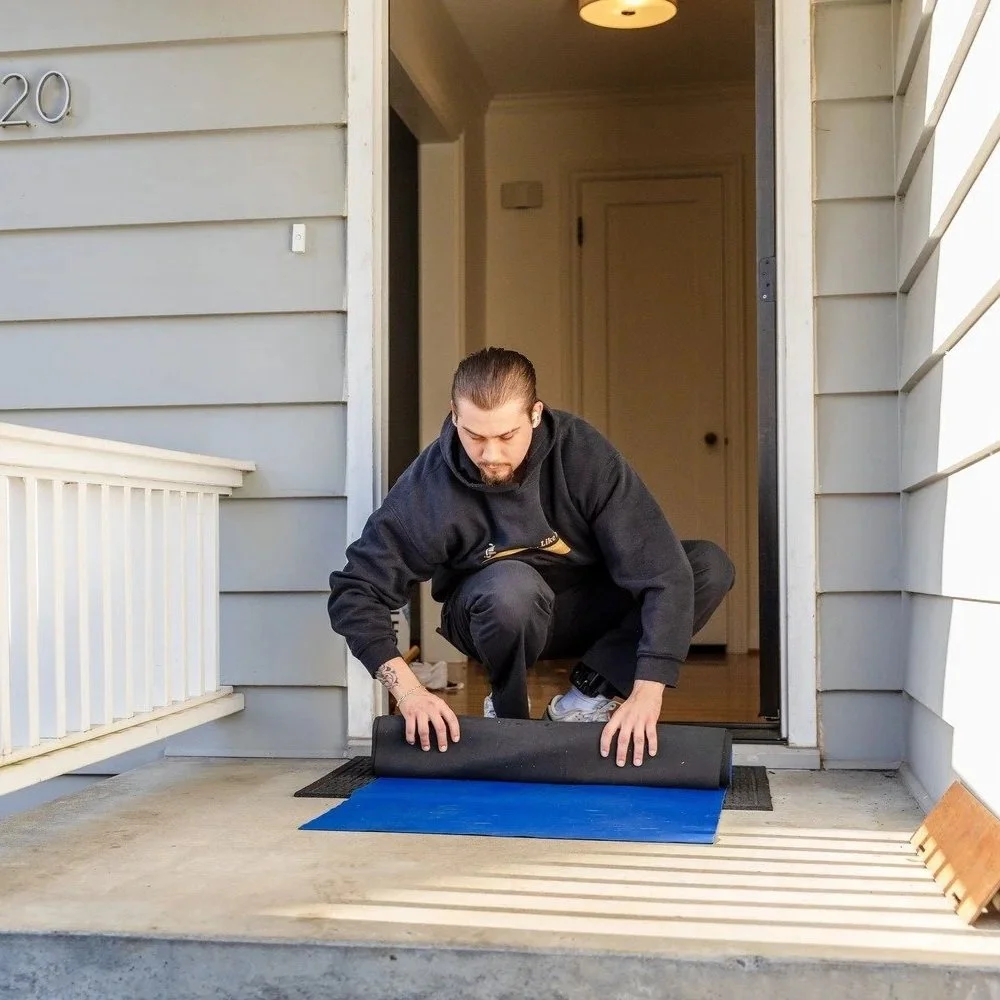
Experienced mover installs floor protection inside Beaverton new-build home, helping prevent damage during residential moving and furniture delivery services.
You are closing on a new-construction home in Beaverton or Hillsboro. Congratulations. Now comes a logistics challenge most first-time new-build buyers do not anticipate: moving into a home that is still technically a construction site until the builder’s final punch-list is complete. HOA rules may restrict moving windows. The flooring and paint are pristine but fragile. Weather delays are common. This guide walks you through the realities of Westside new builds so you can plan the move correctly.
The New-Build Move: Different From a Standard Move
Moving into new construction is not the same as moving into an existing home. The builder is still on-site, completing punch-list items (fixing defects, installing missing fixtures, final cleanup). The home is new and fragile: flooring and paint can easily be damaged. HOAs in Westside subdivisions (Bethany, Reed’s Crossing, Witch Hazel, AmberGlen, Cooper Mountain) impose moving restrictions that do not exist in non-HOA neighborhoods.
First-time builders often do not understand that they cannot move in immediately after closing. The builder typically closes the sale, but you cannot occupy the home until the punch-list is complete and the home is officially released for occupancy. This timeline is typically 2 to 4 weeks after closing.
The HOA restrictions are real. Many Westside HOAs allow moves only Friday through Sunday, or only during specified morning hours (often 7 am to noon). Some HOAs limit the number of trucks on-site at any given time. Some require advance notice to the HOA or building management. These rules protect the community but require you to plan the move carefully and communicate with the HOA early.
Westside HOA Rules: What Movers and Homeowners Must Know
Bethany, Reed’s Crossing, Witch Hazel, AmberGlen, and Cooper Mountain all have HOAs with moving policies. While each HOA’s rules vary slightly, they follow common patterns.
Moving windows are the most common restriction. Most Westside HOAs allow moves Friday through Sunday or during other limited hours. Some restrict moves to 7 am to 5 pm. Some prohibit moves on holidays or during community events. You need to know your HOA’s moving policy before you close on the home.
Parking restrictions often require movers to stage trucks in designated areas. Unloading in front of the house without a parking permit may violate community rules. Clarify parking with the HOA.
A Certificate of Insurance is usually required. Movers must carry liability insurance (Butterfield does), and the certificate must be provided to the HOA before the move. This document is standard, and Butterfield can provide it.
Access paths sometimes have HOA restrictions. Some HOAs protect landscaping by restricting movers from cutting across the grass or using certain walkways. Ask the HOA which routes are approved for moving equipment and debris removal.
The maximum noise and disturbance hours limit when movers can operate. Most HOAs require moves to finish by evening (6 pm to 8 pm) and prohibit weekend moves before 8 am or 9 am to avoid disturbing neighbors.
Get a copy of the HOA moving policy from your real estate agent or the HOA office before closing. Provide it to Butterfield when booking so the crew knows the rules and can plan accordingly.
Punch-List and Builder Coordination: Timing Your Move-In
The builder’s process follows a standard timeline. After you close, the builder completes final inspections and punch-list work (fixing defects, installing missing items, and final cleanup). The punch list is created during your initial walkthrough, typically 24 to 48 hours after closing. You walk through with the builder and note any defects.
The punch-list completion timeline is usually two to four weeks. The builder schedules work to fix the noted items. Once all punch-list items are done, the builder schedules a final walkthrough where you sign off on completion. Then the home is released for occupancy.
Coordinating the move around the punch-list is critical. If you move in before the punch-list is complete, the builder’s crews are still on-site, and they may damage items you have just moved in. Wet paint, fresh drywall, incomplete electrical work—these create risks. Most new-build buyers move in after the punch-list is signed off.
Ask the builder for an estimated punch-list completion date. Plan the move for one week after that date, giving the builder buffer time. This prevents overlap and keeps your furniture out of the construction zone.
If the move must happen before punch-list completion, discuss with Butterfield and the builder. The builder can schedule punch-list work to avoid the moving day, and Butterfield can coordinate around builder activity.
Pacific Northwest Weather and Build Delays: Why Your Completion Date Slipped
Westside Beaverton and Hillsboro builders frequently miss original completion dates due to Pacific Northwest winter weather. November through February brings rain that delays concrete curing, roofing work, and exterior finishing. Wet weather can delay landscaping, driveway sealing, and final grading by weeks.
This is not unusual or a sign of a problem. It is the climate. Builders in Oregon and Washington learn to plan for winter delays; most estimates build in a buffer. But sometimes the weather is worse than expected, or the builder’s suppliers are delayed, and the punch-list completion date slips by two, three, or even four weeks.
If your completion date slips, you have options. You can reschedule the move (which is flexible with Butterfield if booked well in advance). You can request a rent-back from the current home (extending your lease another month) or negotiate temporary housing if the builder is responsible for the delay. Most builders are sympathetic to delays caused by weather and try to accommodate reasonable requests.
Call Butterfield to discuss rebooking if your completion date slips. Flexible scheduling is part of the new-build reality.
Pre-Move-In Walkthrough: What to Check Before Movers Arrive
The final walkthrough happens 24 to 48 hours before closing. This is your chance to verify the home is actually ready. Walk through with the builder’s representative or your real estate agent. Check these items:
Flooring: Is it installed? Any damage or stains?
Paint: Is every room painted? Any chips or drips?
Appliances: Are they installed and functioning? Refrigerator, oven, dishwasher, microwave?
Fixtures: Are light fixtures, ceiling fans, and door hardware installed?
Bathrooms: Do sinks, toilets, and showers work?
HVAC: Does the heating system work? Is the thermostat functional?
Plumbing: Turn on water at multiple fixtures. Check for leaks.
Doors and windows: Do they open and close smoothly?
Cleanliness: Is the home swept and cleaned, or is there dust and debris?
If the home is dirty, partially finished, or has defects, the move-in is delayed until the builder completes work. Do not agree to move in to an incomplete home. Call Butterfield and reschedule if the home is not ready.
Move-In Day for New Construction: Protecting New Flooring and Finishes
New-build homes have pristine finishes that are easily damaged. Flooring is sealed but fresh. Paint is new. Appliances have protective film. Protecting these during the move requires care.
Movers use protective coverings on doorways and hallways (cardboard, plywood, kraft paper) to prevent scuffs and impacts. If you notice the movers are not using protection in high-traffic areas, ask them to add it.
Mud is a real hazard. The driveway, landscaping, and yard are often wet or muddy during the rainy season (October–May). Movers will track mud into the home if you are not careful. Place a mat or tarp outside the front door for movers to wipe their feet. Consider having them remove boots in a mudroom if one exists.
Heated garages are standard in Westside new construction and are useful for staging. Movers can set boxes and some furniture in the garage to protect them from the weather and prevent congestion in the main living areas. Use the garage as a staging area during the move.
Final placement in a new home is often exacting. New-build buyers know exactly where they want furniture because the home is their design. Movers will ask about placement, and you will direct them. Communicate clearly and do not expect movers to read your mind about optimal furniture arrangement.
Hillside Builds (Bethany, Cooper Mountain): Slope and Driveway Considerations
Hillside subdivisions in Bethany and Cooper Mountain have homes on slopes. Long driveways, steep grades, and hillside landscaping affect move logistics. Driveways are freshly sealed or poured concrete, and movers must be careful not to damage the surface with heavy equipment.
Some HOAs restrict truck weight or limit large trucks on new driveways. Check with the HOA before booking. Butterfield can advise on crew size and equipment (lighter dollies, sliders for new flooring) if the driveway has restrictions.
Slope affects furniture fit. Hillside homes often feature split-level layouts, with living areas on different levels. Stairs are common. Plan for extra time if the home has multiple levels or steep stairs.
Assess the property: Is the driveway steep? Is the front door easily accessible, or is there a long walkway? Are there multiple levels inside? Butterfield can evaluate these factors during a pre-move consultation and advise on crew size, equipment, and estimated time.
After You Move In: New-Home Snagging and Builder Warranty
After the movers depart, you do a final walkthrough to check for any damage that occurred during the move. Most new-home builders’ warranties cover construction defects but not damage caused by movers. Moving damage is your responsibility unless the movers caused it.
Walk through the home with your movers before they leave. Point out any damage you notice (scratches on floors, dents in walls, broken fixtures). Movers will note whether they caused the damage or whether it was pre-existing. Document everything with photos.
If damage occurred during the move, contact Butterfield immediately. The moving company’s insurance covers damage caused by movers.
If the damage is pre-existing (builder’s responsibility), contact the builder. New-home warranties cover defects from construction for one year (typically), so the builder will address them.
The goal is documentation and communication. Clarify responsibility immediately so no one assumes the other is at fault.
FAQs
After. Moving in before punch-list completion puts your furniture at risk of damage from builder crews or incomplete work. Ask the builder for an estimated punch-list completion date, then schedule the move one week later.
Check your HOA’s moving policy. Some HOAs require advance notice (5 to 7 days) before a move. Some require the mover to provide a Certificate of Insurance. Provide the policy to Butterfield when booking so the crew knows the requirements.
A Certificate of Insurance is a document showing the moving company’s liability insurance. Butterfield carries insurance and can provide this document. Request it when booking the move, and Butterfield will provide it to you or directly to the HOA.
Yes, but it is not ideal. Coordinate with the builder to schedule punch-list work on a different day or schedule the move after punch-list completion. If overlap is unavoidable, the builder and movers should coordinate to avoid congestion and damage.
Pacific Northwest weather, especially winter rain, delays construction. Concrete curing, roofing, and exterior work are weather-dependent. Most builders build buffer time into schedules, but severe weather can extend timelines. This is normal and not a sign of a problem.
Contact Butterfield immediately and document the damage with photos. The moving company’s insurance covers damage caused by movers. If the damage is pre-existing (builder’s responsibility), contact the builder under the new-home warranty.
Call Butterfield Moving at (503) 506-4149 if you are moving into a new-build in Beaverton or Hillsboro. We coordinate with HOAs and builders and know the Westside rules. Free estimate and HOA compliance check. Open 7 days a week, 7 am to 10 pm.